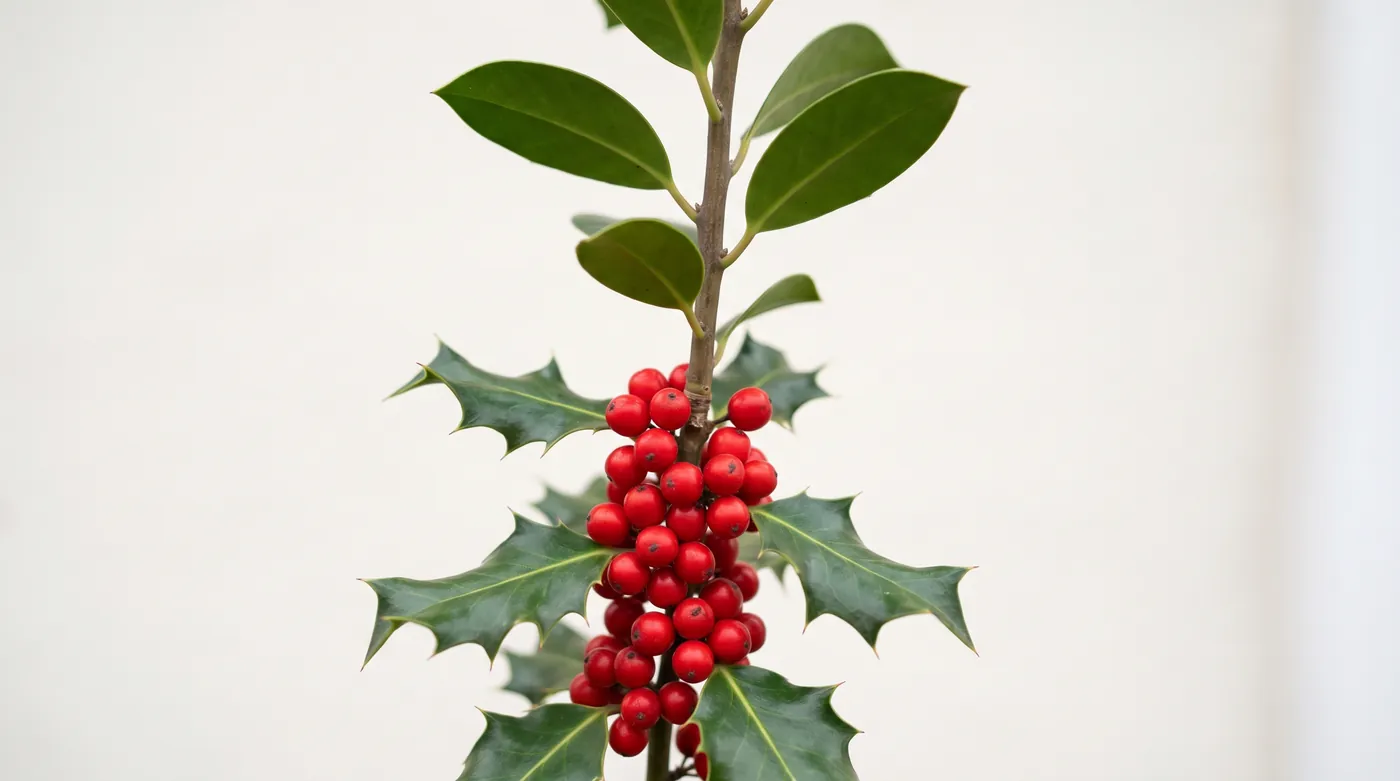
The caffeine hollies
Yerba mate is a holly. The drink of Argentina, Uruguay, Paraguay and southern Brazil, taken from a gourd through a metal straw and passed around, is made from the dried leaves of a South American tree in this family, and it carries a serious dose of caffeine. Guayusa, brewed in the Ecuadorian Amazon, is another.
North America has one too, and its history is worth telling. Yaupon, which grows across the southeastern United States, is the only caffeinated plant native to North America, and it was central to the ceremonial black drink of the peoples of the southeast. A European naturalist gave it the species name vomitoria on the assumption that it caused the vomiting seen in those ceremonies. It does not. The vomiting came from the quantity consumed and from other things added to it, and the plant has been carrying a libel in its scientific name ever since. It is now being revived as an American tea crop.