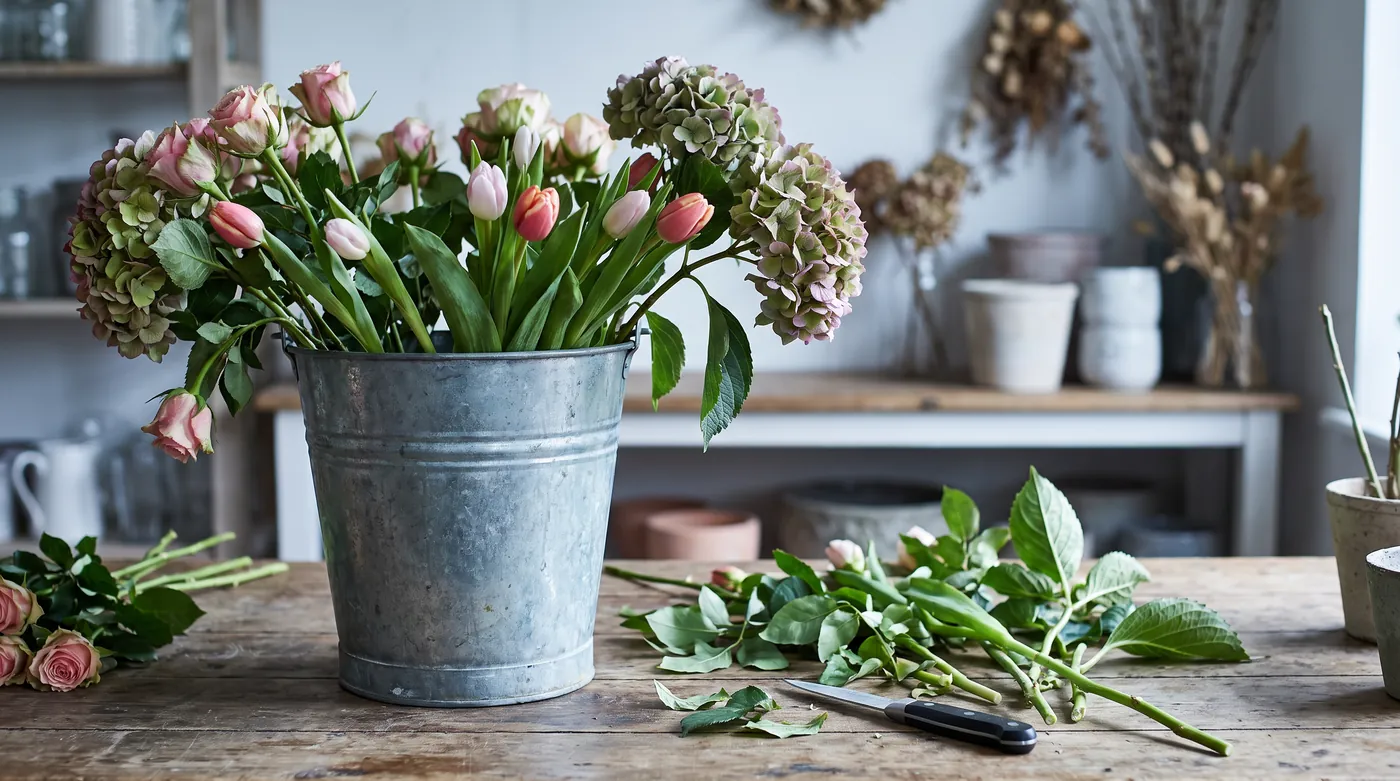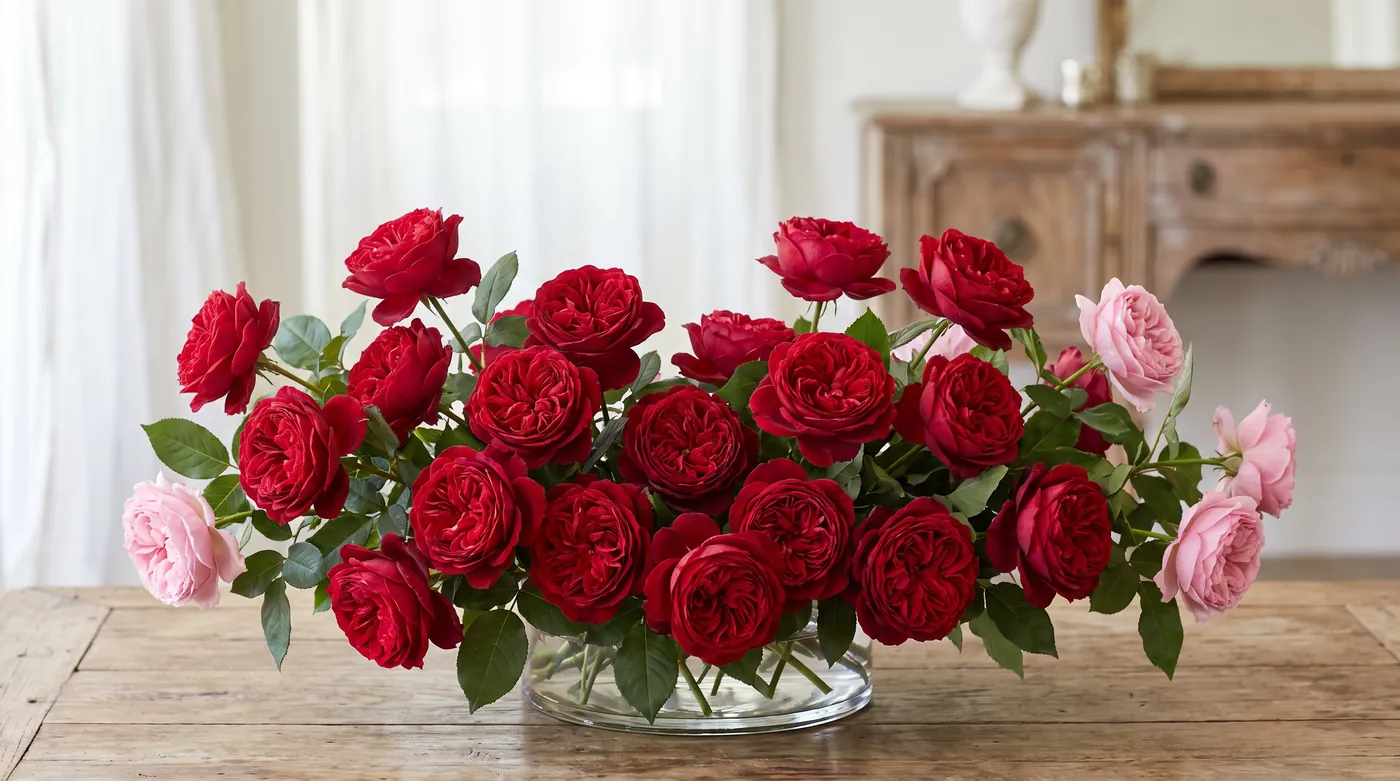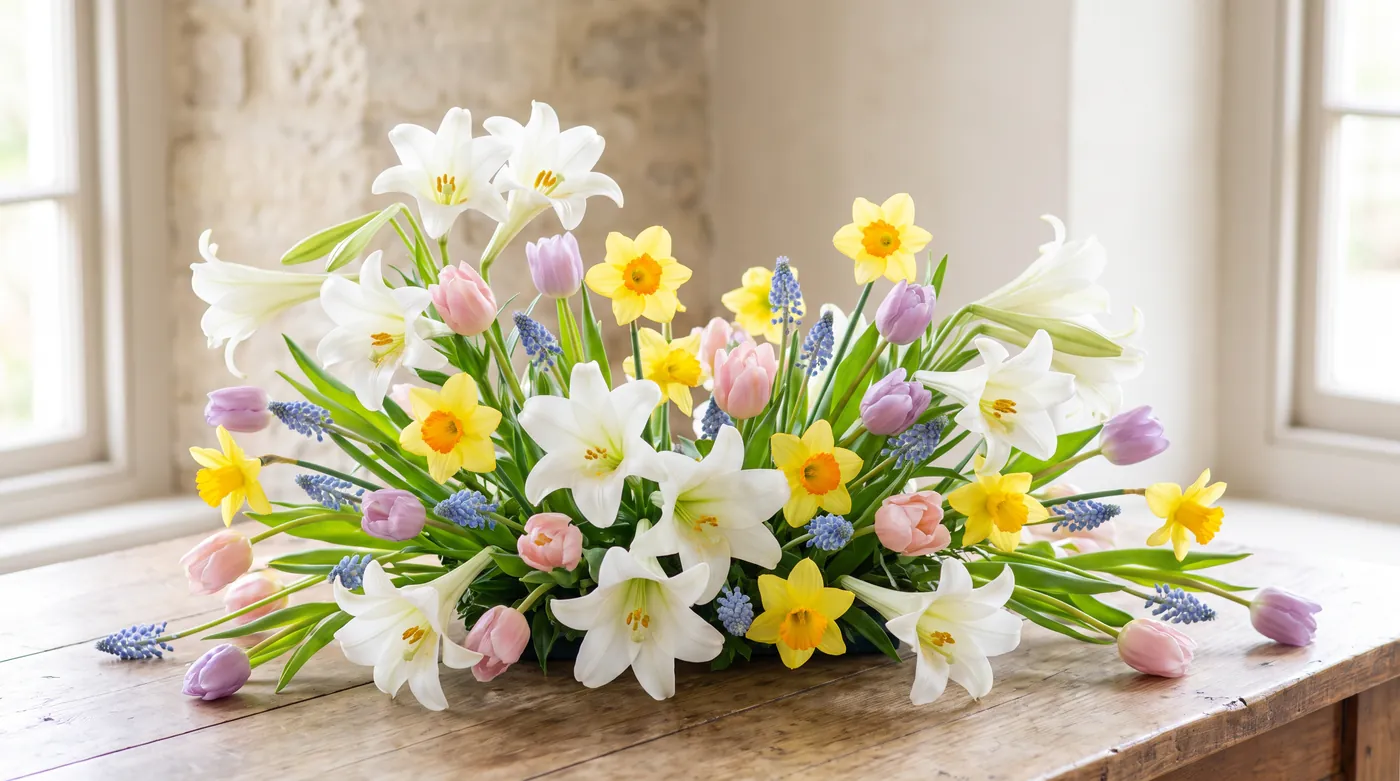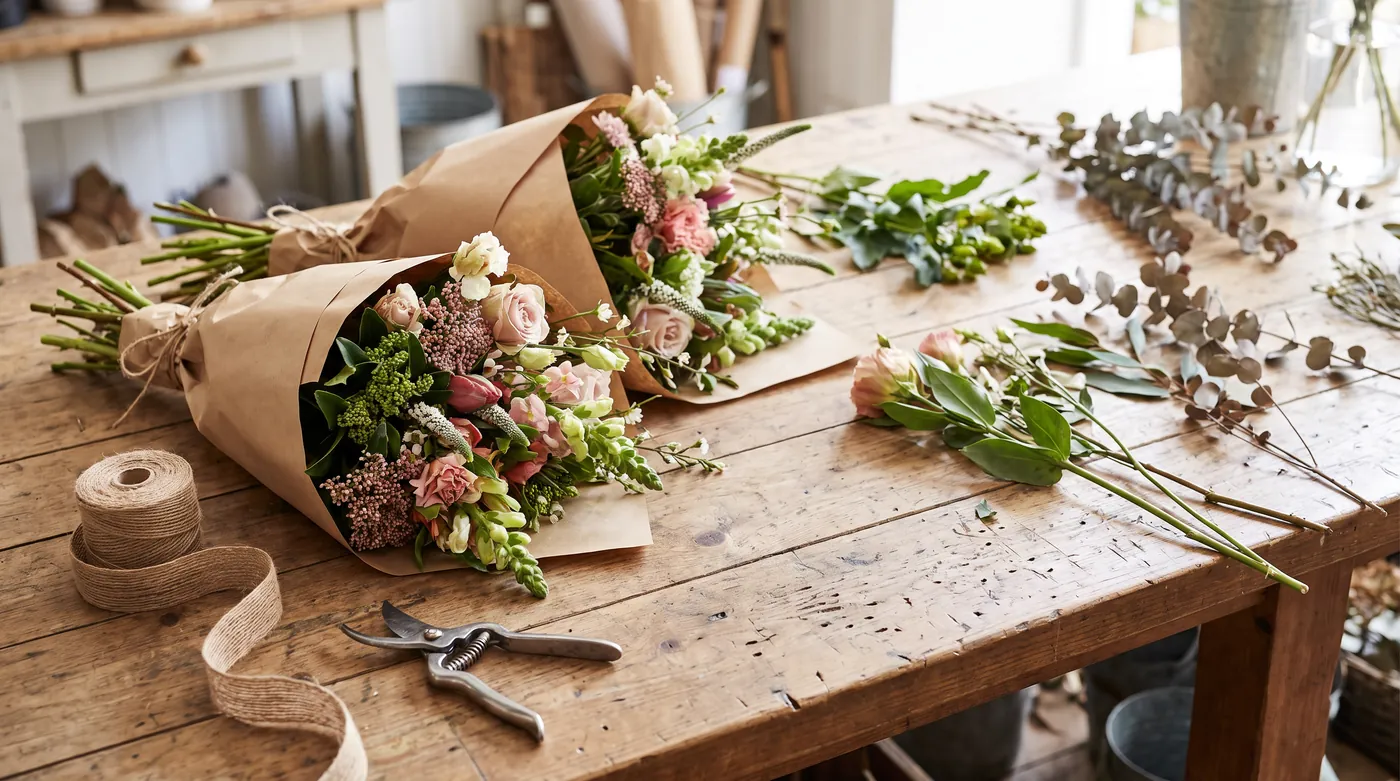
Somebody sends flowers, they arrive, and they are smaller than the photograph and made of different flowers. The customer assumes the local florist did a poor job. The local florist, who received about half of what was paid, did the best job the money allowed. Almost nobody understands what happened in between, and it is not complicated.
None of this is a scam and the services are not villains. They are a genuine convenience with a real cost, and the cost is that less of your money turns into flowers. It is worth knowing which you are buying, and when each is the right call.
It began as a genuinely good idea
FTD is the Florists' Telegraph Delivery Association, founded in 1910 by fifteen American florists. The problem it solved was real: you could not send flowers to another city, because flowers do not travel. So you walked into your local shop, they telegraphed the order to a member florist in the destination town, and that florist made and delivered it. Teleflora, founded in the 1930s, worked the same way.
That network is still what happens underneath. When you order from a national site today, a local shop somewhere near the recipient makes those flowers and puts them in a van. The flowers are local even when the order is not.
What changed is the front of it. Once ordering moved online there was no longer any reason for the sender to walk into a shop, and a second kind of business appeared: the order gatherer. These are companies whose entire product is being found first. They buy search advertising on the name of your town, take the order, keep a share, and pass it into the same network.
Where the money goes
The traditional split has been remarkably stable for decades and it is the single most useful thing to understand. Very roughly: the business that takes the order keeps about a fifth, the wire service takes a clearing fee of under ten per cent, and the florist who actually makes and delivers the arrangement receives the rest, somewhere around seventy per cent. The exact numbers vary by service and by contract.
Then subtract from that the service fee and delivery charge added at checkout, which the sending business keeps. By the time it reaches the workbench, the money available for flowers, a container, labour and a driver is a good deal less than what you paid.
This is why the arrangement looks smaller. Not because the florist was lazy, but because they were handed a budget and made the best thing that budget allowed. A shop asked directly for the same total has the whole of it to work with.
Why it never looks like the photograph
Every wire service allows substitution, and says so in terms almost nobody reads. The fulfilling florist must match the value, the color scheme and the general style, and may use whatever is in their cooler that morning. That is not a loophole, it is the only workable rule: a shop in a small town in February cannot be required to hold a specific variety of rose on the chance an order arrives.
The photograph, meanwhile, was styled for a catalog by a designer with unlimited stems and no time limit, and often shot with more flowers than the price covers. Comparing the two is comparing a menu picture with dinner.
The container matters more than people expect. A branded vase in the photo may be a piece the local shop has never stocked, so they substitute, and the whole thing reads differently even when the flowers are right.
How to tell who you are actually buying from
Look for a street address
A real shop has one, on the page, with a photograph of a building. An order gatherer has a contact form and a list of cities it "serves".
Check the phone number
A local shop has a local area code. A national number, or no number at all, tells you what you are dealing with.
Count the towns
If the site delivers to every town in the state, or the country, it is not a shop. No florist has vans in four hundred towns.
Search the name separately
Put the shop name and the town into a search engine on their own. If the business that appears is somewhere else entirely, you were on an order gatherer.
Read the About page
Real shops name people, years and neighborhoods. Gatherers write about "our network of professional florists".
Just call
Thirty seconds on the phone settles it completely, and a shop that answers its own phone will tell you what is good this week.
Our directory lists shops by state, county and town with the phone number we hold on file, and where a listing's website goes to a wire service rather than the shop's own site we label it as an order page rather than pretending otherwise.
When a wire service is the right answer
There are cases where it plainly is, and pretending otherwise would be as dishonest as the catalog photograph.
Sending to a town you know nothing about, where you have no way to judge one shop against another, is exactly the problem the network was invented for. So is sending abroad. So is eleven o'clock at night when nothing is open and something has happened. And a national brand gives you one customer service number and a refund process, which matters if the delivery goes wrong and you are a thousand miles away.
What you give up is control and value. What you gain is someone else carrying the risk. That is a fair trade and worth making with your eyes open.
What calling a shop directly actually gets you
All of your money becomes flowers, a container, labour and a driver, rather than most of it. On the same total that is a visibly bigger arrangement.
You can also describe what you want in a sentence instead of picking a photograph, which is how florists prefer to work. Give them a color, a budget and the occasion and ask for the designer's choice, and you will get the best of what came in that morning rather than whatever the catalog committed them to months ago.
And you can ask questions a website cannot answer. What arrived today. Whether the peonies are any good this week. Whether they can get to that address by four. Whether the recipient has a cat.
Common questions
Are wire services a scam?
No. They are a real service solving a real problem, and the flowers are genuinely made by a local florist near the recipient. What people object to is the gap between the photograph and the delivery, and that gap comes from the commission structure and the substitution policy rather than from anybody cheating.
Why did the flowers not look like the picture?
Two reasons, both structural. The fulfilling florist is allowed, and required, to substitute for what is in their cooler at similar value, because no shop can stock every variety on the chance of an order. And the money reaching them is well under what you paid, since the order taker and the wire service are paid first, so the arrangement is sized to what is left.
How much of what I pay reaches the florist who makes them?
Traditionally around seventy per cent of the arrangement price, with about a fifth going to whoever took the order and a clearing fee under ten per cent to the service. Service and delivery charges added at checkout are on top of that and stay with the order taker. The exact figures vary by service and contract.
How do I find the actual local florist?
Look for a street address and a local area code, and be suspicious of any site that lists every town in the region. Search the shop name and town separately, and call. Our directory lists shops by state, county and town with the number we hold, which is the short way round.
Is it always better to call the shop?
For value and for getting what you actually want, yes. Not for convenience. If you are sending somewhere you know nothing about, or abroad, or late at night, the network exists for exactly that and the premium buys somebody else carrying the risk.
Find a florist near you
Every one of these is easier to get right in person, because a local shop is buying from the same market this page describes and can tell you what actually arrived this week. Our directory lists flower shops in every state, by county and town. Find a florist near you.