Almost nobody buys funeral flowers often enough to be confident about it, and the questions people are most anxious about are the ones they feel unable to ask: whether it is their place to send anything at all, whether the thing they are ordering is meant for close family only, and what on earth to write. This page answers those directly.
The short version, if you need it now. White flowers are always correct. A basket or vase arrangement is right from almost anyone and can move to the family's home after the service. Leave the casket flowers to the immediate family. If the notice says in lieu of flowers, it means it. And if the family is Jewish or Muslim, check before you order, because flowers may not be part of it.
Why flowers, and why they stayed
The custom began as a practical one. Before refrigeration and embalming, a body lay at home for several days before burial, and banks of scented flowers were the only way to manage that. It is not a romantic origin, but it is the real one, and it is why the flowers chosen were the heavily perfumed ones: lilies, tuberose, stock.
The Victorians turned the necessity into an elaborate etiquette, with rules about who sent what and how much black crepe went with it. By the time embalming had made the original purpose redundant, the ritual was fixed and had acquired its own meaning.
What it does now is different again and worth understanding, because it tells you what to send. A room filled with flowers is visible evidence that a lot of people cared about someone, and the family sees exactly that when they walk in. The card is read, every one of them, usually days later and often more than once. That is the part that lasts, which is why the wording below matters more than the size of the arrangement.
What each arrangement is, and who sends it
Most of the anxiety around funeral flowers comes from not knowing that these are different things with different senders. They are not simply larger and smaller versions of each other.
Casket spray
The arrangement that lies on the casket itself. It is chosen and paid for by the immediate family, and there is only one. Do not order one unless you are that family. This is the single most common mistake and the funeral director will usually catch it, but not always.
Standing spray
A large one-sided arrangement on an easel, displayed beside the casket or at the front of the service. The usual choice for close friends, a workplace, or a group clubbing together. Substantial and clearly visible, which is the point of it.
Wreath
The circular form, traditionally standing on an easel rather than lying flat. Long associated with organisations, clubs, regiments and workplaces, and still reads that way.
Cross or religious form
Appropriate at a Christian service and out of place at anything else. If you are not certain of the family's faith, do not choose this one.
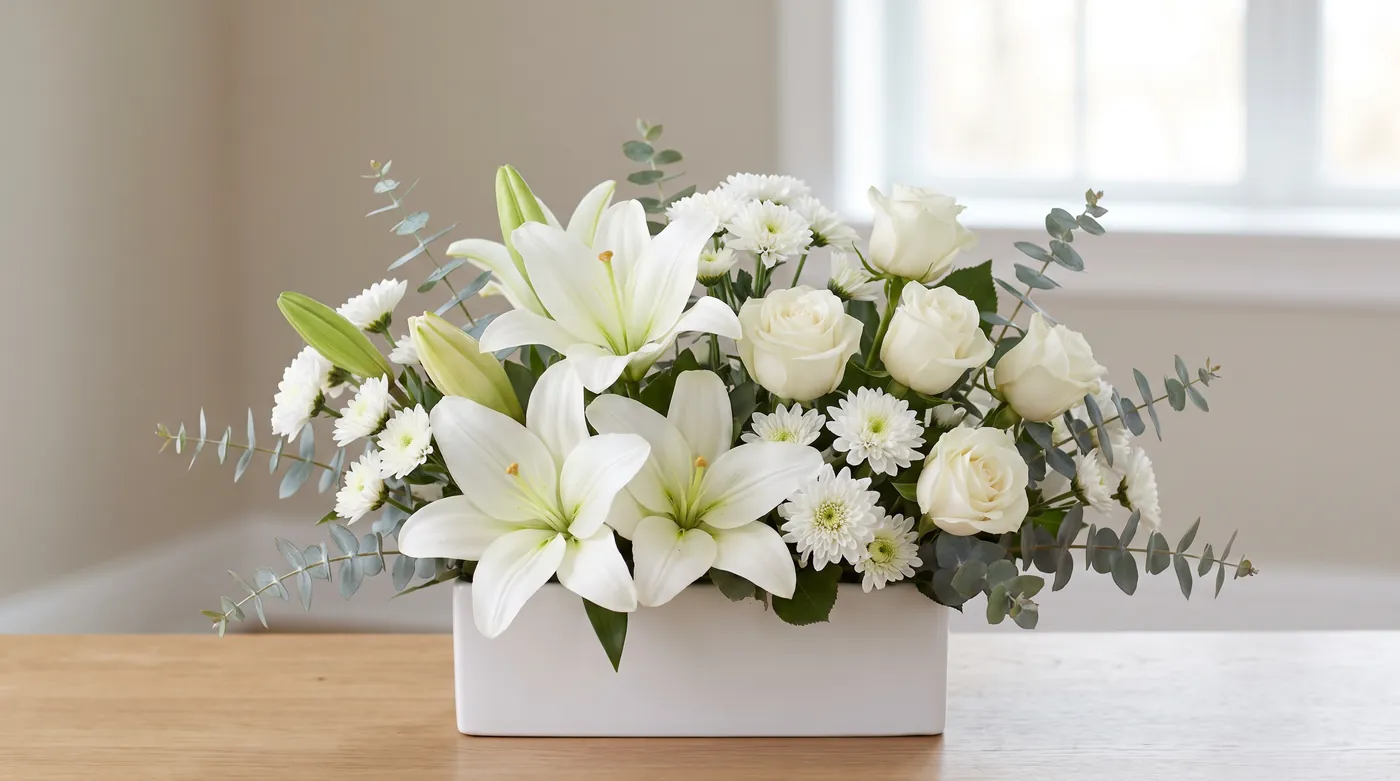
Basket or vase arrangement
The right answer for most people most of the time. Correct from anyone at any level of closeness, appropriate at the service, and it can be carried to the family's home afterwards instead of being thrown away.
Sympathy plant
A peace lily or an orchid in a pot. It goes to the home, it lasts months rather than days, and it is the better choice when you want the family to have something after everyone has gone home.
Casket pillow or heart
Small shaped pieces placed in or on the casket. Immediate family and occasionally grandchildren. Not for anyone else.
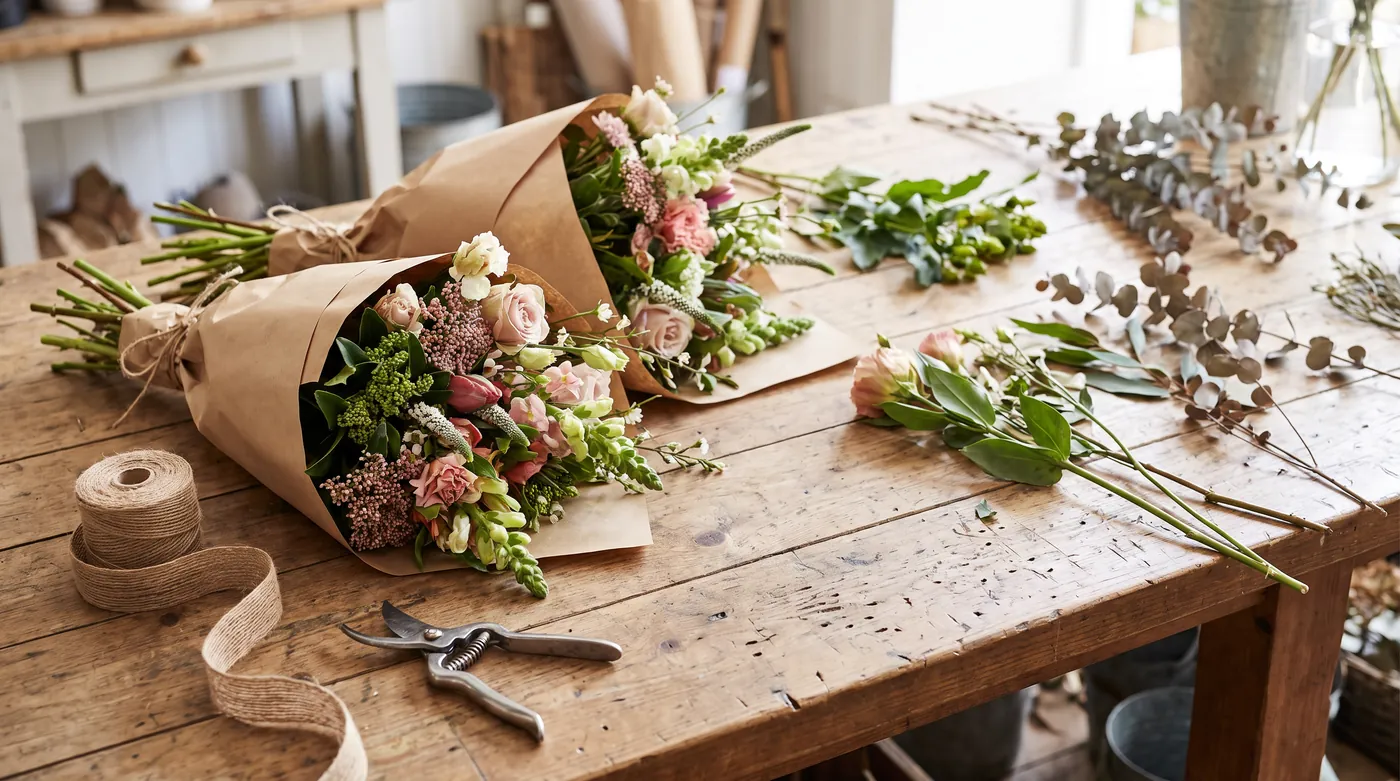
Hand-tied bouquet
For the house, not the service, and usually best a week or two later. See the timing section below, because this is the most underrated thing on the list.
If you knew the person only through their family, or you knew them well but are not close to the family, an arrangement to the home is more considerate than something at the service. It puts nothing on display and asks nothing of anyone.
Where to send it, and when
Anything intended for the service goes to the funeral home, not the family's house. Call the funeral home rather than guessing: they will tell you the time of the service, the deadline for deliveries, and the exact name the deceased is listed under, which matters more than people expect when a home is handling several services in a day. A good florist will make that call for you if you ask.
Anything intended for the family goes to the house, and it does not need to be before the funeral. A direct cremation with no service, which is now very common, means the house is the only option.
The genuinely useful timing is the one almost nobody uses. In the week of a death the house is full of people and food and flowers. Two or three weeks later everyone has gone back to work and the family is on their own with it, and that is when something arriving means the most. If you have missed the funeral, you have not missed anything. You are better placed than the people who sent on the day.
One practical note for a natural or green burial: many sites ask for no floral foam and no non-native material. Say where the flowers are going and the florist will build it hand-tied and compostable.
The card, which is the part they keep
Short is correct. Nobody has ever been criticised for writing too little on a funeral card, and the family is reading a great many of them at a point when they can absorb almost nothing.
Sign your full name and say who you are. This is the piece of advice that gets ignored most and matters most. A card signed with a first name alone is a small puzzle for someone who cannot solve puzzles that week. Write it as you would want to be identified: your full name, and the connection, written out. From a workplace, name the company and the team.
For what to say, plain is better than eloquent. That you are thinking of them. That you are sorry. One specific, true sentence about the person is worth more than any amount of careful phrasing, because it tells the family that someone else knew them.
What to avoid: anything that starts with at least, anything that explains the death as being for a reason, and any offer of help that requires the family to make the call. If you mean to help, name the thing and the day.
Faith and culture, where this goes wrong
Flowers are not a universal funeral custom, and a well-meant arrangement can land badly. If you are not certain, ask the funeral home, which will know.
Jewish funerals. Flowers are traditionally not sent. The custom is food to the shiva house, so that the mourners do not have to think about feeding the people who come, and a donation in the person's memory. Some Reform families are happy to receive flowers, but food or a donation is never wrong.
Muslim funerals. Flowers are generally not part of the tradition, which values simplicity and a very quick burial. Some families accept them at the graveside. Food to the family and a donation are safer, and condolences in person more so.
Hindu funerals. Flowers are central, usually as garlands and usually white, but the family normally provides them. Ask before sending, and if you do send, white.
Buddhist funerals. White flowers are appropriate and welcome. Avoid red, which reads as celebratory.
Christian funerals, Catholic, Protestant and Orthodox, expect flowers, and a cross or wreath form is appropriate at any of them.
Chrysanthemums are the trap. In the United States they read as cheerful autumn flowers. Across most of Europe, in France, Italy, Spain, Poland, Belgium and Austria, and throughout China, Japan and Korea, they are specifically funeral flowers, white ones above all. That cuts both ways: they are entirely correct for a funeral here, and a terrible thing to send a living person abroad.
In lieu of flowers means what it says. The family has asked for something else, usually a donation to a named charity, and honouring that is the whole of the courtesy. Sending flowers anyway overrides a request made by people who had very few decisions left to make.
Color, and when white is not the answer
White is the default and it is never wrong: peace, reverence and dignity, and it suits every faith that accepts flowers at all. Soft pastels, blush and cream and pale blue, read as comfort and are a gentler choice for the home rather than the service.
Red is for love and respect and belongs to those closest to the person. Red roses specifically read as a spouse, a partner or a child, which is why they are the wrong choice from a colleague however fond you were.
Bright color is increasingly right rather than wrong. A celebration of life, a long life well finished, or a family who have asked people not to wear black, all call for something with yellow and orange in it. The way to know is to ask. Funeral directors field that question constantly and answering it is part of the job.
Yellow on its own means friendship and warmth, which makes it a good and slightly unusual choice from a friend rather than a relative.
The flowers used, and why they are the ones
Funeral flowers are chosen for a warm room, a long day and a certain amount of handling, which is why the list looks conservative. These are the ones that survive it.
Lilies
The funeral flower, and the white oriental lily above all. The traditional reading is the restored innocence of the person who has died. Buds open across several days, so an arrangement made on the Monday still looks alive on the Thursday. If it is going to a home with a cat, read the warning below.
Roses
White for reverence and honor, from anyone. Red carries love and belongs to a spouse, a partner or a child, so think before sending red from an office.
Carnations
The standard funeral flower in most of the world, and for good reason: they hold up for weeks, they take a warm room better than almost anything else, and they are what makes a large piece affordable without looking cheap.
Chrysanthemums
In much of Europe and across east Asia this is the funeral flower, full stop. Entirely correct here too, long lasting, and available year round in every color a family might want.
Gladiolus
The classic standing spray flower. It gives an easel piece its height and its shape, and its traditional meaning is strength of character, which is usually the thing people are trying to say.
Orchids
As a plant rather than cut. It goes home with the family, flowers for two or three months, and is still there long after the week is over. Along with the peace lily, the sympathy plant.
Delphiniums
Height and true blue in a large piece, which is otherwise hard to get. Often used where a family has asked for a color that is not white without wanting anything bright.
Stock
Scent and a soft column of flower. It is one of the flowers used for the original practical reason, and it still does that job in a warm room full of people.
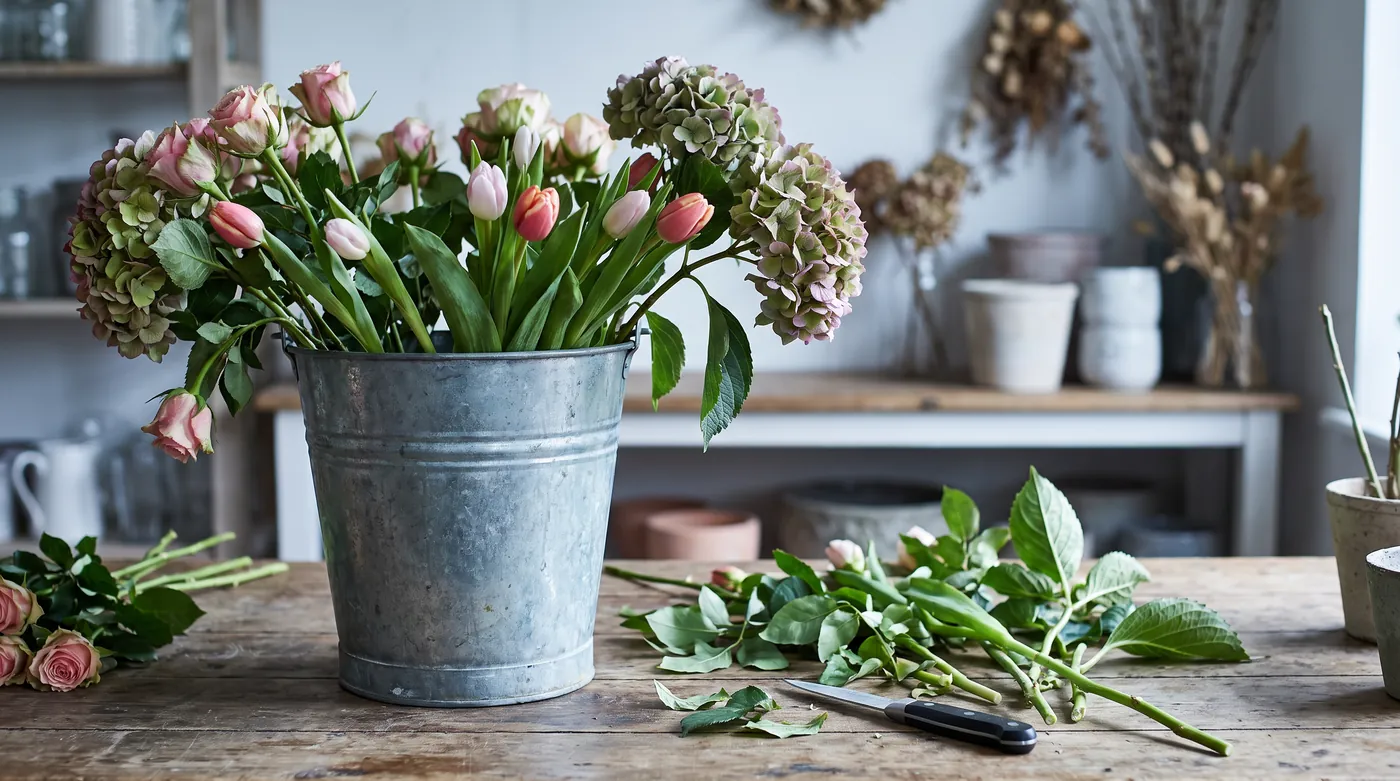
Hydrangeas
Enormous heads that fill a large arrangement quickly, and available as a plant that can be put in the garden afterwards, which some families find they want to do.
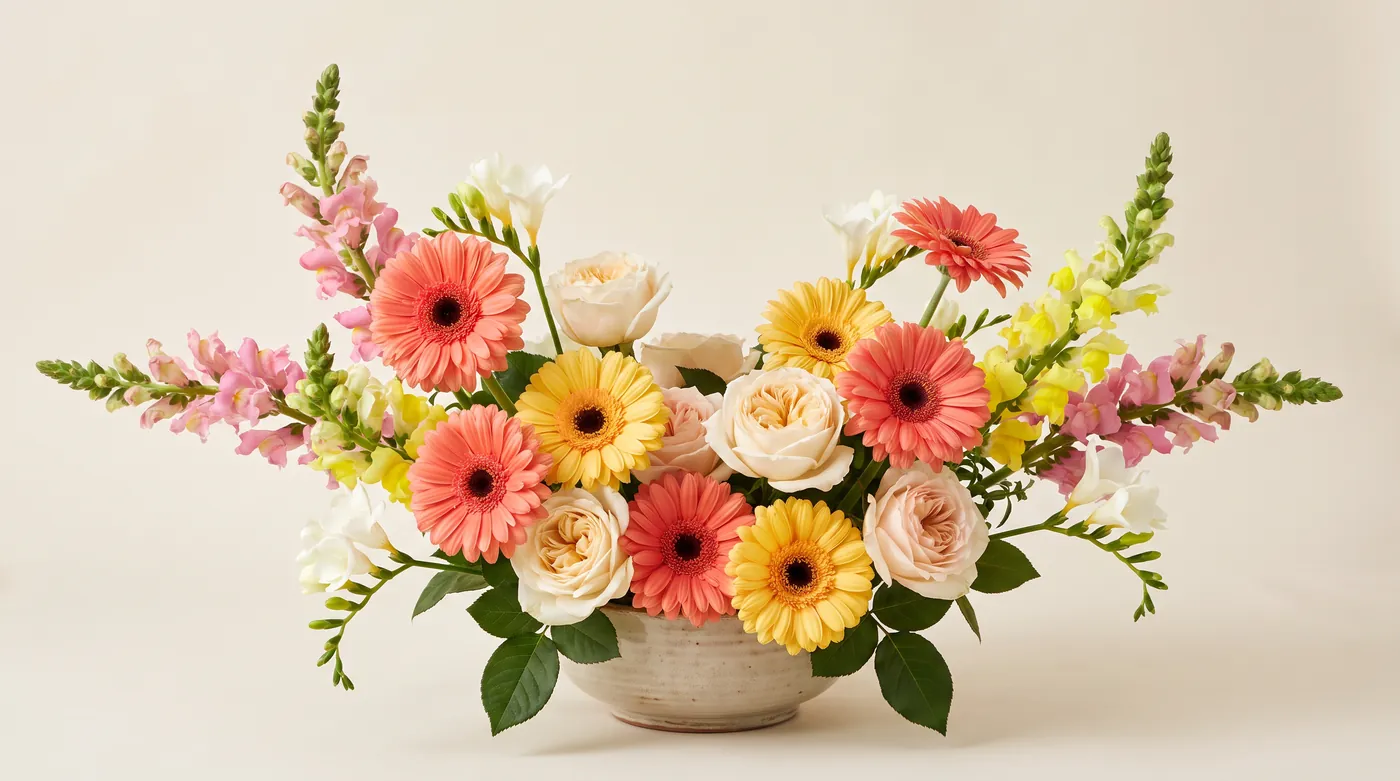
Gerbera Daisies
Uncomplicated and cheerful, which makes them right for a child's funeral and for a celebration of life, and wrong for a formal service unless the family has asked.
Eucalyptus
The gray-green structure behind most modern funeral work. It lasts, it smells clean, and it stops a white arrangement looking stark.
The mistakes that actually cause offense
Ordering a casket spray when you are not immediate family. There is one, the family chose it, and a second one arriving is an awkward conversation for a funeral director who has enough to do.
Overriding an in lieu of flowers request. Covered above, and worth repeating because people do it out of affection.
Lilies to a house with a cat. True lilies and daylilies cause acute kidney failure in cats from a very small exposure, including pollen groomed off fur. A sympathy arrangement is going to sit in a house where nobody is paying attention to the cat. If you know there is one, say so and the florist will leave them out. A peace lily, despite the name, is not a true lily and causes mouth irritation rather than kidney damage.
Heavy scent in a small room. Some funeral homes ask for it to be kept down, because several large scented arrangements in a closed viewing room become overwhelming rather than comforting.
Signing with a first name only. Not offensive, but it wastes the part of the gesture that the family actually keeps.
Common questions
What should I send if the family asked for donations instead of flowers?
Make the donation, and send a card. That request was made deliberately and honouring it is the courtesy. If you want to do something more, an arrangement to the family's home a couple of weeks later is welcome in a way that overriding the request at the service is not.
Is it too late to send flowers after the funeral?
No, and later is often better. In the week of a death the house is full of people and everything arrives at once. Two or three weeks on, everyone has gone back to work and the family is on their own with it. Something arriving then is remembered.
What do you send for a Jewish funeral?
Traditionally not flowers. Food sent to the shiva house is the custom, so that the mourners are not responsible for feeding the people who come, along with a donation in the person's memory. Some Reform families are glad to receive flowers, but food or a donation is never the wrong answer. The funeral home will tell you if you ask.
What do I write on the card?
Little, plainly, and sign it with your full name and how you knew the person. That you are thinking of them and that you are sorry is enough. One true sentence about the person is worth more than anything careful. Avoid anything beginning with at least, and if you offer help, name the thing and the day rather than asking them to call you.
Do I send flowers to the funeral home or the house?
Anything meant for the service goes to the funeral home, and it is worth calling them for the delivery deadline and the exact name the deceased is listed under. Anything meant for the family goes to the house. If there is no service, which is increasingly common, the house is the only option.
How much should I spend?
The size follows the role rather than the relationship. A standing spray or a wreath has to read from across a room, so it costs what that takes. An arrangement for the house does not, and a modest one that arrives with a good card does more than a large one that arrives with a name. Tell the florist your budget and what it is for, and let them build to it. That is the conversation they have all day.
Find a florist near you
Every one of these is easier to get right in person, because a local shop is buying from the same market this page describes and can tell you what actually arrived this week. Our directory lists flower shops in every state, by county and town. Find a florist near you.