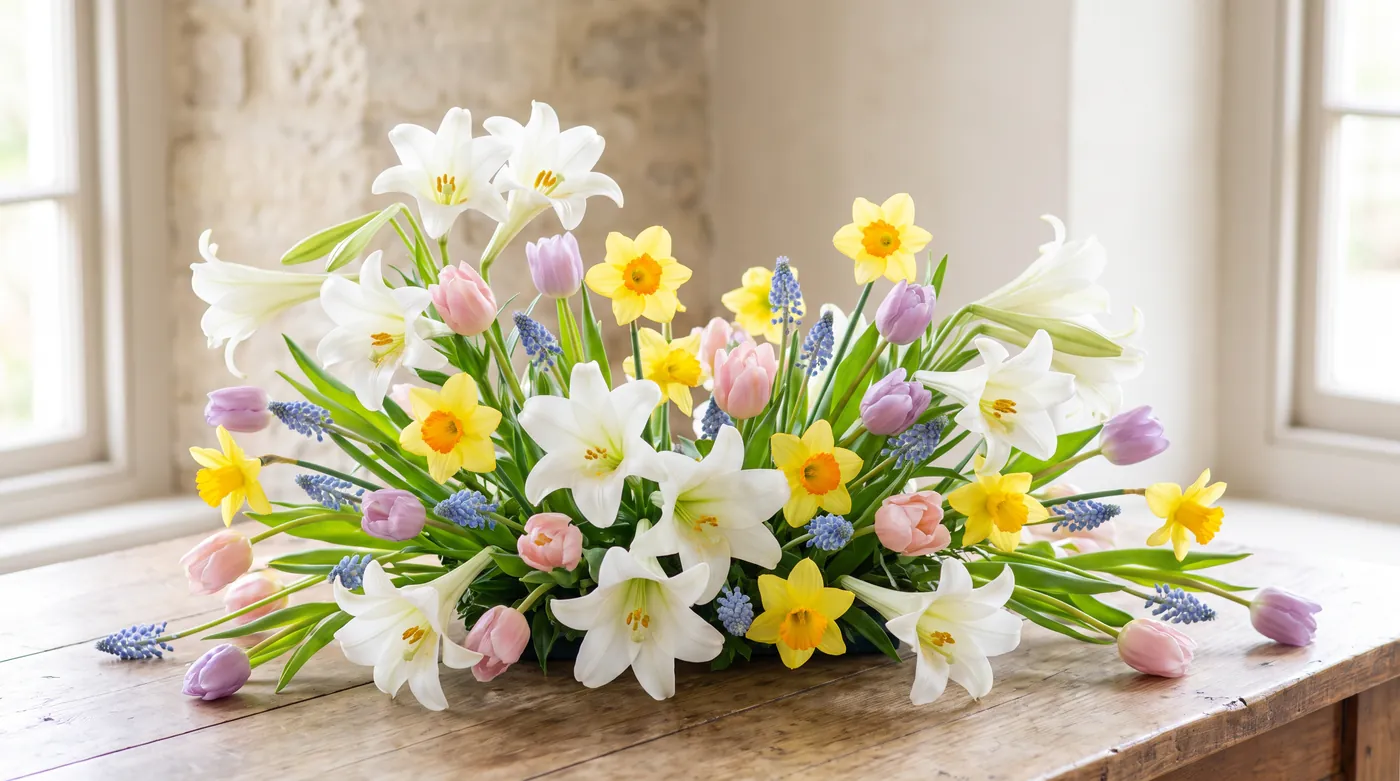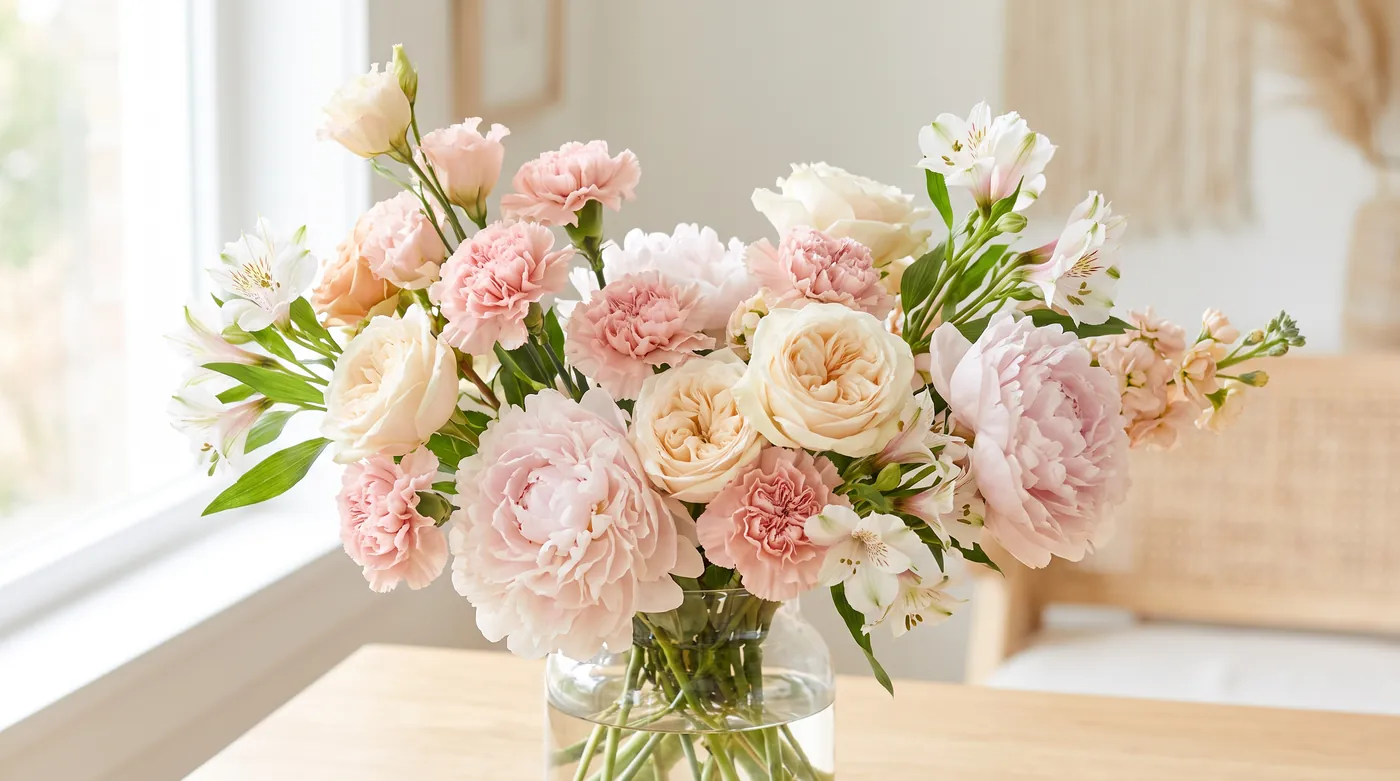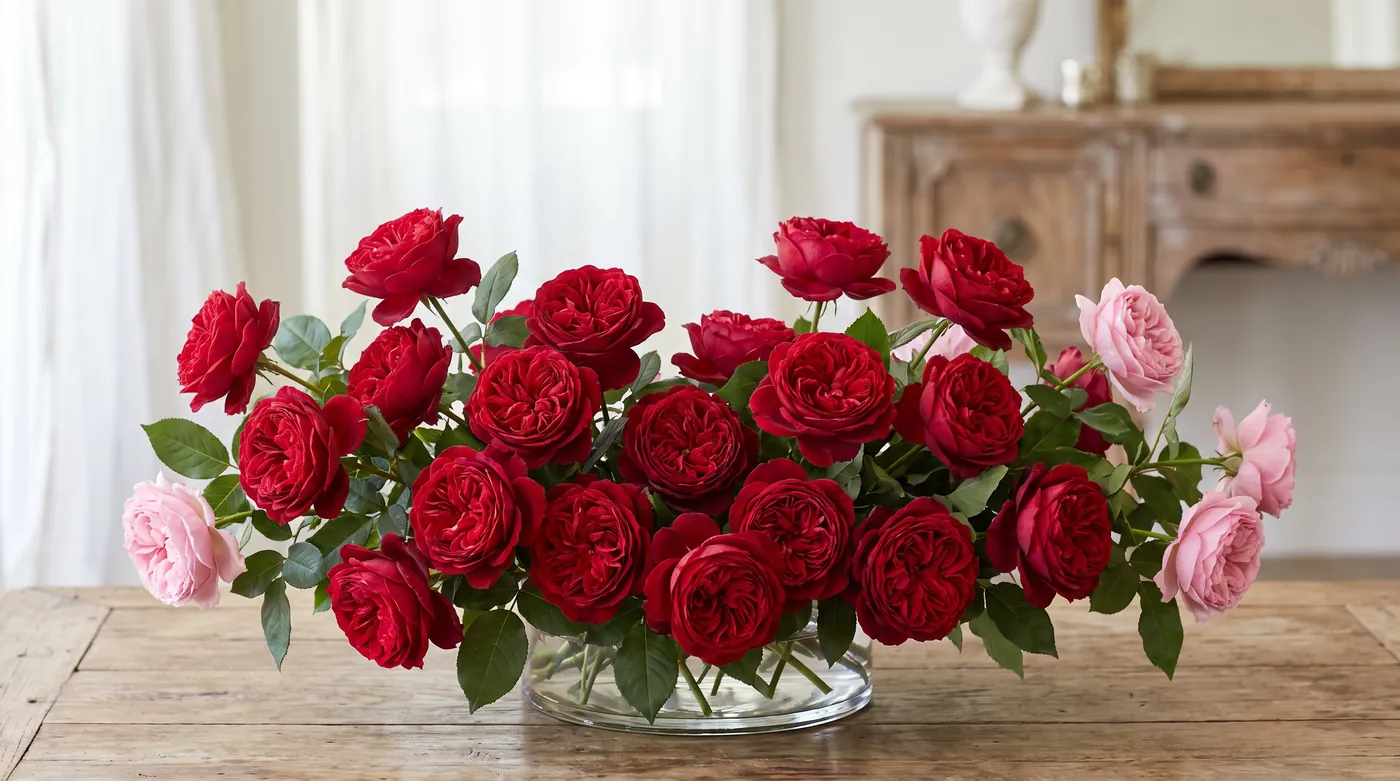
Valentine's Day is the biggest single day in the flower trade and the least flexible. Roughly a quarter of a billion roses are grown for it, the crop is planned the previous autumn, and every part of the chain from the farm to the delivery van is priced around one date. Knowing how that works is most of the difference between a good order and an expensive disappointment.
The useful thing to understand first is that the premium is much narrower than people assume. It lands on red roses. That same week, tulips, alstroemeria, ranunculus and roses in almost any other color sit close to their normal price.
How the rose came to mean this
The rose was Venus's flower in classical myth, and the association with love has never really been broken since. What turned a general symbol into a specific gift was much later and much more deliberate.
Two things happened in the eighteenth and nineteenth centuries. Lady Mary Wortley Montagu, writing home from Constantinople in 1717, described a Turkish custom of sending objects that carried meanings, and the idea caught. A century later Charlotte de la Tour published Le Langage des Fleurs in Paris, and the Victorians turned that into an industry of dictionaries assigning a sentiment to every bloom. In almost all of them, the red rose meant love, and it meant it unambiguously.
The date came from somewhere else entirely. Chaucer's Parliament of Fowls, written around 1382, is the earliest known text to tie the middle of February to courtship, on the idea that this is when birds choose their mates. The saint himself contributes a name and very little else. By the time Esther Howland was mass producing valentines in Massachusetts in the 1840s, the pairing of the day and the flower was already settled.
What made it possible to act on in February was the cold chain. Roses in midwinter are an aviation story: most cut flowers sold in America are grown at altitude near the equator in Colombia and Ecuador, cooled, flown into Miami and trucked out from there. Without that, a red rose on the fourteenth of February would be a hothouse luxury rather than a supermarket purchase.
Why red roses cost what they do that week
Growers decide the Valentine's crop months in advance. Rose bushes are pruned on a schedule calculated backwards from the fourteenth so that the largest possible number of stems are cut in the right few days, which means capacity is committed long before anyone knows what demand will be. Freight is chartered, cold storage is booked, and shops take on extra hands. All of that sits on top of a flower that has to arrive on one specific day or it is worth very little.
The result is a genuine cost, not a markup for its own sake. It is also narrow. Ask a florist what is good value that week and the honest answer is nearly everything except a dozen red roses.
Two practical consequences. Ordering seven to ten days ahead gets you the choice and the delivery window you want, and the twelfth and thirteenth of February are the worst possible time to walk into a shop. And if the date is at all flexible, flowers on the twelfth or the sixteenth are a different proposition entirely.
Color changes the message more than the flower does
Within roses, the color is doing most of the talking. Red is romantic love and nothing else. Pink reads as admiration, gratitude and affection, which makes it the right choice when red would be too much. White is purity and new beginnings, and is also the color used for sympathy, so it can land oddly if the relationship is new.
Yellow is friendship. There is a persistent story that it means jealousy or infidelity, and it is worth naming that as a Victorian invention rather than a rule anybody now follows. Orange carries enthusiasm and desire, and lavender is the traditional color for enchantment and love at first sight.
The number is a convention rather than a code. A dozen is the standard because it is how roses are bunched and sold. A single stem is a clean, deliberate gesture, and it costs almost nothing to send well.
What to send, and why each one works
Every one of these is available and in good condition in mid February, which is not true of everything people ask for.
Roses
The default for a reason. They ship well, they hold in the cold chain, and no other flower carries a message this unambiguous. If it has to be red roses, order early and buy fewer good ones rather than more poor ones.
Tulips
In season, grown much closer to home, and priced normally that week. They keep growing in the vase, which people either love or find untidy. A softer message than a rose, and often the better gift early in a relationship.
Ranunculus
Peak season is late winter, so Valentine's Day falls right in it. Layer after layer of tissue-thin petals gives you the fullness of a garden rose at a fraction of the cost and none of the cliche.
Lisianthus
Reads as a rose from across a room, lasts considerably longer, and comes in the same white through pink through purple range. The quiet choice.
Anemones
In season, dramatic, and completely unlike anything else in the shop: a saturated petal around an almost black center. For someone who would find roses predictable.
Alstroemeria
The value option and genuinely good, not a compromise. Two to three weeks in a vase means the gift is still there long after a rose would have wilted.
Orchids
Luxury without the Valentine's premium, because nobody has bid the price up for that week. A phalaenopsis plant flowers for months.
Carnations
Unfairly dismissed. Modern varieties are nothing like the dyed stems that ruined the reputation, they last for weeks, and red carnations have carried admiration far longer than most of the flowers people consider more sophisticated.
What you cannot have in February, whatever the picture shows
Peonies are the one people ask for most and are the hardest to supply. A small, very expensive southern hemisphere window exists around the turn of the year, and outside it the answer is no. Garden roses and sweet peas are the same story: the scent and the softness are exactly what a long cold chain destroys.
If the look matters more than the name, a full-headed rose or a large ranunculus gets you close to a peony for a fraction of the cost, and both are at their best in February. Ask to be shown the alternatives before you commit.
Common questions
Why are roses so much more expensive at Valentine's Day?
Because the crop is planned around one date. Growers prune months ahead so the maximum number of stems are ready in the right few days, freight is chartered, and shops staff up. That cost is real, and it lands almost entirely on red roses. Roses in other colors, and almost every other flower, are near their normal price that week.
How far ahead should I order?
Seven to ten days for Valentine's Day. You are mostly reserving the florist's time and a delivery slot rather than the flowers themselves. Ordering the day before does not usually cost more, it just narrows what you can have and when it can arrive.
Does the number of roses mean something?
A dozen is a convention rather than a code, and it exists because that is how roses are bunched and sold. Florists will tell you a single stem means devotion and fifty means unconditional love, and there is no harm in that, but nobody receiving them is decoding a message. One beautifully wrapped stem is a better gift than a tired dozen.
What should I send if roses feel too obvious?
Ranunculus and anemones are both in season and look nothing like a florist's default. Tulips are the softer, less loaded choice. Lisianthus gives you the rose shape without the message being quite so loud. All four are priced normally that week.
Can I buy the flowers a few days early?
Yes, and for everything except red roses it is the smart move. Buy on a delivery day, keep them cool and out of direct sun, change the water, and they will be at their best on the fourteenth. Ask the shop which day their deliveries arrive.
Find a florist near you
Every one of these is easier to get right in person, because a local shop is buying from the same market this page describes and can tell you what actually arrived this week. Our directory lists flower shops in every state, by county and town. Find a florist near you.