A wilted flower has usually not run out of life. It has run out of water, and the reason is almost always something blocking the stem rather than anything wrong with the bloom. Fix the blockage and a great many flowers stand back up within an hour, which surprises people the first time they see it.
What follows is what florists actually do, in the order they do it. None of it needs anything you do not already own.
Flowers die of thirst, not of age
A cut stem is a straw. Water moves up it under tension, pulled from above as the flower loses moisture. Three things interrupt that, and between them they account for nearly every disappointing vase.
Air. The moment a stem is cut in open air a bubble can be drawn into it, and an air lock stops the column of water dead. This is why a bunch that looked fine in the shop flops an hour after you get it home.
Bacteria. Vase water grows them enthusiastically, and they block the cut end from the outside. Any leaf left below the waterline rots and feeds them, which is why stripping leaves matters more than it sounds.
The plant's own sap. Daffodils leak a sap that blocks other flowers. Poppies and euphorbias bleed a latex that seals their own stem. Both have specific fixes below.
Age is real, but it is the last of the four, and it is the only one you cannot do anything about.
The recut, which fixes most of it
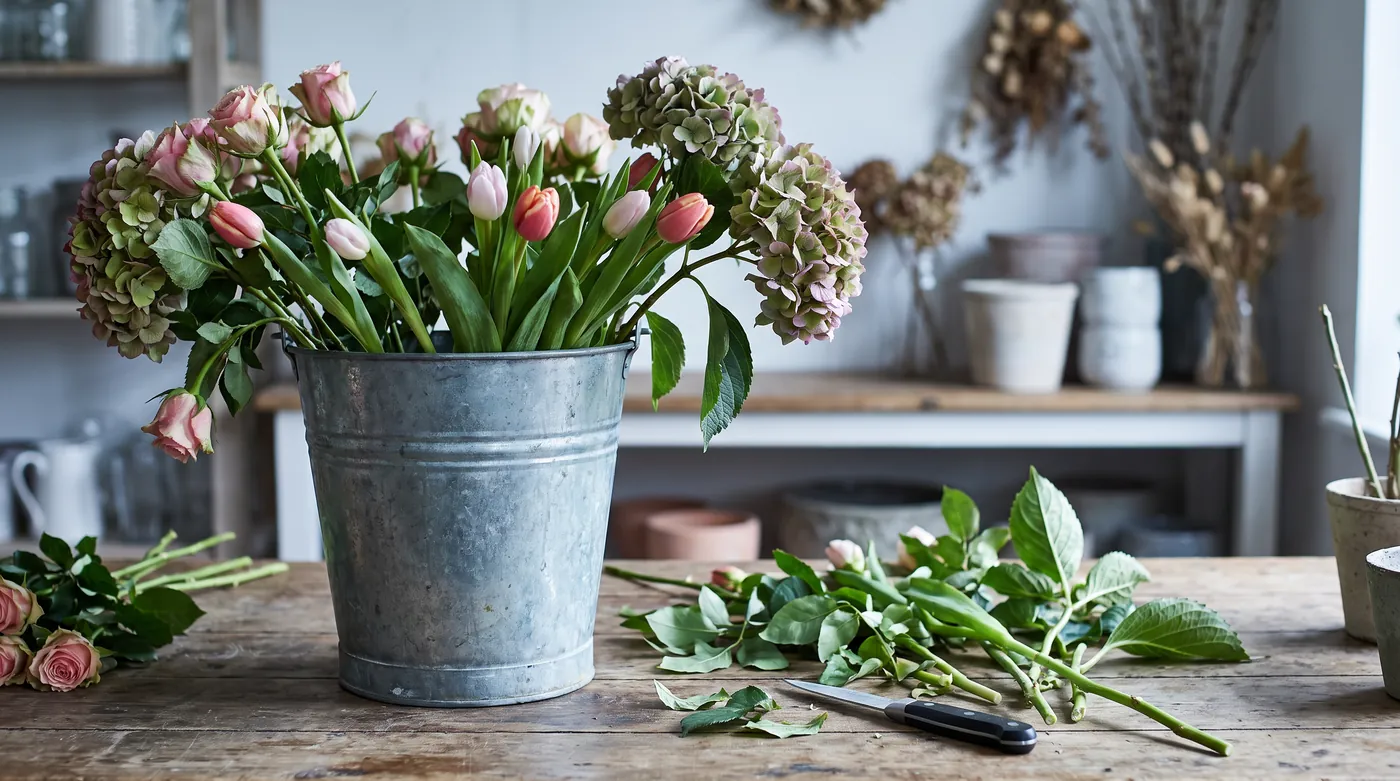
Cut two or three centimetres off the bottom of every stem, at an angle, and do it with the ends under water if you can manage it. A bowl or a sinkful is fine. Cutting under water means no air can be drawn in as the stem opens, which is the whole point of the exercise.
Use something sharp. A knife or good floristry scissors slice; household scissors and secateurs crush, and a crushed stem cannot draw water through the collapsed tissue. This is the most common mistake and it is invisible.
Strip every leaf that would sit below the waterline. Then stand everything in deep, cool, clean water for an hour before arranging. That hour is not optional if something is already drooping.
The angle is not superstition: a flat cut can sit against the bottom of the vase and seal itself off.
What to do about each specific failure
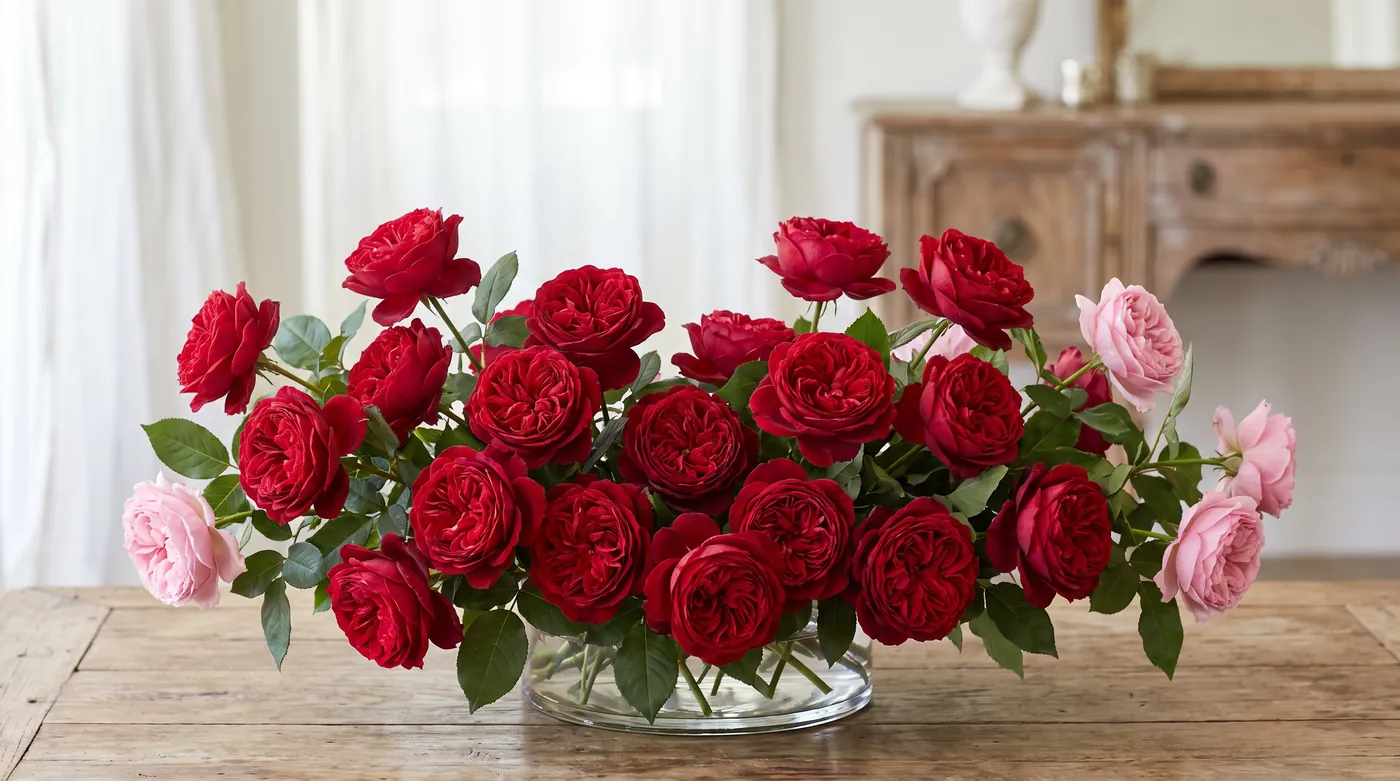
Roses with bent necks
An air lock, almost always. Recut under water, then wrap the whole bunch firmly in paper so the heads are held upright, and stand it in deep cool water for an hour. The paper is what makes it work: it supports the neck while the stem refills.
Tulips bending and sprawling
Partly normal, since tulips keep growing in the vase and lean toward the light. For real collapse, wrap them in paper and stand them in deep water for an hour or two. Turning the vase daily keeps them straighter.
Hydrangeas gone limp
They take up water through the head as well as the stem, which is why they collapse so suddenly and why they recover so dramatically. Submerge the entire head in cool water for half an hour, recut, and put it back. It looks like a party trick.
Woody stems: lilac, blossom, viburnum
A narrow woody stem cannot draw enough water for the leaves above it. Split the bottom couple of centimetres with a knife and stand it in deep water. Removing some foliage helps more than anything else.
Milky sap: poppies, euphorbia
The latex seals the stem within minutes. Sear the cut end in a flame for a few seconds, or dip it in boiling water briefly, then straight into cool water.
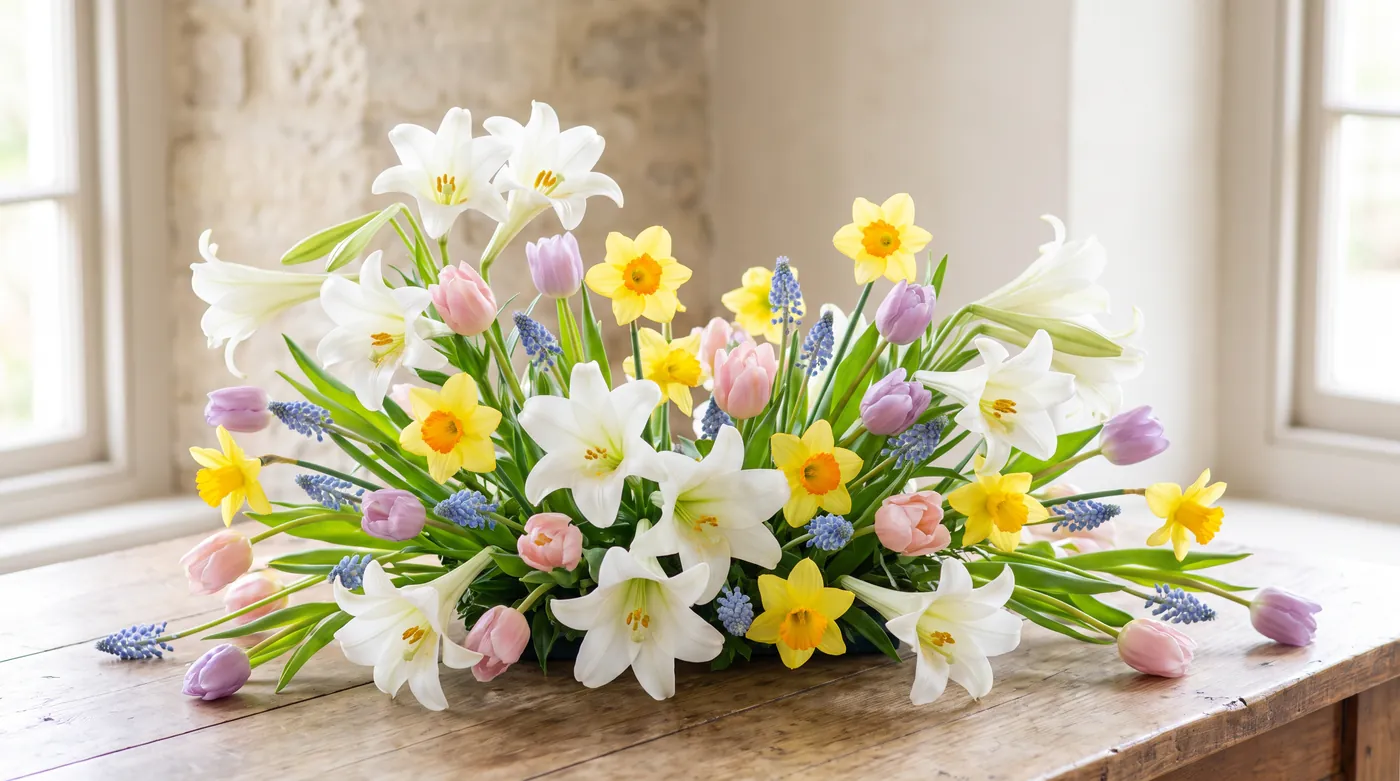
Daffodils with anything else
Their sap blocks other flowers and kills tulips outright. Stand daffodils alone in water for six hours first, then move them into the arrangement WITHOUT recutting. A fresh cut starts the sap again.
Cloudy or smelly water
Bacteria, and they are blocking the stems. Change the water, wash the vase with detergent rather than rinsing it, recut, and strip anything sitting below the surface.
Buds refusing to open
Either they were cut too tight, or it is ethylene. Move the vase away from the fruit bowl and pull out any flower that is already dying, since both give the gas off.
Everything failing quickly
The room. Warmth, direct sun, a radiator or a draft will halve a vase life. Somewhere cool overnight buys days, and this is what florists mean by a cool room.
The vase is dirtier than you think
Rinsing is not washing. A vase that has held flowers before carries a film on the inside that no amount of running water removes, and that film is a bacterial culture waiting for the next bunch. Wash it with detergent and a brush, or run it through a dishwasher.
Then change the water every two days rather than topping it up. Topping up dilutes nothing and leaves the population in place. Recut the stems each time you change it and you will get days more out of almost any bunch.
Flower food, and the tricks that get passed around
The sachet works, and it is not just sugar. It contains three things: an acidifier that lowers the pH so water moves up the stem more easily, a biocide that slows the bacteria, and a small amount of sugar to feed the flower. Use the whole sachet in the amount of water it specifies, because half a sachet in a full vase does very little.
Of the household remedies, the defensible one is a drop of household bleach, which does the biocide job, and it has to be a drop rather than a splash. Sugar alone without a biocide feeds the bacteria faster than the flowers and makes things worse.
Aspirin has a plausible story about acidity and almost no evidence behind it. Lemonade is sugar without a biocide. Vodka is sometimes offered as an ethylene inhibitor and is not worth the vodka. A copper coin is a myth twice over, since modern coins are barely copper.
If you have no food, clean water changed often beats a vase of home remedies.
When it is genuinely over
Some things do not come back. A stem that stays limp after an hour standing in deep water after a proper recut has usually gone. Petals that have turned translucent or papery at the edges are past it. A head that has dropped its outer petals at a touch is finished.
It is also worth being honest that some bunches were old when you bought them. The tells at the shop are the same either way: look at the water, which should be clear; look at the outer petals of the roses rather than the center; check the cut ends for slime; and for anything on a spike, buy it with only the lowest flowers open.
Ask which day their deliveries arrive and buy that day or the day after. It is the single easiest thing anybody can do to get longer out of flowers, and it costs nothing.
The ones most often brought back
Each of these has a specific fix rather than a general one, and each flower's own page carries the detail.
Roses
The classic save. A bent neck is an air lock, not death. Recut under water, wrap the bunch in paper to hold the heads up, and stand it deep for an hour.
Hydrangeas
The most dramatic recovery of any flower, because they drink through the head. Submerge the whole head for half an hour and it comes back while you watch.
Tulips
Bending is partly just what they do, since they keep growing after cutting. For a genuine flop, paper and deep water.
Daffodils
Not a rescue so much as a rule: condition them alone for six hours, then arrange without recutting, or they will take the rest of the vase with them.
Poppies
Sear the cut end in a flame for a few seconds to stop the milky sap sealing the stem, then straight into cool water.
Lilacs
Woody, thirsty and short lived. Split the stem end and strip most of the foliage, which is what is drinking the water the flowers need.
Gerbera Daisies
Heavy heads on hollow stems that bend at the neck. They last well in clean shallow water, and they hate a dirty vase more than most.
Sunflowers
Heavy heads and thirsty stems. They drink a startling amount, so check the water daily rather than every other day.
The things that quietly shorten a vase
Blunt scissors. They crush the stem instead of cutting it, and a crushed stem cannot draw water. Nothing else on this page matters if the cut is bad.
Leaves under the water. They rot within a day and turn the vase into a culture. Strip them before the flowers go in, not after you notice the smell.
The fruit bowl. Ripening fruit gives off ethylene, which makes flowers drop petals and refuse to open buds. So does a dying flower left in the same vase.
Sun and warmth. A vase on a sunny windowsill or above a radiator will not last half as long as the same flowers in a cool corner. Moving them somewhere cool overnight genuinely works.
Topping up instead of changing. It leaves the bacteria exactly where they were and the water no cleaner.
Common questions
How do I revive drooping roses?
Recut two or three centimetres off each stem at an angle, with the ends under water if you can, then wrap the whole bunch firmly in paper so the heads are held upright and stand it in deep cool water for an hour. The paper is the part people leave out, and it is what supports the neck while the stem refills.
Why do my tulips keep flopping over?
Partly because that is what tulips do. They carry on growing after they are cut, sometimes several centimetres, and they lean toward the light. For a genuine collapse, wrap them in paper and stand them in deep water for an hour or two, and turn the vase each day.
Do hydrangeas really come back if you soak the flower?
Yes, and it is the most reliable trick in this whole subject. Hydrangeas take up water through the head as well as the stem, so submerging the entire head in cool water for half an hour rehydrates it directly. Recut the stem before putting it back.
Does flower food actually do anything?
It does, and it is not just sugar. There is an acidifier so water moves up the stem more easily, a biocide to slow the bacteria, and a little sugar. Use the whole sachet in the amount of water it says. Sugar on its own, with no biocide, feeds the bacteria and makes things worse.
What about aspirin, a copper coin or a splash of lemonade?
A single drop of household bleach is defensible, because it does the biocide job. The rest are not: aspirin has a plausible story and almost no evidence, lemonade is sugar without a biocide, and modern coins are barely copper. Clean water changed every two days beats all of them.
How can I tell the flowers were old when I bought them?
Look at the water in the shop's buckets, which should be clear rather than cloudy. Check the outer petals of roses rather than the center. Feel for slime on the cut ends. And buy anything on a spike with only the lowest flowers open. Asking which day deliveries arrive, and buying that day, does more than any of it.
Find a florist near you
Every one of these is easier to get right in person, because a local shop is buying from the same market this page describes and can tell you what actually arrived this week. Our directory lists flower shops in every state, by county and town. Find a florist near you.