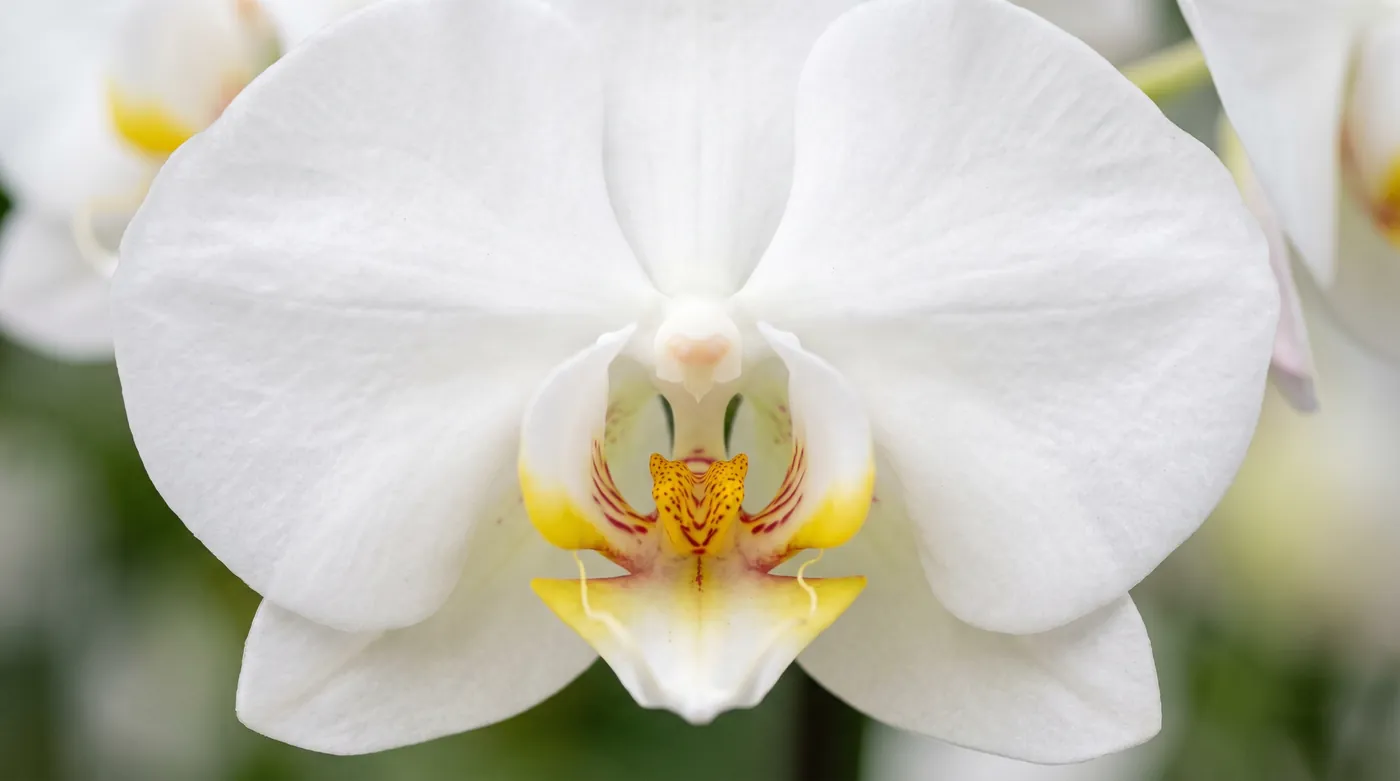
Why an orchid collapses overnight
Orchid flowers last a long time, several weeks on a cut stem and months on a plant, because an unpollinated orchid has no reason to stop waiting. The moment it is pollinated that reverses. The flower has done its job, the plant withdraws support, and it wilts within a day or two.
The practical consequence catches people out. Knocking the pollinia off the column while handling a stem tells the flower the same story, and that bloom will collapse for no visible reason. Handle cut orchids by the stem and keep fingers out of the throat of the flower.
The same mechanism makes the whole family unusually sensitive to ethylene, because ethylene is the signal the flower is acting on. An orchid belongs nowhere near ripening fruit.
The other thing to understand about the family is where most of it lives. The majority of tropical orchids are epiphytes, growing on the bark of trees without taking anything from them, anchored by thick roots wrapped in a spongy white layer that soaks up rain and turns translucent green while it is wet. Those roots evolved to be drenched and then dried by moving air within hours. That is the entire explanation for why an orchid is sold in coarse bark instead of soil, and why leaving one standing in water kills it.