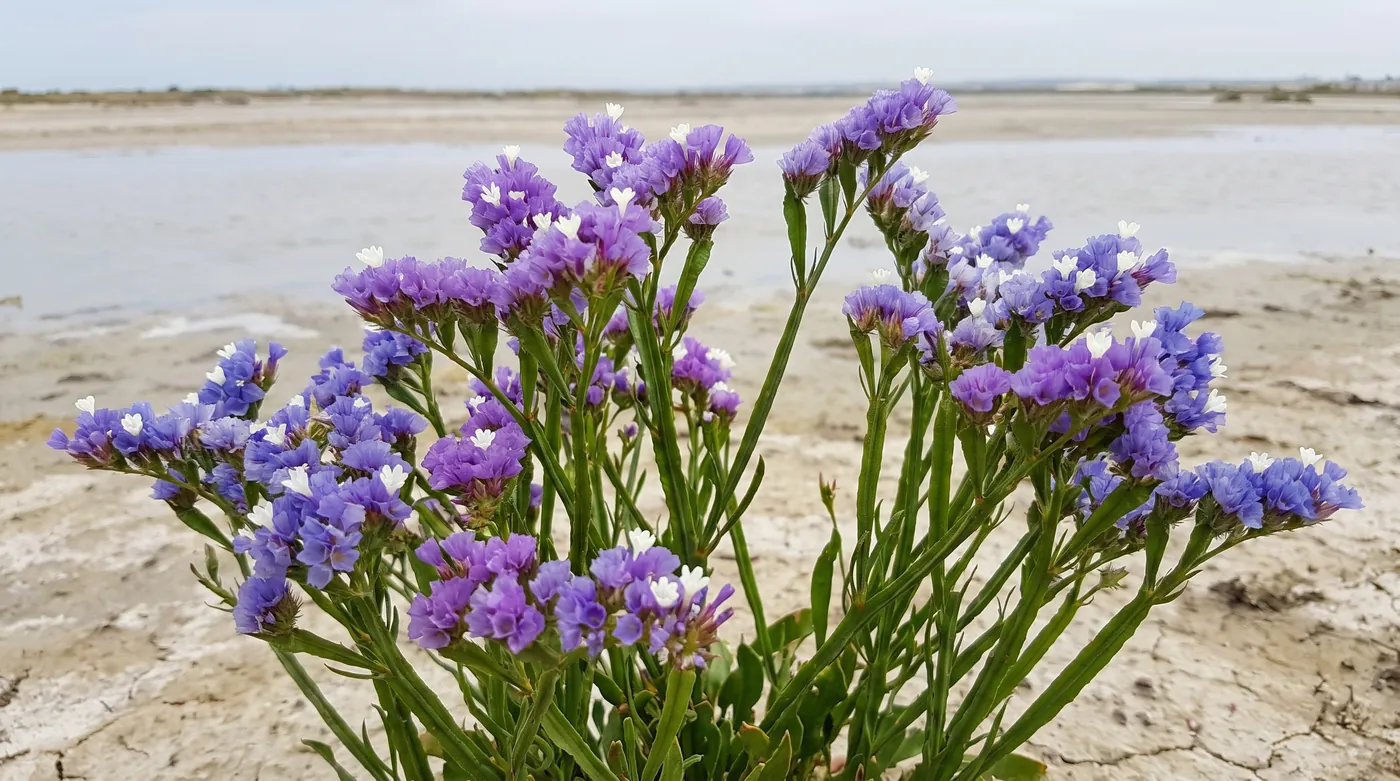
Papery statice growing on a coastal salt marsh

1 flower in this family

Everything in this guide that belongs to Plumbaginaceae

Clusters of purple and white papery statice

Statice

Limonium sinuatum
14-21 days fresh, years dried

Statice

Why the whole family dries so well

Salt ground is physiologically a desert. Water may be all around, in the marsh or the sea beside it, but it is not water the plant can easily take up, so everything here is built as though drought were permanent, because functionally it is.

That produces tissue with a low water content, heavily stiffened cell walls and a great deal of structural material for the amount of living matter involved. A plant like that has already done most of the work of being a dried flower while it is still growing in the ground.

This is the real reason the family dominates the dried trade rather than merely appearing in it. Ordinary flowers are mostly water held in shape by pressure, so drying one means collapse and shrinkage and loss of color. These plants have very little to lose in the first place, so they come out of the process nearly unchanged, and they do it whether anybody intended to dry them or not.
A genus that mostly stopped bothering with sex

Sea lavenders are a taxonomic headache and the reason is that a great many of them reproduce by making seed without fertilization. The seed is viable, the offspring are clones of the parent, and pollination has dropped out of the process.

The result is swarms of tiny, stable, self perpetuating populations that differ slightly from one another and never interbreed to average themselves out. Britain alone has a set of these confined to particular stretches of cliff, each occupying a headland or two and found nowhere else, and botanists have argued for a century over how many of them are really species.

The family name is unrelated and comes from lead. One genus was called plumbago either because Pliny reported it as a treatment for lead poisoning or because somebody thought its flowers were the color of the metal, and leadwort is the English version. Neither explanation has ever been settled.