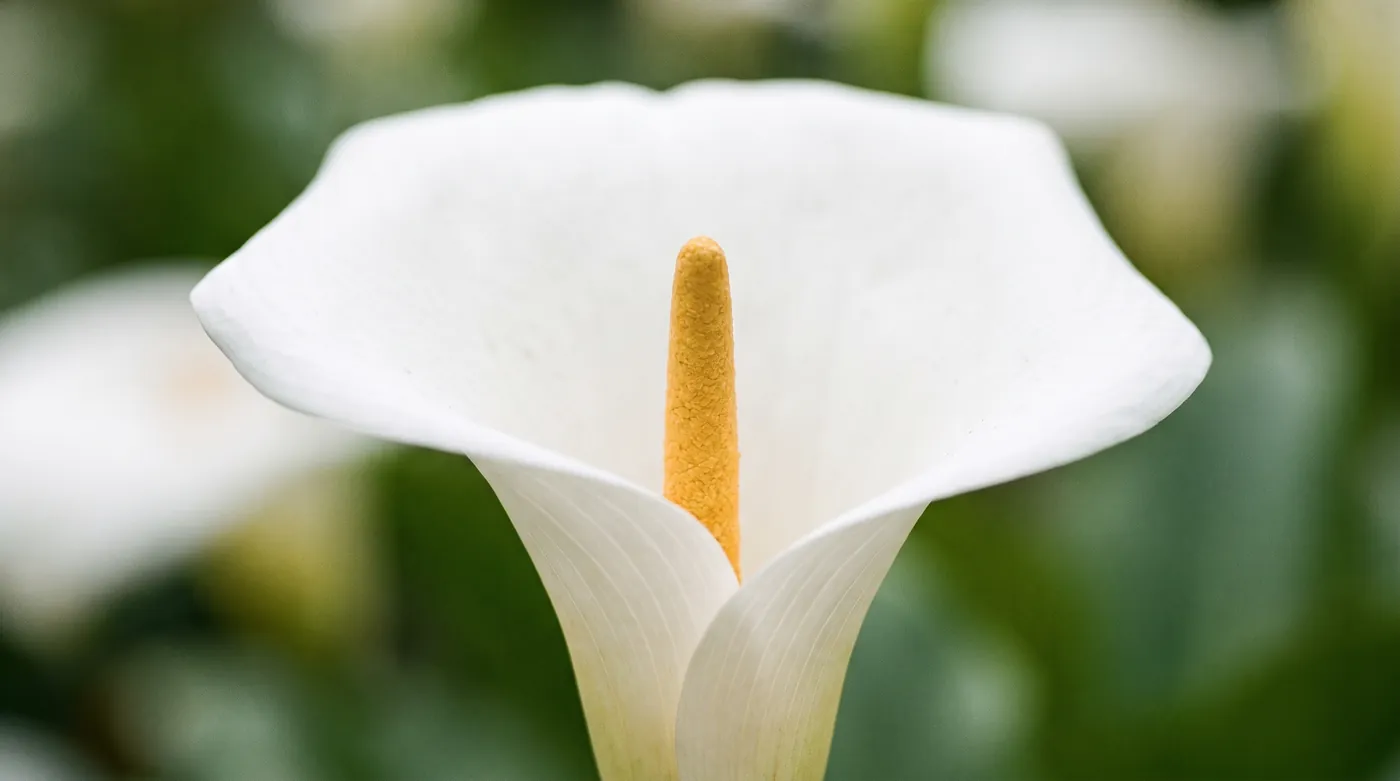
A calla lily showing its spathe wrapped around the spadix

2 flowers in this family

Everything in this guide that belongs to Araceae

Glossy red anthurium spathes with pale spadix

Anthuriums

Anthurium andraeanum
21-42 days

Anthuriums
Calla Lilies

Calla Lilies

Zantedeschia
7-14 days

Calla Lilies

Neither one is a lily

Calla lily is a misnomer twice over. It is not a lily, it belongs to no part of the lily family, and it is not even the genus Calla. The flowers sold under that name are Zantedeschia, from southern Africa, and the true Calla is a small bog plant from the northern hemisphere.

The name has been in trade use for so long that arguing with it is pointless, but the distinction matters for one practical reason. True lilies are lethally toxic to cats, and customers who know that will sometimes refuse anything with lily in the name. A calla is not a lily and does not carry that specific danger, which is worth being able to say clearly.

That is not the same as saying it is safe. This family has a toxicity of its own, and it applies to every member.

Relatives you already know

Peace lily, monstera, philodendron, pothos, dieffenbachia and ZZ plant are all in this family. If a house has plants in it, some of them are almost certainly Araceae, which is a useful thing to know when a customer asks what will survive a dim hallway.

Taro is here too, and it feeds a very large number of people across the Pacific, Africa and Asia. It has to be cooked thoroughly, and the reason is precisely those calcium oxalate crystals: heat and long preparation break them down.

The family also contains the most theatrical flowers on earth. The titan arum produces the largest unbranched flower structure of any plant and smells of rotting meat to attract carrion flies, and several members generate real heat, warming the spadix well above the surrounding air to carry that scent further. Nothing in a florist's cooler does that, but it is the same spathe and spadix doing it.