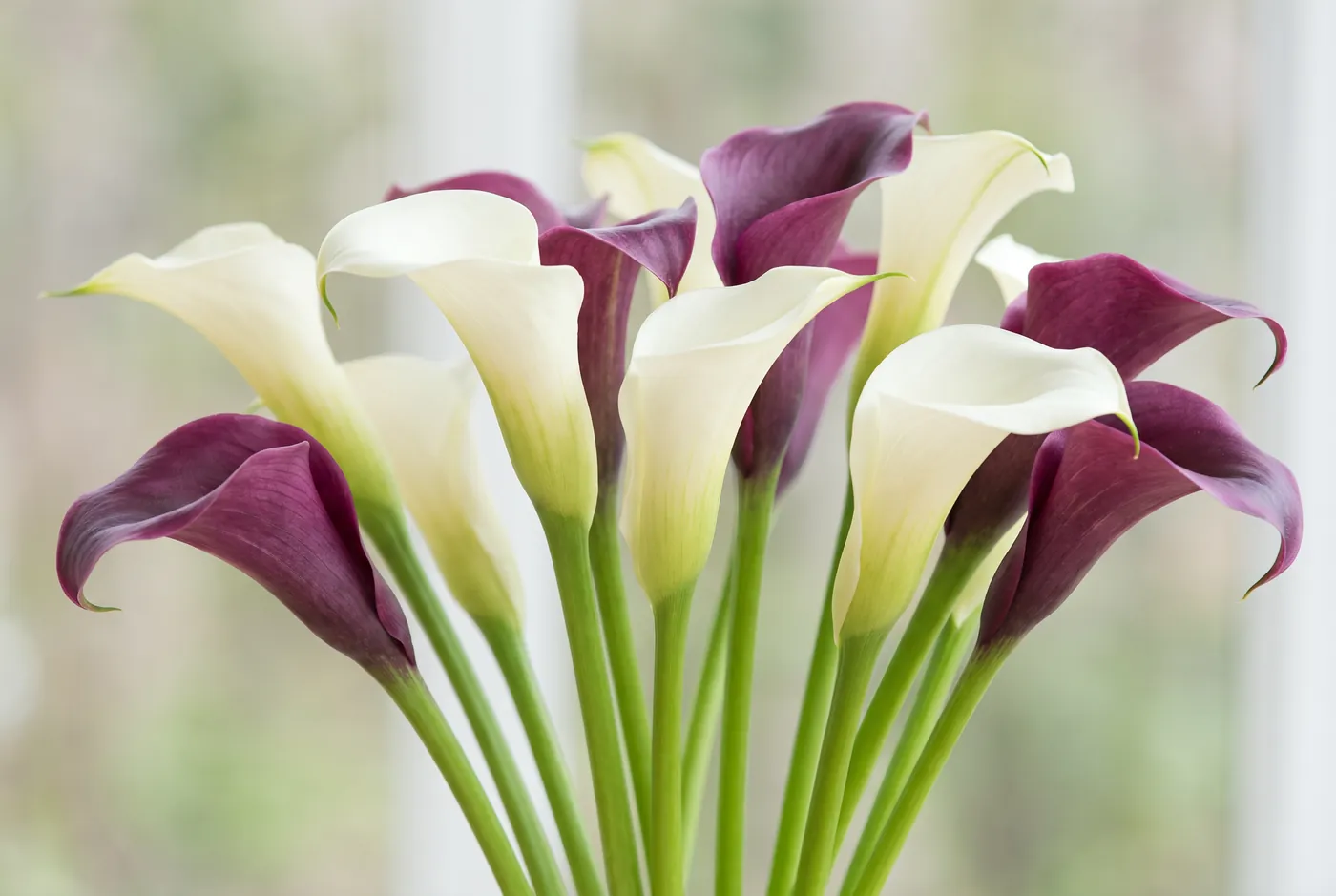
About Calla Lilies
Calla lilies are sophisticated flowers known for their elegant, trumpet-shaped blooms and smooth, sculptural form. Despite their name, they are not true lilies but belong to their own unique genus, prized for their architectural beauty and refined appearance.
With their sleek lines and graceful curves, calla lilies have become synonymous with elegance and modern sophistication. The flower's single, rolled petal (actually a spathe) surrounding a golden spadix creates a minimalist beauty that has inspired artists, designers, and brides for generations.
Primary Meanings
- Magnificent Beauty: Represents extraordinary attractiveness and breathtaking elegance
- Purity: Symbolizes innocence, virtue, and spiritual devotion
- Rebirth: Represents renewal, resurrection, and new beginnings
- Faithfulness: Conveys loyalty, commitment, and devoted love
Calla Lilies Colors and Their Meanings
White Calla Lilies
Purity, innocence, and spiritual enlightenment
Pink Calla Lilies
Appreciation, admiration, and gratitude
Purple Calla Lilies
Royalty, passion, and charm
Yellow Calla Lilies
Gratitude, joy, and growth
Red Calla Lilies
Courage, determination, and passion
Black Calla Lilies
Elegance, mystery, and sophisticated beauty
Popular Calla Lilies Types
White Calla
Zantedeschia aethiopica
Mini Calla Lilies
Smaller varieties
Colored Calla Lilies
Hybrid cultivars
Black Calla
Zantedeschia 'Schwarzwalder'
Care Instructions
Water
Keep stems in deep, clean water changed every 2-3 days
Trim Stems
Cut stems at a 45-degree angle using sharp scissors
Temperature
Display in cool location at 65-72°F
Flower Food
Add flower food and remove any wilted outer petals
Light
Keep away from direct sunlight and ripening fruit
Best Occasions for Calla Lilies
- Elegant weddings and ceremonies: Elegant weddings and ceremonies
- Sympathy and funeral arrangements: Sympathy and funeral arrangements
- Easter celebrations: Easter celebrations
- Anniversary gifts: Anniversary gifts
- Sophisticated dinner parties: Sophisticated dinner parties
Interesting Calla Lilies Facts
- Georgia O'Keeffe famously painted calla lilies in her modernist artwork
- The flower's name comes from the Greek word 'kallos' meaning beauty
- Calla lilies are native to South Africa, not the Mediterranean as once believed
- All parts of the plant are toxic if ingested by humans or pets
- Ancient Romans associated calla lilies with celebrations and festivities
- The flower is considered a symbol of resurrection in Christian tradition
How to Buy Good Calla Lilies
The spathe, the smooth funnel that looks like the petal. Should be unmarked and firm, with no brown or translucent edging where it curls. Callas bruise easily and every mark shows on that unbroken surface, so inspect them properly. The stem should be stiff and solid; a soft one is already going.
Season, Availability and What Drives the Price
Grown under glass and available year-round with fairly steady pricing. The trade splits into two: large white callas, which are expensive and used for formal and bridal work, and mini callas in plum, mango, pink and near-black, which are considerably cheaper and come in far more colors. If budget matters, ask specifically for minis.
What to Use Instead
Orchids occupy the same elegant, minimal territory at a similar or higher price. Tulips give a comparable clean line much more cheaply, though without the sculptural curve. For white formal work, a single-stem chrysanthemum holds the same visual weight for less.
Safety Around Pets and Skin
Calla lilies are not true lilies and do not cause the kidney failure that Lilium does in cats, an important distinction, because the shared name causes real confusion. What they do contain is calcium oxalate, which causes intense mouth irritation, drooling and swelling if chewed. Unpleasant and worth a vet call, but a different order of risk entirely.
Florist Tips for Calla Lilies
Use shallow water
Calla stems soften, split and curl if they stand in deep water. A few inches is enough, and it will keep the stems straight for far longer.
Handle them by the stem base
Fingerprints and pressure marks show permanently on the smooth spathe. Do not hold them by the flower.
Wipe the stem ends between water changes
They exude a slime that fouls water quickly. A quick wipe and a fresh cut each time makes a visible difference.
Common Questions About Calla Lilies
Are calla lilies toxic to cats like true lilies?
No, and the difference matters. True lilies cause fatal kidney failure in cats. Calla lilies contain calcium oxalate and cause painful mouth irritation and drooling instead. Still worth keeping away from pets, but not the emergency that a true lily is.
Why did my calla lily stems curl?
Too much water. Calla stems soften and curl in deep vases. Use only a few inches of water and recut the ends cleanly.
Are calla lilies actually lilies?
No. They are Zantedeschia, from an entirely different family. The name is a historical accident that has caused a lot of confusion, including about pet safety.