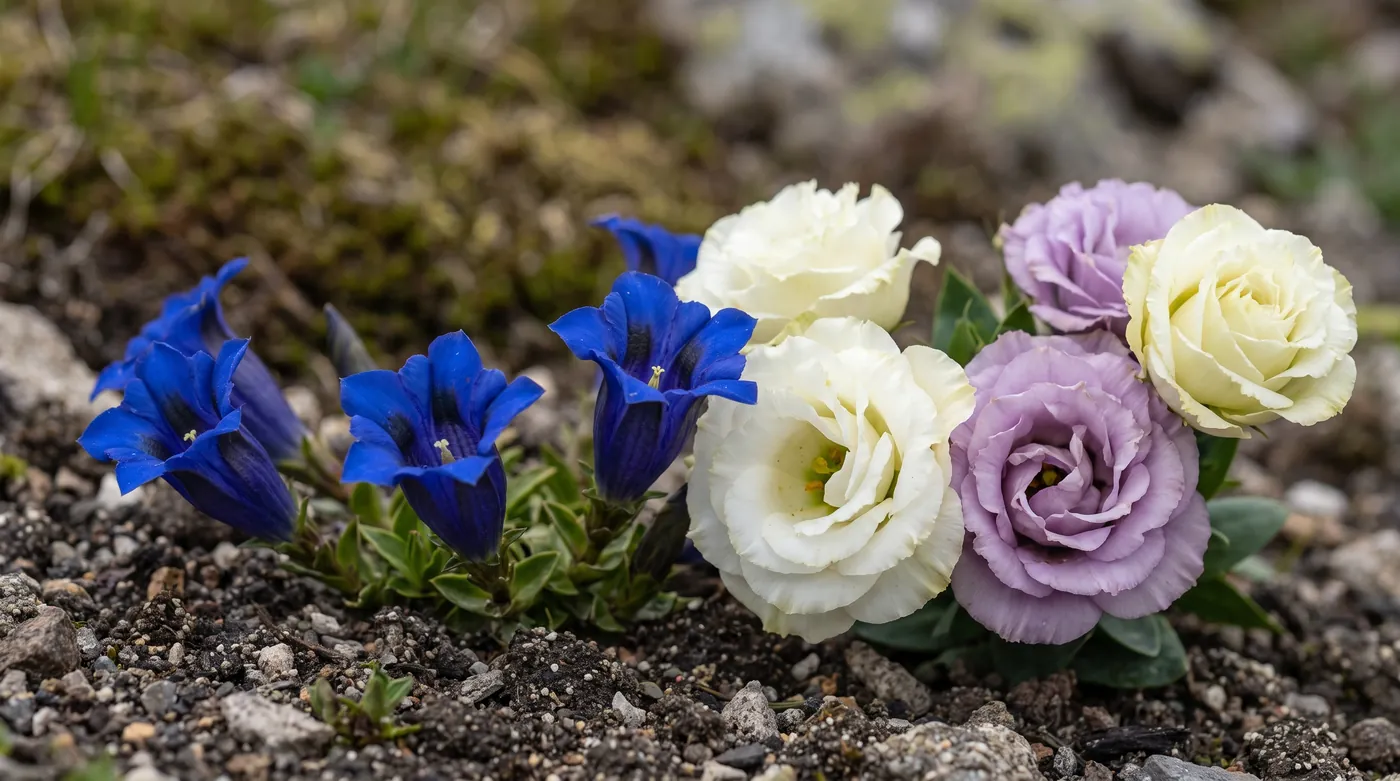
Bitter enough to be a benchmark
Gentian root is the reference standard for bitterness. The compound responsible, amarogentin, is among the most bitter substances known from any source, and it remains detectable on the tongue at dilutions where almost nothing else registers at all. The name translates roughly as bitter gentian, which is about as blunt as chemical naming gets.
That is why the family is in a great many bottles. Gentian root is the backbone of aromatic bitters, of several French and Italian aperitifs, and of the old category of medicinal tonics, where the point of the bitterness was that it provoked appetite and digestion. The plant is not making it for anybody's aperitif; it is making it so that grazing animals on a mountain leave it alone.
The family name honors Gentius, an Illyrian king of the second century BC credited with discovering the root's use. And gentian violet, the dye in the antiseptic, has nothing whatever to do with these plants. It was named for the color.