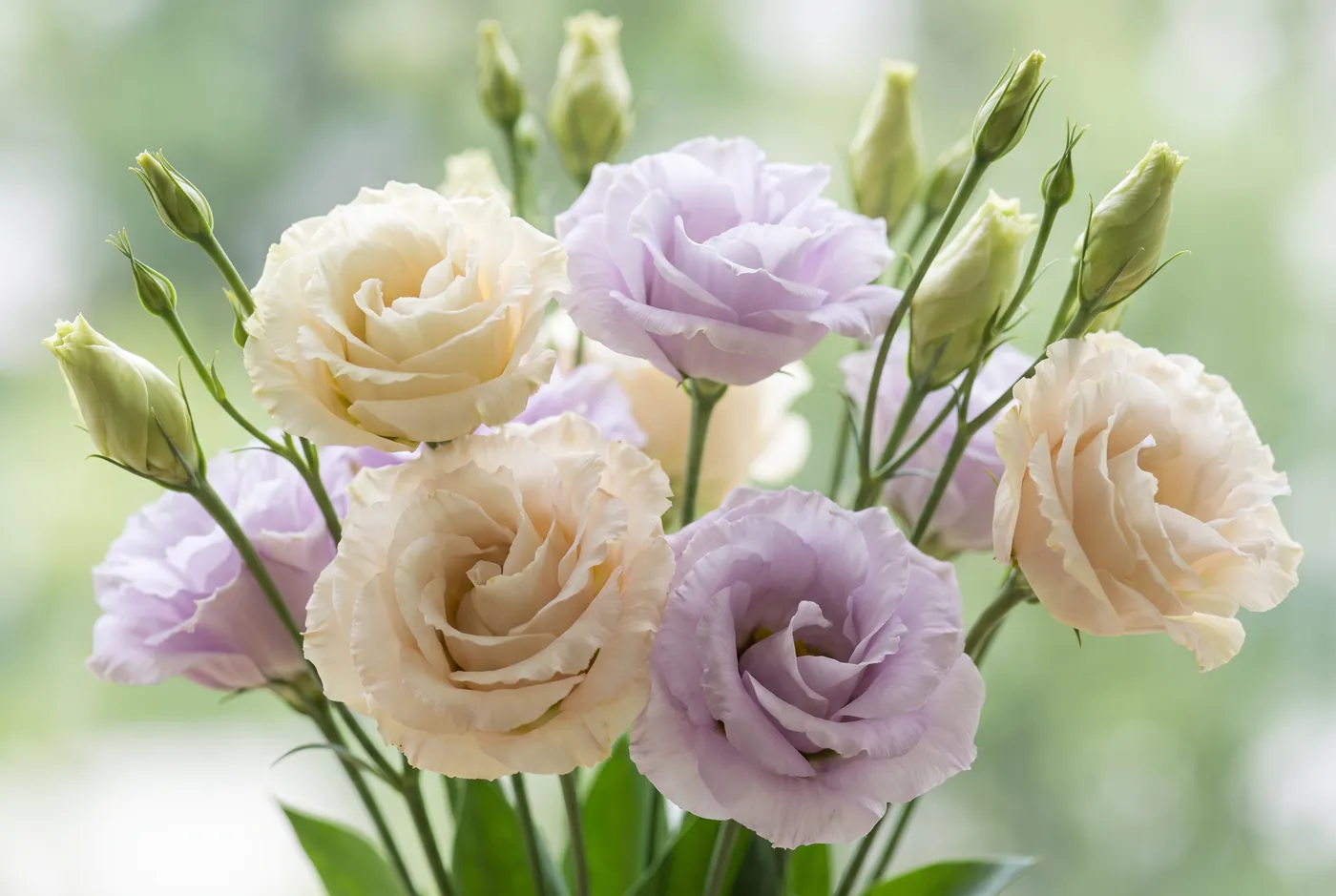
About Lisianthus
Lisianthus is the flower florists suggest when someone asks for roses and the budget or the season will not allow it. The bloom is ruffled, layered and softly translucent, several to a stem, and it outlasts a rose by days. It has no thorns and almost no scent, which makes it easy to work with and easy to put on a dinner table.
It is not a lily and not a rose, despite being sold as prairie gentian and Texas bluebell in different parts of the country. It is a slow, difficult crop to grow, which is the honest reason it is not cheaper than it is.
Primary Meanings
- Appreciation: The most commonly cited meaning, and why it suits thank-you bouquets
- Charisma: From its showy, outgoing bloom on an understated plant
- Lasting Bond: Its long vase life gave it a loyalty association
- Calm: Traditionally given to convey composure or reassurance
Lisianthus Colors and Their Meanings
White Lisianthus
Purity, the wedding standard
Lilac Lisianthus
Grace, the colour it is best known for
Pink Lisianthus
Affection and gratitude
Deep Purple Lisianthus
Elegance, used for depth in arrangements
Picotee Lisianthus
Edged in a second colour, the most prized form
Popular Lisianthus Types
Double Lisianthus
Many-petalled and rose-like, the type most people picture
Single Lisianthus
One row of petals, poppy-like and more delicate
Picotee
Pale petals edged in a contrasting colour
Fringed Varieties
Ruffled petal edges, the showiest and priciest
Care Instructions
Trim Gently
The stems are hollow and bruise easily. Cut, do not crush.
Water
Clean water changed often. It is sensitive to bacteria.
Pinch Spent Blooms
Remove faded flowers and the buds behind them keep opening.
Keep Cool
Away from heat and fruit; it is ethylene sensitive.
Best Occasions for Lisianthus
- Weddings: Bouquets and centrepieces, often instead of roses
- Thank You: The appreciation association makes it a natural choice
- Sympathy: White and lilac forms are widely used
- Dinner Tables: No scent and no thorns, so it never competes with food
Interesting Lisianthus Facts
- Its other names, prairie gentian and Texas bluebell, describe a wild American plant
- Seed to flower takes five to six months, which is why it is never cheap
- Each stem carries several blooms plus buds that open in sequence
- It has almost no fragrance, which is a selling point for table arrangements
- Japanese breeders developed most of the double-flowered varieties sold today
How to Buy Good Lisianthus
Buy it with one or two blooms open and the rest in tight bud, because unlike baby's breath those buds genuinely do open in the vase and you get a week of new flowers out of them. Check where the stem branches: that junction is the weak point and stems snap there in handling, so avoid a bunch with kinked or bruised joins. The petals should feel like fine paper and look translucent rather than dull. Brown speckling on the outer petals is early botrytis and will spread through the bunch.
Season, Availability and What Drives the Price
It is grown under glass year-round, but this is a genuinely seasonal flower in the way roses are not. Summer stems are taller, stronger and cheaper because they can be grown on less heat, and winter lisianthus is both dearer and shorter. Its real cost driver is time: five to six months from seed to a cuttable stem, in a crop that dislikes being rushed. That is why it never drops to filler prices, and why it is worth asking a florist what is good rather than ordering it blind in January.
What to Use Instead
For the rose look at lower cost, spray roses give more heads per stem, though they will not match the softness. Ranunculus reads almost identically in photographs and costs less in spring, but lasts around half as long. Double tulips do the same job in late winter. Carnations, which are unfairly dismissed, sit closer in form than most people expect and last longer than anything here. If the point is specifically the ruffled translucent petal, nothing substitutes properly and it is worth paying for.
Safety Around Pets and Skin
Lisianthus is not listed as toxic to cats or dogs. It is one of the safer flowers to have in a house with animals, and being thornless and unscented it is also one of the few that suits a table where people are eating. As with any plant material, a pet that eats a large quantity may still be sick, but there is no specific toxin here.
Florist Tips for Lisianthus
Handle it by the stem, never the head
The stems are hollow and the branch points snap easily. Most damage happens carrying it home, not in the vase.
Deadhead and it keeps going
Pinch off each bloom as it fades. The buds behind it open in sequence, and a bunch that looks finished often has another five days in it.
Keep it away from the fruit bowl
It is sensitive to ethylene, so ripening fruit in the same room will shorten it noticeably.
Common Questions About Lisianthus
Is lisianthus the same as a rose?
No, they are unrelated. Lisianthus is a gentian relative from the American prairies. It is used as a rose alternative because the double varieties have a similar layered bloom, but it has no thorns, almost no scent, and a longer vase life.
Why is lisianthus expensive?
It takes five to six months from seed to a cuttable stem and does not tolerate being forced. That length of glasshouse time is the whole answer. It is not scarcity or fashion, it is the growing cycle.
Will the closed buds open?
Yes, and that is the reason to buy it in bud. Each stem carries several blooms that open in sequence over about a week, provided you remove the spent ones and keep the water clean.