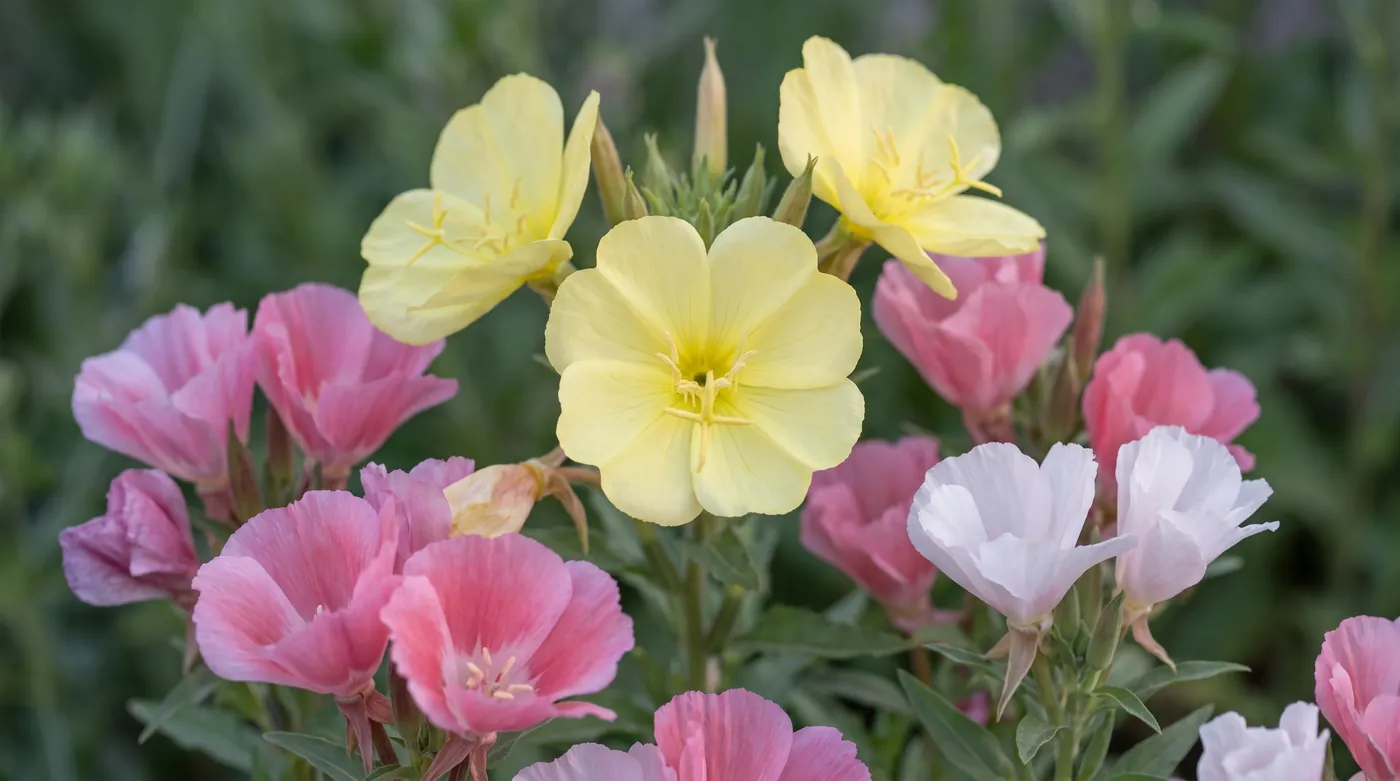
Evening primrose with four petals, beside satin godetia cups

1 flower in this family

Everything in this guide that belongs to Onagraceae

Satin-textured pink and white godetia cups on upright stems

Godetia

Clarkia amoena
10-14 days

Godetia

A flower you can watch open

Evening primroses open at dusk and they do it fast enough to sit and watch. The sepals let go, the bud unwinds and the flower is fully out inside a few minutes, sometimes in under one. It is one of the few plant movements that happens on a human timescale and it is worth doing once, with a bud that is bulging and pale in the late afternoon.

The timing is for moths. The flowers are pale yellow or white so they hold what light is left, they release a strong sweet scent after dark, and the nectar is at the bottom of that long tube where only a long tongued hawkmoth can reach it. By the middle of the next morning the flower is spent and going limp, having done its work in a single night.

The seeds of these plants are pressed for evening primrose oil, which is grown as a field crop on a serious scale, and the roots of the biennial species were eaten in North America long before anybody was interested in the oil.

Fireweed, fuchsia, and a man from an expedition

Fuchsia is in this family, which surprises people who have only met the bedding kind. The wild species are shrubs and small trees from the Andes and New Zealand, hummingbird pollinated, with the same four part flower hanging on a long tube.

Fireweed is the other famous relative and it is the plant that follows disaster. It colonizes burned ground within a season, which is where the name comes from, and after the bombing of London it came up across the ruins in such quantity that Londoners called it bombweed. Its seeds carry silky plumes and travel for miles.

The genus this site's member belongs to carries the name of William Clark, of the expedition that crossed the continent in 1804. The plants were collected on that journey, brought back east and named for him, which makes a common summer annual a direct souvenir of the survey of the American west.