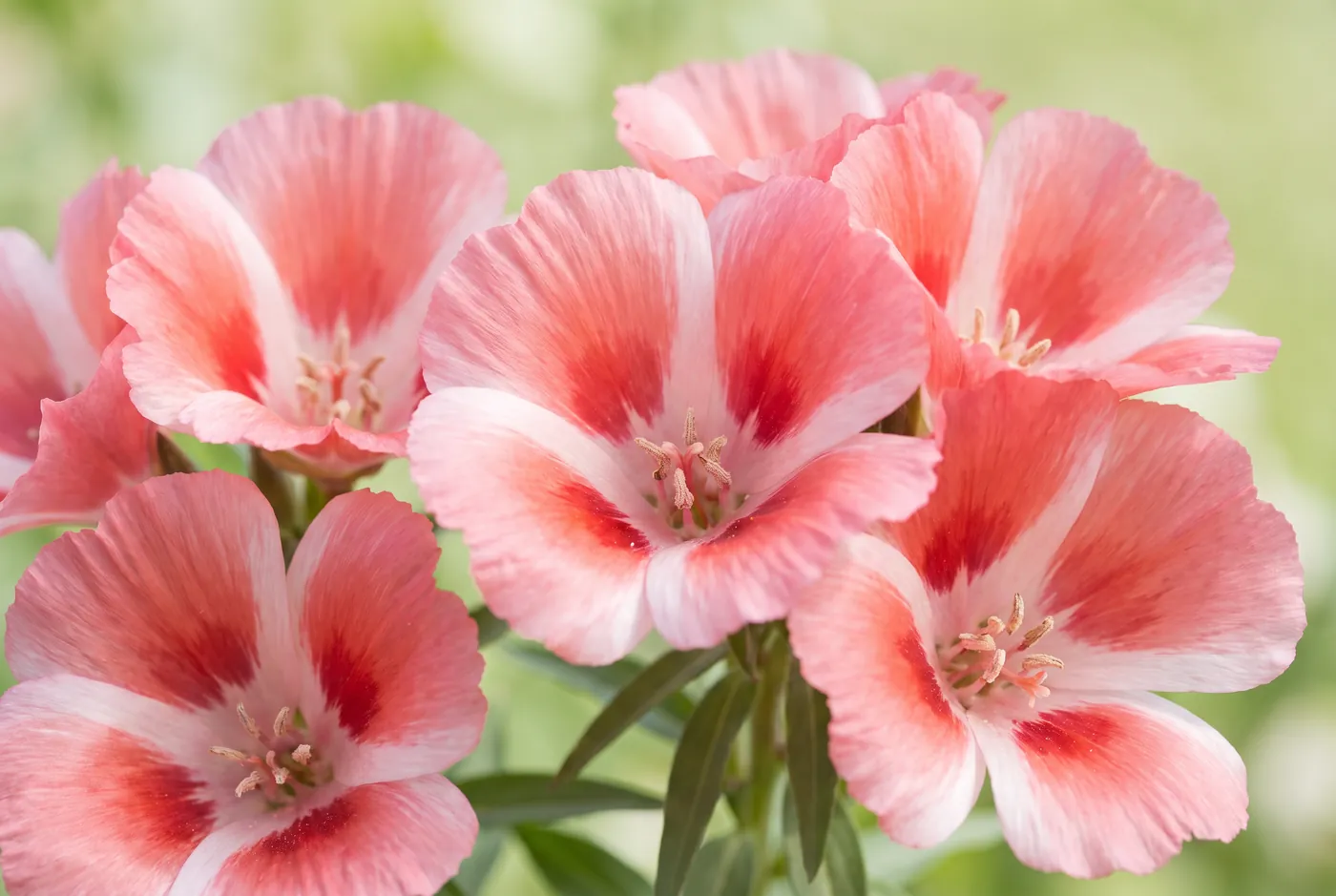
About Godetia
Godetia is a cup of four broad overlapping petals with a distinctly satiny, almost crumpled-silk texture, in pinks, corals, salmon and white, often with a deeper blotch at the base. Several open at once up a stiff stem with more behind, and it lasts a fortnight cut, which is unusual for something that looks this delicate.
It is also sold as clarkia, and both names refer to the same genus. The American common name is farewell-to-spring, because it flowers as the western wildflower season ends.
Primary Meanings
- Sincerity: The traditional meaning
- Farewell: From the American name, farewell-to-spring
- Delicacy: The satin texture of the petals
- Lasting Affection: From its long vase life
Godetia Colors and Their Meanings
Pink Godetia
The classic and most grown
Salmon Godetia
The colour it is best known for
White Godetia
Purity; used in bridal work
Blotched Godetia
Petals with a deep central mark
Popular Godetia Types
Clarkia amoena
The species, and the standard cut flower
Grace Series
Bred for cutting; long stems and uniform colour
Satin Series
Compact bedding forms
Clarkia unguiculata
Mountain garland; a taller, looser relative
Care Instructions
Clean Water
Change every couple of days.
Strip Foliage
The narrow leaves rot quickly.
Remove Spent Cups
The buds behind keep opening.
Cool Room
It holds well but heat shortens it.
Best Occasions for Godetia
- Summer Bouquets: Its natural season
- Weddings: The salmon and blush shades in soft palettes
- Cutting Gardens: Easy from seed and very productive
- Cottage Arrangements: With larkspur, ammi and cosmos
Interesting Godetia Facts
- Godetia and clarkia are the same genus under two trade names
- The American common name is farewell-to-spring
- The petals have a distinctly satiny, crumpled-silk texture
- It lasts up to a fortnight cut, unusual for a flower this delicate
- It is native to the western United States
How to Buy Good Godetia
Buy stems with two or three cups open and plenty of buds behind them, since those buds genuinely do open in the vase and are most of what you are paying for. The petals should have their characteristic satin sheen and no translucent or bruised patches. Stems are stiff and should be rigid. Strip the narrow leaves before it goes in water, because they break down faster than the flowers do.
Season, Availability and What Drives the Price
Early to midsummer, mostly from local growers and specialist cut flower farms rather than large wholesalers. It is inexpensive where sold and is one of the better-value summer flowers given how long it lasts. It is also very easy from seed, which is why it turns up more often at markets and in cutting gardens than in florists.
What to Use Instead
Lisianthus gives a similar ruffled cup year-round at higher cost. Sweet peas cover the same soft palette with scent and a far shorter life. Cosmos provides the same flat open face in a lighter form. Godetia's advantage over all of them is longevity: for the same money it will outlast sweet peas three times over, which is worth knowing when planning an event.
Safety Around Pets and Skin
Godetia is not listed as toxic to cats or dogs by the ASPCA and is treated as safe. It is in the willowherb family alongside evening primrose and fuchsia, none of which present significant hazards. A reasonable choice for a house with animals.
Florist Tips for Godetia
The buds really do open
Unlike many flowers sold in bud, godetia reliably opens what it carries. A stem with plenty of buds is genuinely worth more than one already in full flower.
It lasts far longer than it looks like it should
Ten to fourteen days is normal. People treat it as fragile because of the satin petals and are consistently surprised.
Godetia and clarkia are the same thing
If a grower has clarkia and you wanted godetia, you are in the right place. The two names are used interchangeably across the trade.
Common Questions About Godetia
Is godetia the same as clarkia?
Yes. They are the same genus and the names are used interchangeably. Godetia was once a separate genus and was merged into Clarkia, but the old name stuck in the flower trade.
Why is it called farewell-to-spring?
It is the American common name, given because the plant flowers as the western wildflower season is ending and the dry summer begins. It is native to the western United States.
How long does godetia last in a vase?
Ten to fourteen days, which is a great deal longer than its delicate satin petals suggest. Strip the foliage, change the water regularly and remove spent cups so the buds behind keep opening.