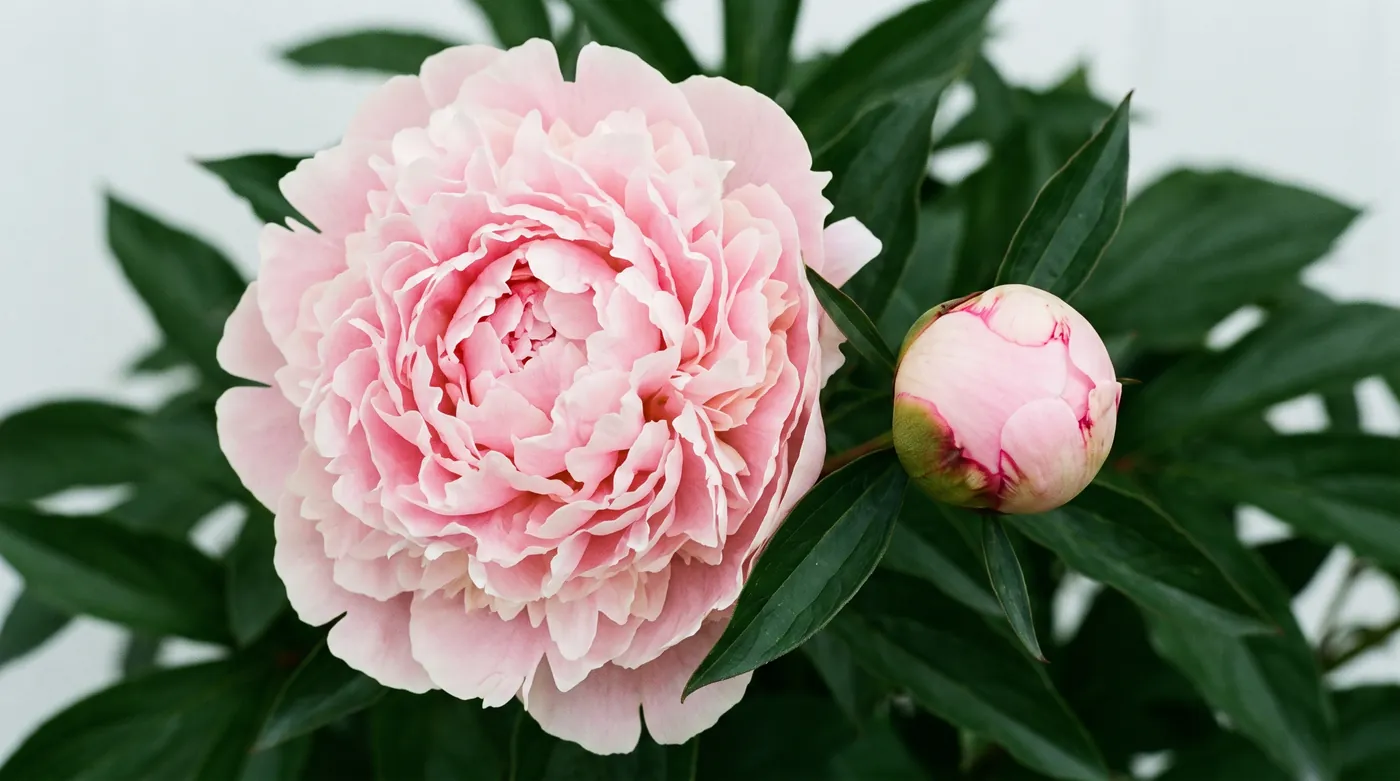
Sugar on the outside of the bud
A peony bud is sticky, and the reason is a feature this family carries that most flowers do not. Nectar is normally made inside a flower, where it buys a pollinator. Peonies also make it outside, from glands on the surface of the sepals, before the flower has opened and where no pollinator can reach it. Botanists call these extrafloral nectaries, and they turn up across a scattering of otherwise unrelated plants.
What they are for is a reasonable argument rather than a settled fact. The strongest case is that they are paying for protection: the sugar brings ants, the ants patrol the bud, and insects that would chew it get driven off. That trade is documented in other plants and it fits what happens on a peony. What is certainly not true is the old belief that the flower cannot open without them.
One more thing worth knowing about this family in a directory covering all fifty states: a serious share of the peonies sold in the American summer are grown in Alaska. The season there runs when nowhere else in the northern hemisphere has them, which turned a short lived local crop into a real industry.