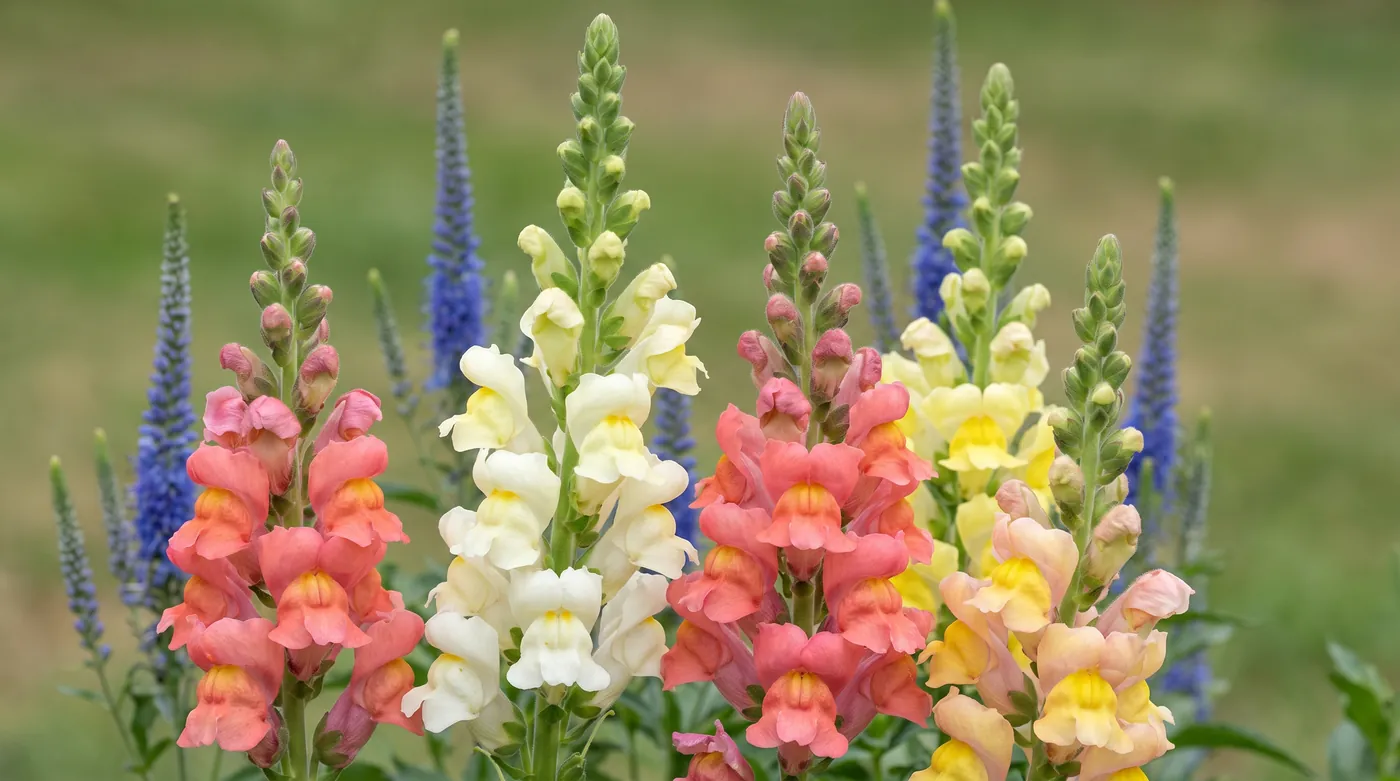
A family named after a lawn weed
Plantago is the ribwort and broadleaf plantain, a flat rosette with a stubby brown flower spike, and its distinction is surviving being walked on. For a long time the family named after it held little else, while snapdragons, foxgloves, penstemons and veronicas sat together in a large and untidy Scrophulariaceae, the figwort family.
Molecular work in the late 1990s took Scrophulariaceae apart. Most of its familiar garden and florist genera turned out to belong with Plantago rather than with figwort, and because the older name has priority the whole enlarged group is Plantaginaceae. It is one of the biggest reshuffles in modern plant classification, and it is why an older reference book files a snapdragon somewhere else entirely.
There is no single character running through the whole family, and pretending otherwise would be dishonest. Most members share flowers fused into a two lipped or spurred tube, four stamens in two unequal pairs, and a dry capsule holding a great many small seeds.