About Snapdragons
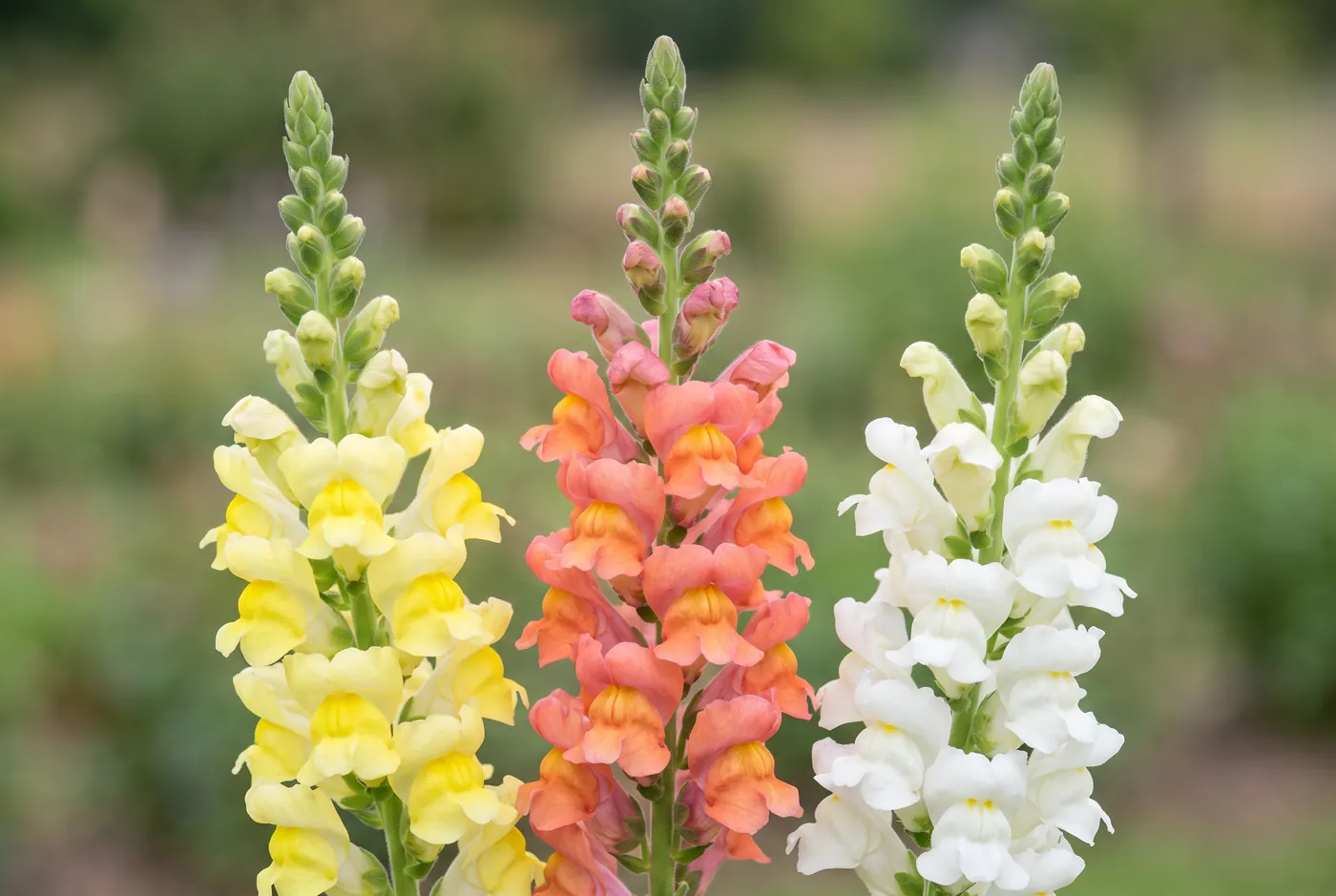
Snapdragons are what florists reach for when an arrangement needs height. They are a line flower: a tall spike densely packed with blooms that open from the bottom upward, giving vertical structure that round flowers cannot. Squeeze a single bloom at the sides and it opens like a mouth, which is where the name comes from and why they end up in every child's garden.
They also carry a genuine sweet scent, which is increasingly rare among commercially grown cut flowers, and they come in a colour range that includes the muted apricots and dusty pinks that are hard to find elsewhere.
Primary Meanings
- Grace: The traditional meaning, from the elegant spike
- Strength: Associated with resilience; the plant grows in poor ground
- Deception: An older, darker Victorian meaning worth knowing before gifting
- Protection: Once planted at doorways to ward off ill will
Snapdragons Colors and Their Meanings
White Snapdragons
Purity and grace
Yellow Snapdragons
Optimism and good fortune
Coral Snapdragons
Warmth; the most sought-after shade
Deep Red Snapdragons
Strength and passion
Bronze Snapdragons
Autumnal tone, hard to source elsewhere
Popular Snapdragons Types
Rocket Series
Tall florist standard, strong straight spikes
Potomac Series
Very tall greenhouse type bred for cutting
Chantilly
Open-faced butterfly type with no snap, softer look
Madame Butterfly
Double azalea-flowered form, ruffled and full
Care Instructions
Store Upright
Lay them flat and the tips curve. This is permanent.
Water
Deep, clean water. They drink heavily.
Trim
Recut at an angle and strip lower leaves.
Strip the Base
Pull off blooms that have faded at the bottom of the spike.
Best Occasions for Snapdragons
- Large Arrangements: The standard source of height in a mixed vase
- Weddings: Tall centrepieces and church pedestals
- Summer Bouquets: Peak season and best price
- Cottage Style: The garden-gathered look, with cosmos and zinnias
Interesting Snapdragons Facts
- The bloom opens like a mouth when squeezed, hence the name
- Cut stems bend upward against gravity within hours, a response called negative geotropism
- The seed pods look like small skulls once dried
- Flowers open from the bottom of the spike upward, never the reverse
- They are one of the few common cut flowers with a real sweet fragrance
How to Buy Good Snapdragons
Buy a spike with roughly the bottom third open and the rest in bud. Fully open snapdragons are near the end, because the flowers drop from the bottom while the tip is still going and a spike that is open all the way up has nothing left to give. The stem should be rigid and straight; any softness low down means it has been standing in dirty water. Check the tip is intact and not snapped off, and look for the first few blooms at the base already browning, which dates the bunch.
Season, Availability and What Drives the Price
Field-grown snapdragons run from late spring into autumn and that is when they are tallest, cheapest and best scented. Greenhouse stems fill the rest of the year and carry a real premium, because heating a tall crop through winter is expensive. Height is what you are paying for: a 90cm greenhouse spike costs considerably more than a shorter summer one of the same colour. Coral and bronze shades tend to cost more whatever the season, simply because fewer growers plant them.
What to Use Instead
For the same vertical line, stock is the closest match and brings a much stronger clove scent. Delphinium and larkspur give more height and a looser, airier spike. Gladiolus is the budget option and reads far more formal. Veronica is the small-scale version for a table arrangement rather than a pedestal. Liatris does the job in a modern, spiky way. None of them replicate the muted apricot and bronze range, which is the real reason to choose snapdragons in the first place.
Safety Around Pets and Skin
Snapdragons are not toxic to cats or dogs and are not listed as a hazard by the ASPCA. They are safe to have in a house with animals. The flowers are also edible and occasionally used as a garnish, though they taste bitter and are decorative rather than pleasant.
Florist Tips for Snapdragons
Never lay them down
A cut snapdragon bends its tip upward within hours of being laid flat, and the curve does not straighten out. Carry them upright and store them upright in the bucket.
Use the curve on purpose
If a stem has already hooked, put it at the edge of an arrangement where the bend reads as a deliberate arc rather than a fault.
Strip the bottom blooms as they go
The base of the spike finishes first. Pulling those off keeps the stem looking fresh while the top half is still opening.
Common Questions About Snapdragons
Why did my snapdragons curve upward?
They were laid on their side. Cut snapdragon stems actively grow against gravity, so a few hours flat produces a permanent hook at the tip. It is not a defect and not reversible, so store and transport them standing up.
Do snapdragons really snap?
The single-flowered types do. Pinch a bloom at the sides and the two lips open like a mouth. Butterfly and double varieties like Chantilly have been bred with open faces and do not snap at all.
Are snapdragons safe around pets?
Yes. They are not toxic to cats or dogs, which makes them one of the safer choices for a tall arrangement in a house with animals.