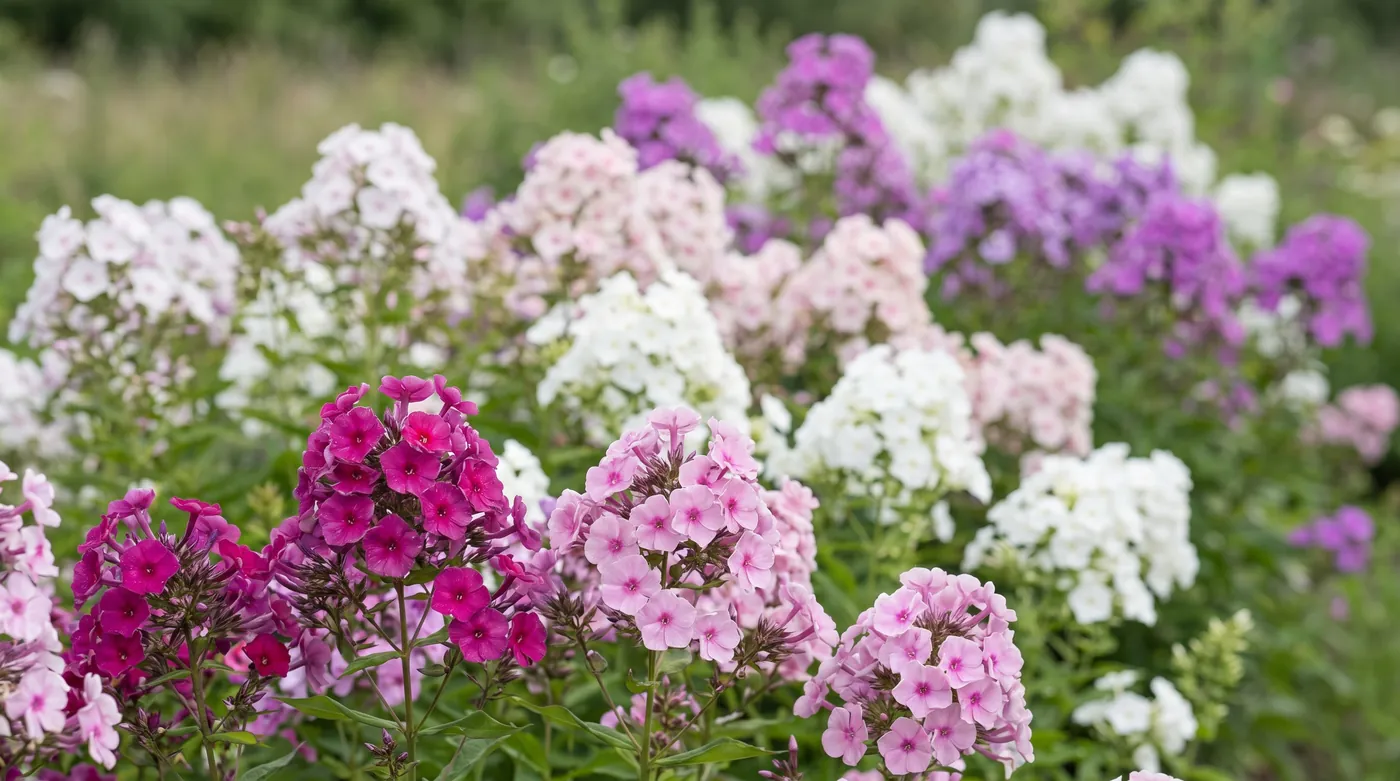
A border of phlox heads, each flower a tube opening to a flat face

1 flower in this family

Everything in this guide that belongs to Polemoniaceae

Domed heads of pink and white phlox flowers

Phlox

Phlox paniculata
5-10 days

Phlox

The tube tells you the visitor

The flower shape is consistent across the family: a narrow tube, sometimes very long, opening abruptly into a flat face of five lobes, like a small tray set on a stalk. What varies, and varies enormously between close relatives, is how long that tube is and what color the face is.

Those two variables decide who can feed there. A short tube with a wide flat landing surface in white or pale blue is a bee flower. A long narrow tube, pale and heavily scented after dark, is built for a night flying moth that hovers and reaches in with a long tongue. A long tube in strong red, with no scent at all because birds hunt by eye, is a hummingbird flower.

This family is where that logic is most easily demonstrated, because species that are near identical in leaf and habit sit side by side on the same hillside with completely different flowers and completely different visitors. It is the reason Polemoniaceae turns up in every textbook chapter on the subject.

A war, a ladder and a vine worked by bats

The family name comes from the Greek for war, and the story behind it is that two kings each claimed to have discovered the medicinal value of the plant and went to war over the credit. Pliny reports it, which is not the same as it having happened, but it has given the family the most belligerent name in botany.

The genus in question is Jacob's ladder, named in turn for its leaves, which are divided into neat opposite pairs of leaflets running up the stalk in rungs.

The odd one out is the cup and saucer vine, a Mexican climber and by far the largest thing in the family, which throws a heavy stemmed flower the size of a fist. It opens green and musty smelling, which is not an insect signal, and turns purple over the following days. In its own country it is worked by bats, and everything about that first night, the size, the color, the smell and the quantity of nectar, is aimed at them.