About Phlox
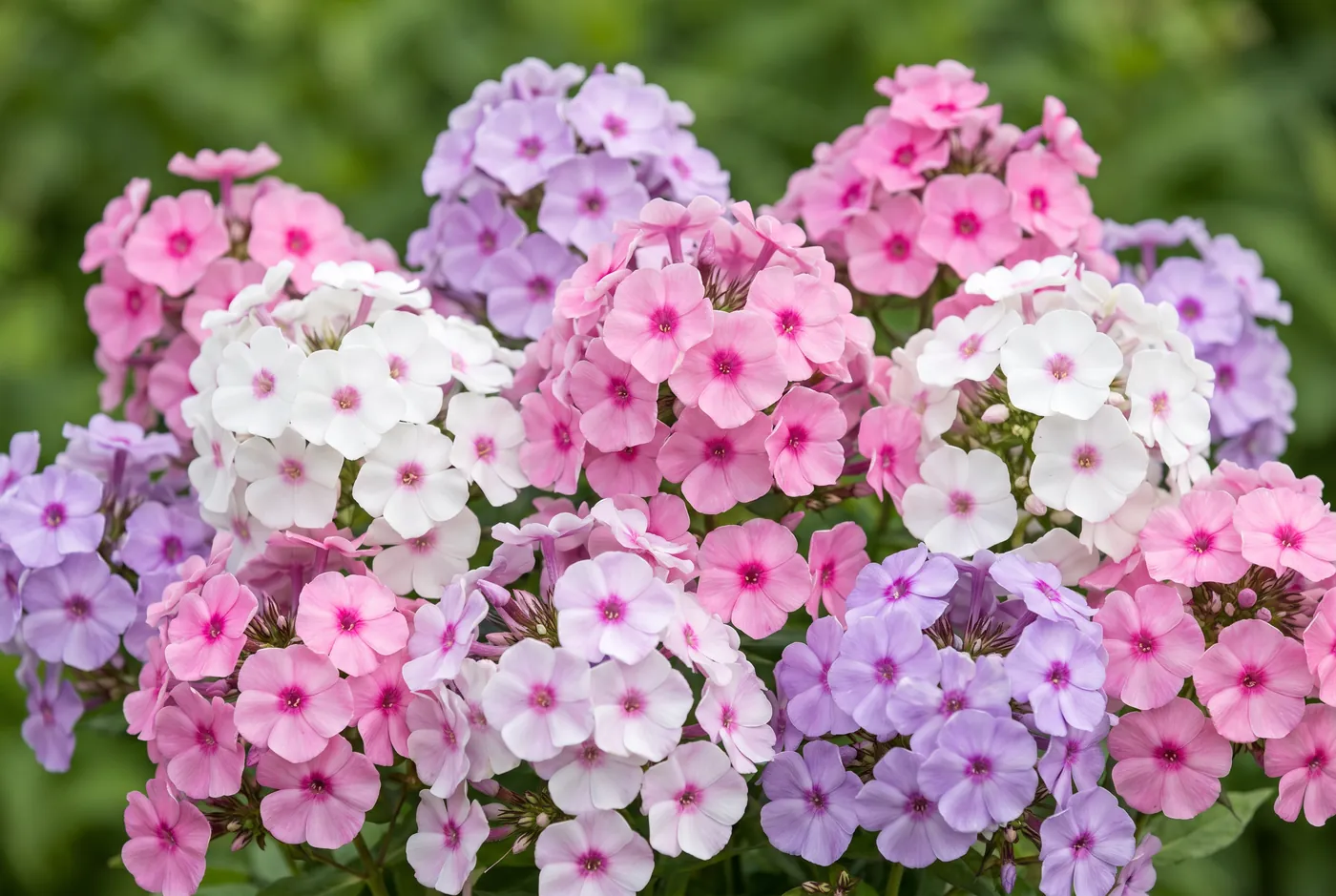
Phlox is a domed head of flat five-petalled flowers, in white, pink, magenta and lilac, often with a contrasting eye, carrying a sweet scent that drifts on a summer evening. It is one of the defining smells of a high-summer garden and one of the few cut flowers whose fragrance genuinely fills a room without being overwhelming.
The name means flame in Greek, and the plant is North American. It has an unglamorous habit of losing its lower leaves to mildew by midsummer, which affects it as a garden plant rather than as a cut flower, but explains why gardeners either love it or gave up on it.
Primary Meanings
- Harmony: The traditional meaning
- Sweet Dreams: The Victorian association, from the evening scent
- Unity: From many flowers forming one head
- Partnership: Commonly given between close friends
Phlox Colors and Their Meanings
White Phlox
Purity; the most strongly scented
Pink Phlox
The classic garden colour
Magenta Phlox
The strongest shade
Lilac Phlox
Soft and much used in weddings
Eyed Phlox
Pale petals with a contrasting centre
Popular Phlox Types
Phlox paniculata
Garden phlox; the tall scented summer species
Phlox drummondii
Annual phlox, shorter and looser, good for cutting
Creeping Phlox
Phlox subulata; a low spring ground cover
Eyed Cultivars
Pale with a contrasting centre, the florist favourite
Care Instructions
Deep Water
It drinks heavily and wilts quickly if dry.
Strip Lower Leaves
They are usually mildewed anyway.
Pick Off Spent Florets
The head opens over several days.
Cool Room
Heat shortens it noticeably.
Best Occasions for Phlox
- Summer Bouquets: Peak season and best scent
- Weddings: The eyed and lilac forms in soft palettes
- Cottage Gardens: One of the defining plants of the style
- Evening Events: The scent strengthens after dusk
Interesting Phlox Facts
- The name means flame in Greek
- It is North American, despite being a fixture of English cottage gardens
- The lower leaves commonly mildew by midsummer
- The scent strengthens in the evening
- Creeping phlox is a different species entirely, low and spring-flowering
How to Buy Good Phlox
Buy heads where roughly half the florets are open and the rest still budded, since a fully open head is a few days from finishing. Look at the foliage: mildew is very common on phlox and shows as a dusty gray film, and while it does not affect the flowers it means the stems will look poor. Stems should be firm right up to the head. Smell it in the shop, since the scent varies by variety and white forms are usually the strongest.
Season, Availability and What Drives the Price
Midsummer into early autumn, mostly from local growers, since phlox does not ship particularly well and there is limited wholesale trade in it. It is moderately priced where sold. As with cosmos and zinnias, a market or a cutting garden is a far better source than a florist, and stems cut that morning behave completely differently from ones that have traveled.
What to Use Instead
Sweet William gives a flatter head with a clove scent earlier in summer. Stock provides far stronger fragrance on a spike. Hydrangea covers the same color range with much more mass and no scent. Buddleia gives a scented cone in the same season. For a domed head with a sweet evening fragrance, phlox is the classic and difficult to substitute.
Safety Around Pets and Skin
Phlox is not listed as toxic to cats or dogs by the ASPCA. It is a safe flower to have around animals and is often recommended for pet-friendly gardens. The mildew that so commonly affects the foliage is a cosmetic problem for the plant rather than any kind of hazard.
Florist Tips for Phlox
Strip the lower leaves without hesitating
They are usually mildewed by the time phlox is worth cutting, and they rot fast in water anyway. Bare stems look better and last longer.
The scent is an evening thing
Phlox smells strongest after dusk and on warm still evenings. Judging it at midday in a shop undersells it considerably.
Buy local or grow it
It does not travel well and there is little wholesale supply. A market bunch cut that morning is a completely different flower from one that has been in transit.
Common Questions About Phlox
Why is my phlox foliage gray and dusty?
Powdery mildew, which affects phlox more than almost any other garden perennial, especially in a dry summer. It does not harm the flowers and does not spread to unrelated plants, but it is why the lower leaves usually get stripped off cut stems.
Is creeping phlox the same plant?
No. Creeping phlox is Phlox subulata, a low spring-flowering ground cover. Garden phlox, the tall scented summer flower used for cutting, is Phlox paniculata. Same genus, very different plants.
Does phlox really smell that strong?
In the evening, yes. The scent is sweet and carries several metres on a still warm night. It is much less noticeable at midday, which is why it disappoints people who sniff a bunch in a shop.