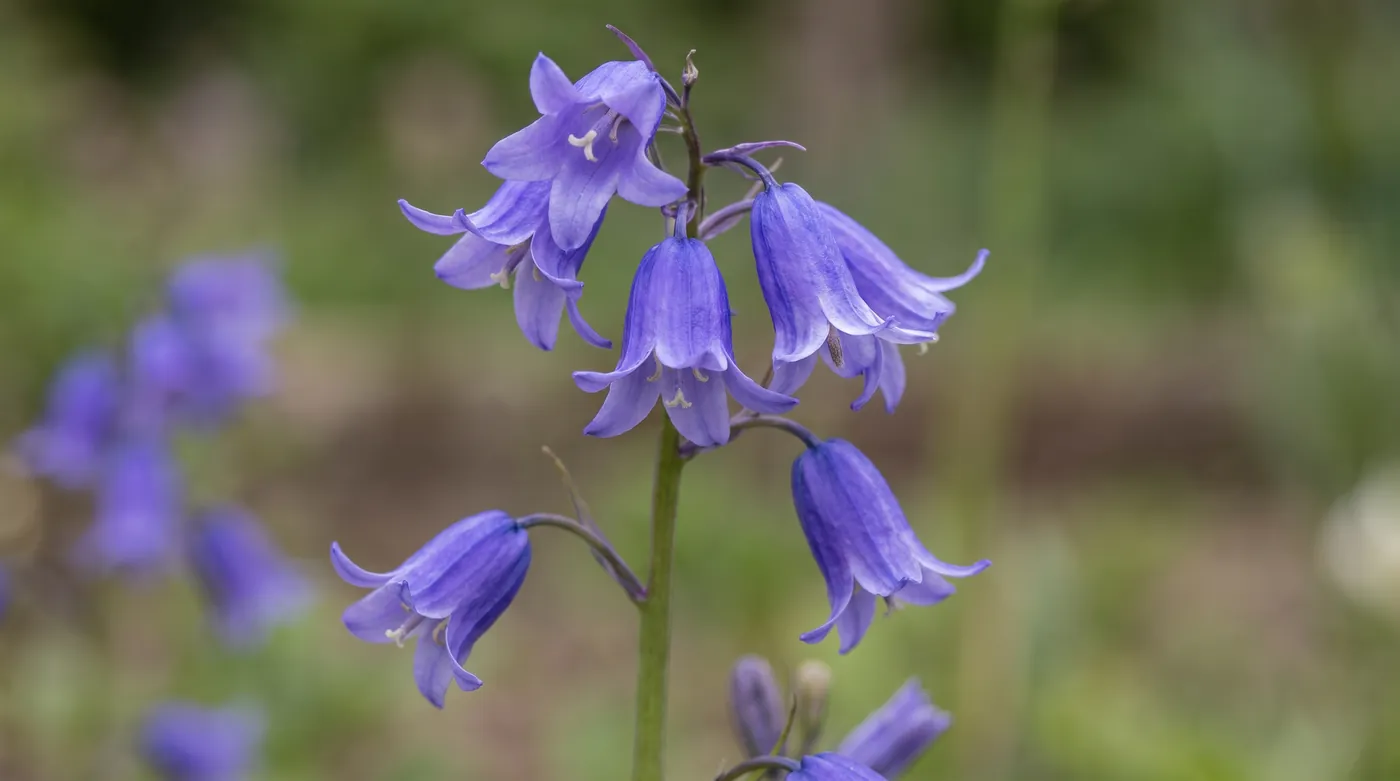
Violet blue bellflowers nodding along a stem

2 flowers in this family

Everything in this guide that belongs to Campanulaceae

Tall spikes of lilac and white campanula bells

Campanula

Campanula medium
7-10 days

Campanula
Flat domed heads of tiny purple trachelium flowers

Trachelium

Trachelium caeruleum
7-12 days

Trachelium

Milky sap, and what it means for the vase

Cut a campanula stem and it bleeds a white latex. That sap is the family's characteristic and it is a nuisance in water: it clouds a vase quickly and can block the stem's own uptake as it congeals at the cut end.

The fix is straightforward. Cut the stem, let it stand in clean water for a short while so the initial bleeding settles, and change that water before arranging. Some growers sear the cut end briefly in boiling water, which stops the flow immediately and works well on the softer stems, though it is rarely necessary for a domestic bunch.

Vase life is decent once that is handled, a week to ten days for campanula and a little longer for trachelium. Both are better than their delicate appearance suggests, and both dislike being crowded in a bucket because the bells bruise against one another.

Relatives you already know

Canterbury bells are the classic garden member and have been grown in Europe since at least the sixteenth century. The harebell, the Scottish bluebell, is a wild campanula, and it is a different plant entirely from the English bluebell, which is not in this family at all. The two names cross over between England and Scotland and cause endless confusion.

Lobelia belongs here too, both the trailing bedding kind and the tall cardinal flower. Rampion, a campanula grown for its edible root, is the plant at the center of the Rapunzel story: the girl is named after the vegetable her mother stole from the witch's garden.

Beyond rampion there is almost nothing edible in this family, and several members are mildly toxic. The milky sap is the clue, as it so often is.