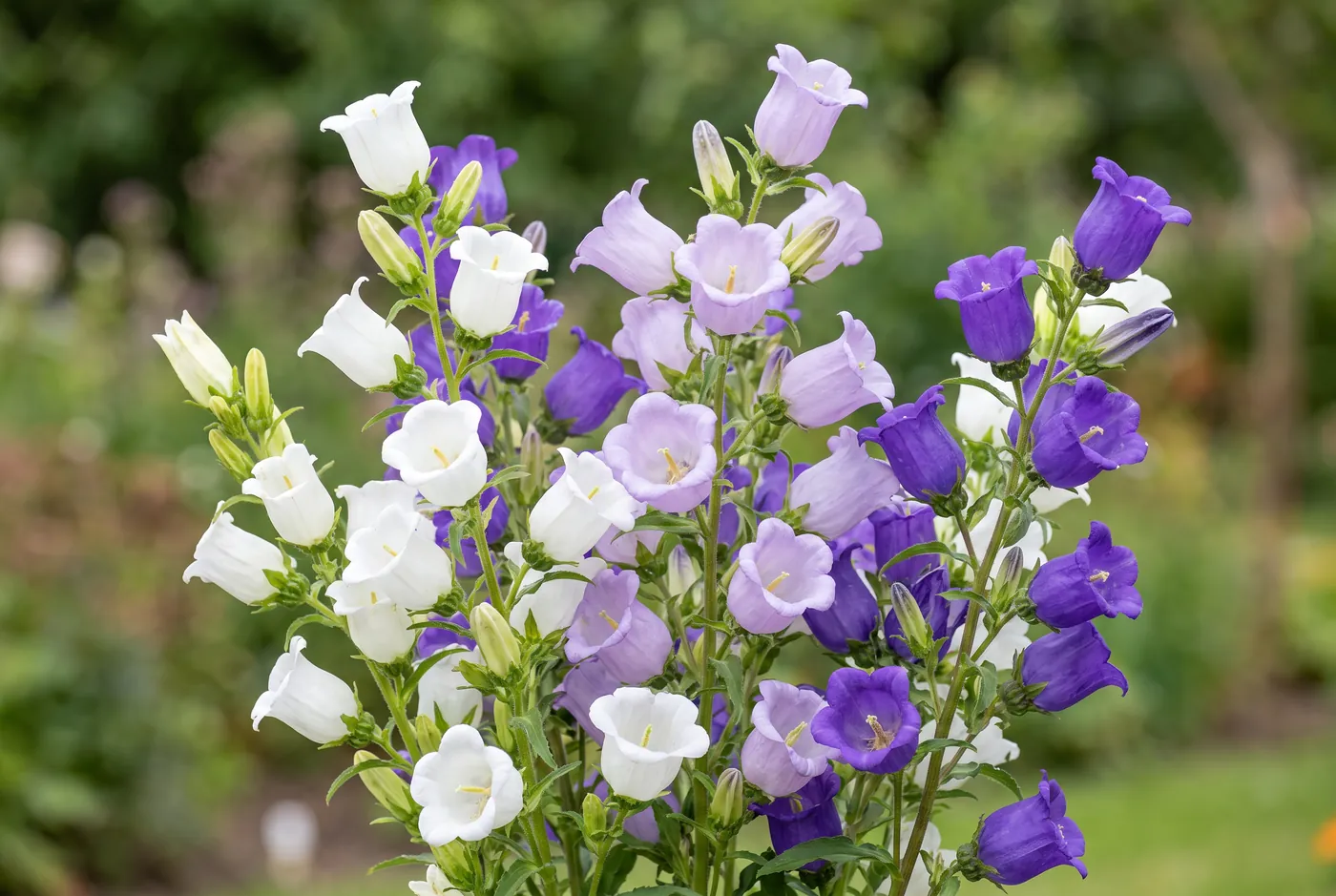
About Campanula
Campanula is the bellflower, and the name is exactly what it means: campanula is Latin for little bell. The florist form is usually Canterbury bells, tall stems hung with cup-shaped bells in white, lilac, soft pink and a clear violet blue that very few flowers can match. It is a cottage-garden flower that grew up into a commercial crop, and it now arrives year round from Dutch growers rather than only in June.
It is also the flower most likely to disappoint someone who does not know one thing about it. Campanula is extremely sensitive to ethylene, the ripening gas given off by fruit and by dying flowers, and an untreated stem sitting near a fruit bowl will drop its bells in a day or two. Handled properly it will run seven to ten days and open buds the whole way up the stem.
Primary Meanings
- Gratitude: The main modern meaning, and why it appears in thank you bouquets
- Constancy: Steady, unchanging affection rather than passion
- Everlasting Love: The Victorian reading, from its long garden life
- Humility: From the way the bells hang and face the ground
Campanula Colors and Their Meanings
White Campanula
Purity and sincere thanks; the wedding colour
Lilac Campanula
Gratitude and gentle affection
Violet Blue Campanula
Constancy; the colour the flower is grown for
Pink Campanula
Warmth and quiet admiration
Popular Campanula Types
Canterbury Bells
Campanula medium; the tall florist type, large hanging bells
Champion Series
The commercial Canterbury bell, bred to flower in one season and ship well
Peach-Leaved Bellflower
Campanula persicifolia; wiry stems, open outward-facing cups
Clustered Bellflower
Campanula glomerata; dense violet heads facing upward, not hanging
Milky Bellflower
Campanula lactiflora; tall and airy, more a garden plant than a cut stem
Care Instructions
Keep It Away From Fruit
Ethylene from ripening fruit makes the bells drop.
Recut and Change the Water
Cut stems leak a milky sap that fouls water.
Pinch Off Spent Bells
Removing faded flowers pushes the buds above them to open.
Keep It Cool
Warmth shortens it faster than most summer flowers.
Best Occasions for Campanula
- Thank You: Its meaning is gratitude, which few flowers own so clearly
- Summer Weddings: White and blue Canterbury bells for a garden look
- Get Well: Long lasting and unscented, which suits a sickroom
- Cottage Arrangements: Height and shape without the formality of a delphinium
Interesting Campanula Facts
- Campanula is Latin for little bell, and there are over three hundred species
- Canterbury bells are said to be named for the bells on pilgrims' horses on the road to Canterbury
- It is one of the most ethylene-sensitive cut flowers grown, so good stems are treated before shipping
- Rampion, Campanula rapunculus, is the plant Rapunzel is named after in the Grimm tale
- Cut stems exude a milky white latex, which is normal and not a sign of damage
How to Buy Good Campanula
Buy campanula with only the lowest two or three bells open and the rest still in tight green bud. It opens up the stem reliably, so a fully open bunch is a bunch already halfway through its life. Look at the buds rather than the flowers: they should be plump and firm, not papery or browning at the tips, and the stem should be stiff rather than floppy in the hand. Ask whether the stems have been treated, because good growers dose campanula against ethylene before it ships and the difference is days, not hours. Any bells already lying in the bottom of the bucket tell you the answer without asking.
Season, Availability and What Drives the Price
Campanula is a summer flower in the garden, June and July, and the garden season is still when it is cheapest and best. Commercially it is a Dutch glasshouse crop and comes in most of the year, which is why it turns up in thank you bouquets in February. What moves the price is height and color: long straight Canterbury bell stems cost more than short ones, and the true violet blue is the one growers plant least and shops charge most for. White is the wedding color and gets busier from May onwards for that reason.
What to Use Instead
For the same height and the same blue, delphiniums are the obvious substitute and are far easier to find, though they read as more formal. Bells of Ireland give you green bells on a spike if the shape matters more than the color. Lisianthus covers the soft lilac and white end with much better keeping qualities, and stock brings the same cottage feel with scent added. For the nodding bell shape specifically, nothing in a normal shop is a close match, which is a fair reason to order campanula ahead.
Safety Around Pets and Skin
Campanula is not listed as toxic to cats or dogs, and several species have a long history as food: rampion, Campanula rapunculus, was grown for its leaves and root and is the plant Rapunzel is named after. That is not a reason to let a pet eat a bouquet, since any quantity of plant material can upset a stomach, but it is not a flower to worry about the way you would worry about lilies. The milky sap from a cut stem is a mild irritant on broken skin at worst and washes off with water.
Florist Tips for Campanula
Fruit is the enemy, not the vase
Campanula is the flower florists use to explain ethylene. Ripening fruit gives off the gas, and campanula responds by dropping open bells and refusing to open the buds. Keep it off the kitchen counter and away from the fruit bowl, and keep dying flowers out of the same vase, because they produce it too.
Pinch the dead bells off
Each spent flower left in place slows the buds above it. Pinch them out every day or two and the stem keeps opening upward, which is where most of the value in a spike flower is.
The milky sap is normal
Campanulaceae stems leak a white latex when cut. It is not disease and not damage, but it clouds the water quickly, so recut the ends and change the water more often than you would for a rose.
Common Questions About Campanula
What does campanula mean?
Gratitude, above everything else, which is why it turns up in thank you bouquets. It also carries constancy and everlasting love from Victorian flower language, and humility, which comes from the way the bells hang and face downward rather than up at the viewer.
Why are my campanula bells falling off?
Almost always ethylene. Campanula is one of the most ethylene-sensitive flowers sold, and ripening fruit, a nearby vase of dying flowers or a warm room will make it drop open bells and stall the buds. Move it away from fruit, keep it cool, and pull any dead material out of the water.
Are Canterbury bells the same as campanula?
Canterbury bells are one campanula, Campanula medium, and they are the type usually meant when a florist says campanula. The genus has over three hundred species, from the tall bells sold as cut stems down to the low trailing bellflowers grown in walls, which are not cut flowers at all.