About Trachelium
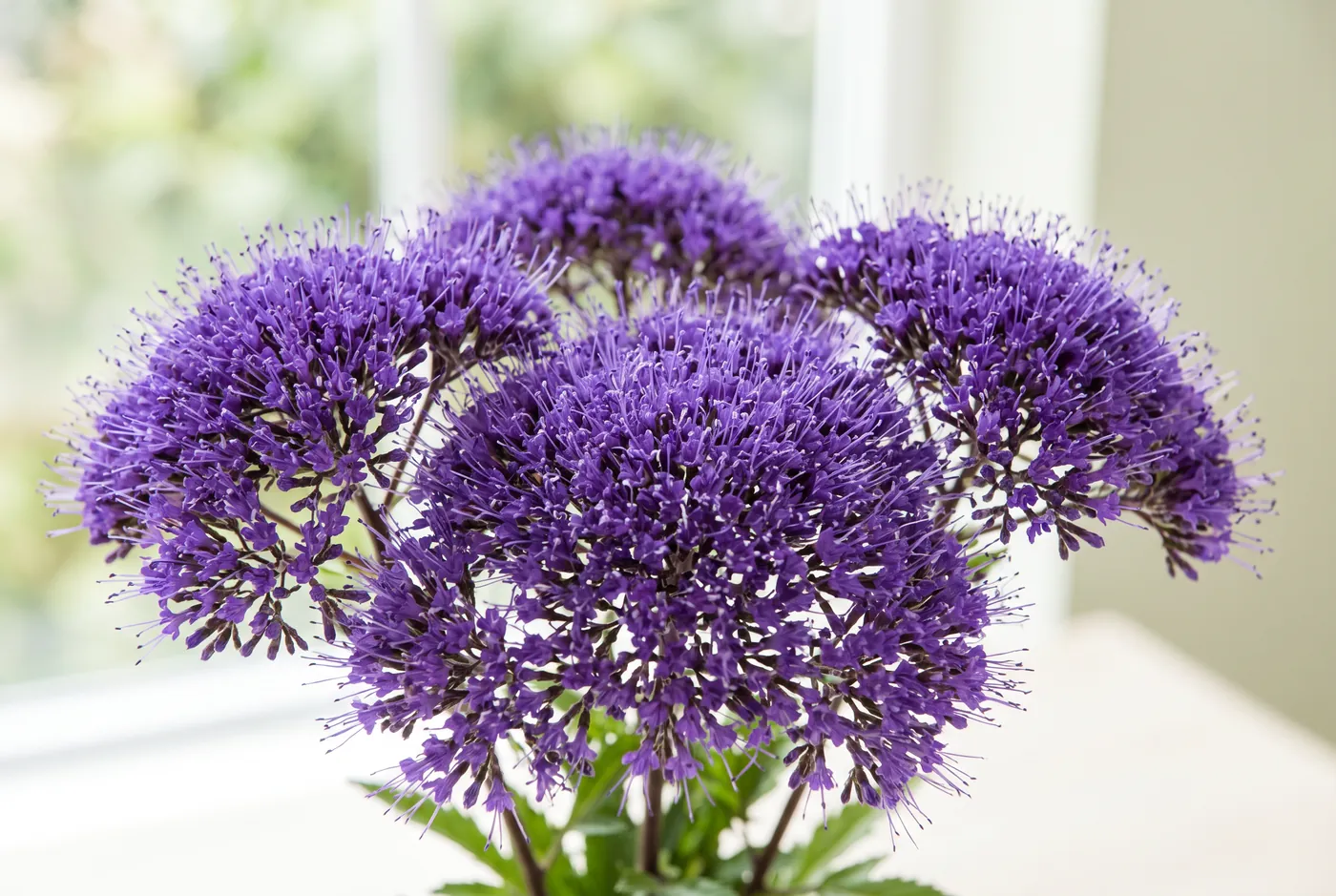
Trachelium is a broad domed head of hundreds of tiny flowers, each with a protruding style that gives the whole plate a soft fuzzy haze. It is usually deep purple, sometimes white or pink, and it reads as a colour block with texture rather than as individual flowers.
It is also called throatwort, from a medieval belief that it treated sore throats. As a cut flower it is straightforward except in one respect: it fouls vase water faster than almost anything else, and that is what usually finishes it.
Primary Meanings
- Neglected Beauty: The Victorian meaning
- Support: Its role as a supporting flower
- Healing: From the throatwort tradition
- Depth: The intensity of the purple
Trachelium Colors and Their Meanings
Deep Purple Trachelium
The classic and most grown
White Trachelium
Used heavily in bridal work
Pink Trachelium
Softer modern shades
Lilac Trachelium
Pale forms
Popular Trachelium Types
Trachelium caeruleum
The species and the commercial cut standard
Lake Series
Bred for cutting; uniform heads and long stems
Devotion
A widely grown deep purple variety
Hamer Pandora
Pale lilac, popular in soft palettes
Care Instructions
Change Water Often
It fouls water faster than most.
Strip Foliage
The leaves are the main cause of that.
Recut Midweek
A fresh cut visibly revives it.
Cool Room
Heat accelerates the water problem.
Best Occasions for Trachelium
- Mixed Bouquets: A block of colour with texture
- Weddings: White and lilac forms in soft palettes
- Summer Arrangements: Its natural season
- Sympathy: The purple carries the traditional association
Interesting Trachelium Facts
- Each head is hundreds of tiny flowers with protruding styles, giving the fuzzy look
- Throatwort comes from a medieval belief it cured sore throats
- It fouls vase water faster than most cut flowers
- It is a relative of campanula, the bellflowers
- The heads are flat enough to read as a solid colour block from a distance
How to Buy Good Trachelium
Look for heads that are densely packed with no gaps and evenly colored across the whole dome. The fuzzy haze of styles should look fresh rather than brown at the tips. Check the foliage closely, because trachelium leaves yellow early and a bunch with tired leaves has been standing. Stems should be firm; a soft stem just below the head means it has been in bad water, which is this flower's usual problem.
Season, Availability and What Drives the Price
Field crops through summer with year-round greenhouse supply, mostly from the Netherlands and Israel. It is moderately priced and steady, bought largely as a supporting flower rather than a feature. Wedding demand for the white and pale lilac forms has grown, and those now cost a little more than the standard deep purple, which is a reversal of how it used to be.
What to Use Instead
Yarrow gives a flat plate in a wider color range and dries far better. Scabiosa offers a domed head with more air and movement. Ageratum reads similarly at a smaller scale and in a softer blue. Hydrangea gives the same color-block effect with far more mass. For a flat purple plate with that fuzzy texture, trachelium is close to the only option.
Safety Around Pets and Skin
Trachelium is not listed as toxic to cats or dogs by the ASPCA and is treated as safe. It is in the campanula family, which contains no significant hazards. The practical caution is the vase water rather than the flower: it goes bad fast, and a pet drinking from the vase is the more realistic problem.
Florist Tips for Trachelium
Change the water more often than you think
Trachelium fouls water faster than almost anything else in a mixed bunch, and it takes the other flowers down with it. Every second day at minimum.
Strip every leaf below the waterline
The foliage is the main cause of the water problem. Bare stems make a real difference to how long the whole vase lasts.
It reads as a color block
Used in quantity, trachelium works as a solid mass of color rather than as individual flowers, which is a different job from most fillers and worth using deliberately.
Common Questions About Trachelium
Why does my trachelium water go cloudy so fast?
It is one of the worst offenders for fouling vase water, largely because of the foliage. Strip every leaf below the waterline and change the water every second day, or it will shorten everything else in the vase as well.
What is throatwort?
Another name for trachelium, from a medieval belief that the plant cured sore throats. The botanical name Trachelium comes from the Greek for neck, for the same reason.
Is trachelium related to campanula?
Yes, they are in the same family. The relationship is not obvious from the flowers, since campanulas are bell-shaped and trachelium forms flat plates of tiny blooms.