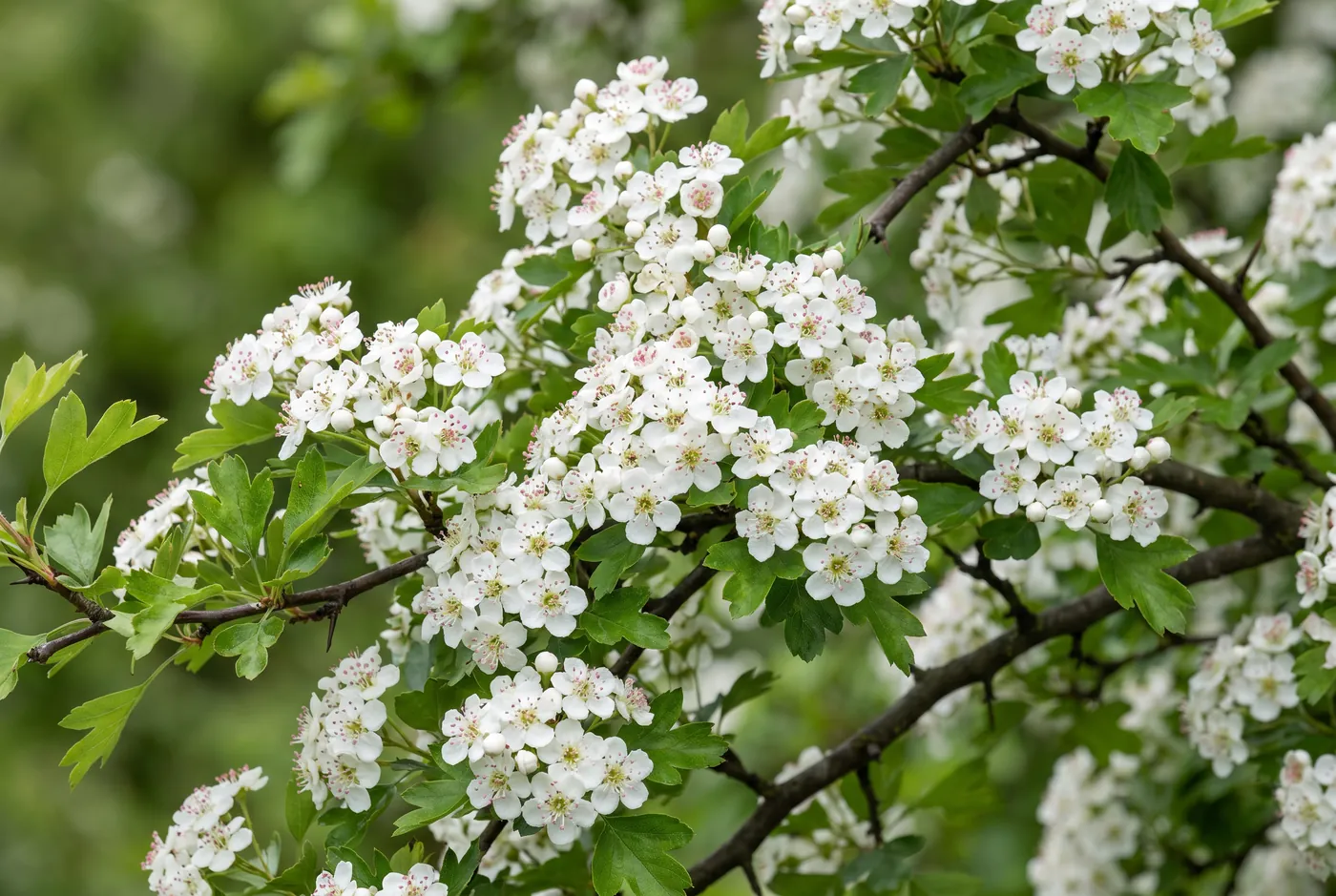
About Hawthorn
Hawthorn is the white blossom that covers hedgerows in May, so completely associated with the month that it is simply called may. It is one of May's two birth flowers, alongside lily of the valley, and it is a small thorny tree rather than anything a florist stocks.
It also carries one of the strongest superstitions attached to any plant: bringing may blossom indoors is said to bring death to the household. Unusually for folklore, there is a plausible reason. The flowers contain trimethylamine, one of the compounds produced by decaying flesh, and in an era when bodies were laid out at home the association would have been immediate.
Primary Meanings
- Hope: The classic meaning, from spring's arrival
- Protection: Planted at boundaries and thought to guard a house from outside
- Fertility: Its role in May Day customs
- Contradiction: Lucky outdoors, unlucky indoors
Hawthorn Colors and Their Meanings
White Hawthorn
The wild species; May blossom
Pink Hawthorn
Rosea; a garden form
Deep Red Hawthorn
Paul's Scarlet, the double red
Red Haws
The autumn berries
Popular Hawthorn Types
Crataegus monogyna
Common hawthorn; the hedgerow may tree
Crataegus laevigata
Midland hawthorn; flowers slightly earlier
Paul's Scarlet
Double deep red flowers, a common street tree
Washington Hawthorn
Crataegus phaenopyrum; the American species
Care Instructions
Split the Stem
Woody; split the cut end.
Mind the Thorns
They are long, hard and sharp.
Be Ready for the Smell
The scent is not pleasant up close.
Deep Water
It drinks steadily but does not last long.
Best Occasions for Hawthorn
- May Birthdays: One of the month's two birth flowers
- May Day: Central to traditional May customs
- Hedging and Wildlife: Its real use; excellent for birds
- Autumn Berries: The haws are cut for wreaths
Interesting Hawthorn Facts
- It is one of two May birth flowers, with lily of the valley
- Bringing it indoors is traditionally said to bring death to the house
- The flowers contain trimethylamine, a compound also produced by decaying flesh
- The berries are called haws and are edible, if dull
- The Glastonbury thorn, a hawthorn, was said to flower at Christmas
How to Buy Good Hawthorn
It is not sold as a cut flower anywhere, so this is a hedgerow or garden cut if you want it at all. Take branches where most of the blossom is open, split the woody end, and expect three to five days. Wear thick gloves, because hawthorn thorns are long, hard and go through most gardening gloves. And smell a branch before you commit to bringing it inside, because the scent is genuinely off-putting at close range.
Season, Availability and What Drives the Price
May, and briefly. Hawthorn is so tied to the month that the tree is called may and the blossom is may blossom. It is one of the most abundant flowering trees in European hedgerows and completely absent from the flower trade, because it does not last, it smells unpleasant indoors and it is covered in thorns. For a May birthday, lily of the valley is the other birth flower and is genuinely a florist's flower.
What to Use Instead
Lily of the valley is May's other birth flower and is the practical choice for a gift. Cherry blossom and blackthorn give the same white blossom on branches earlier in spring and are far better behaved. Spiraea provides a similar froth of small white flowers and is sold commercially. For hedgerow character in an arrangement, cow parsley and blackthorn are the usual substitutes.
Safety Around Pets and Skin
The leaves, flowers and berries of hawthorn are not considered toxic and haws have long been eaten, though the seeds inside contain cyanogenic compounds and should not be crushed or chewed. Hawthorn preparations affect heart rate and blood pressure, and are known to interact with cardiac medication, so it is not a plant to make teas from casually. The realistic hazard is the thorns, which are long enough to cause significant puncture wounds.
Florist Tips for Hawthorn
The superstition has a real basis
May blossom is said to bring death indoors, and the reason is chemical rather than mystical: the flowers contain trimethylamine, which is also produced by decaying flesh. In a period when the dead were laid out at home, the smell would have been unmistakable.
Smell it before you cut it
Pleasant from across a hedge, distinctly unpleasant in a room. This is the main practical reason nobody uses it as a cut flower.
Plant it for the birds
Hawthorn is one of the best wildlife trees available: dense thorny nesting cover, flowers for pollinators and haws that feed thrushes and waxwings through winter.
Common Questions About Hawthorn
Why is hawthorn unlucky to bring indoors?
The superstition holds that may blossom brings death to a household, and it has a genuine basis. The flowers contain trimethylamine, one of the compounds given off by decaying flesh. When bodies were laid out at home, the association would have been immediate and obvious.
Can you buy hawthorn as a cut flower?
No. It lasts only a few days, smells unpleasant indoors and is covered in long thorns, so there is no trade in it. For a May birthday, lily of the valley is the month's other birth flower and is a genuine florist's flower.
Are hawthorn berries edible?
The flesh is, and haws have long been used for jellies and syrups, though they are fairly dull on their own. The seeds contain cyanogenic compounds and should not be crushed or chewed. Hawthorn also affects heart rate and interacts with cardiac medication, so it is not a casual herbal tea.