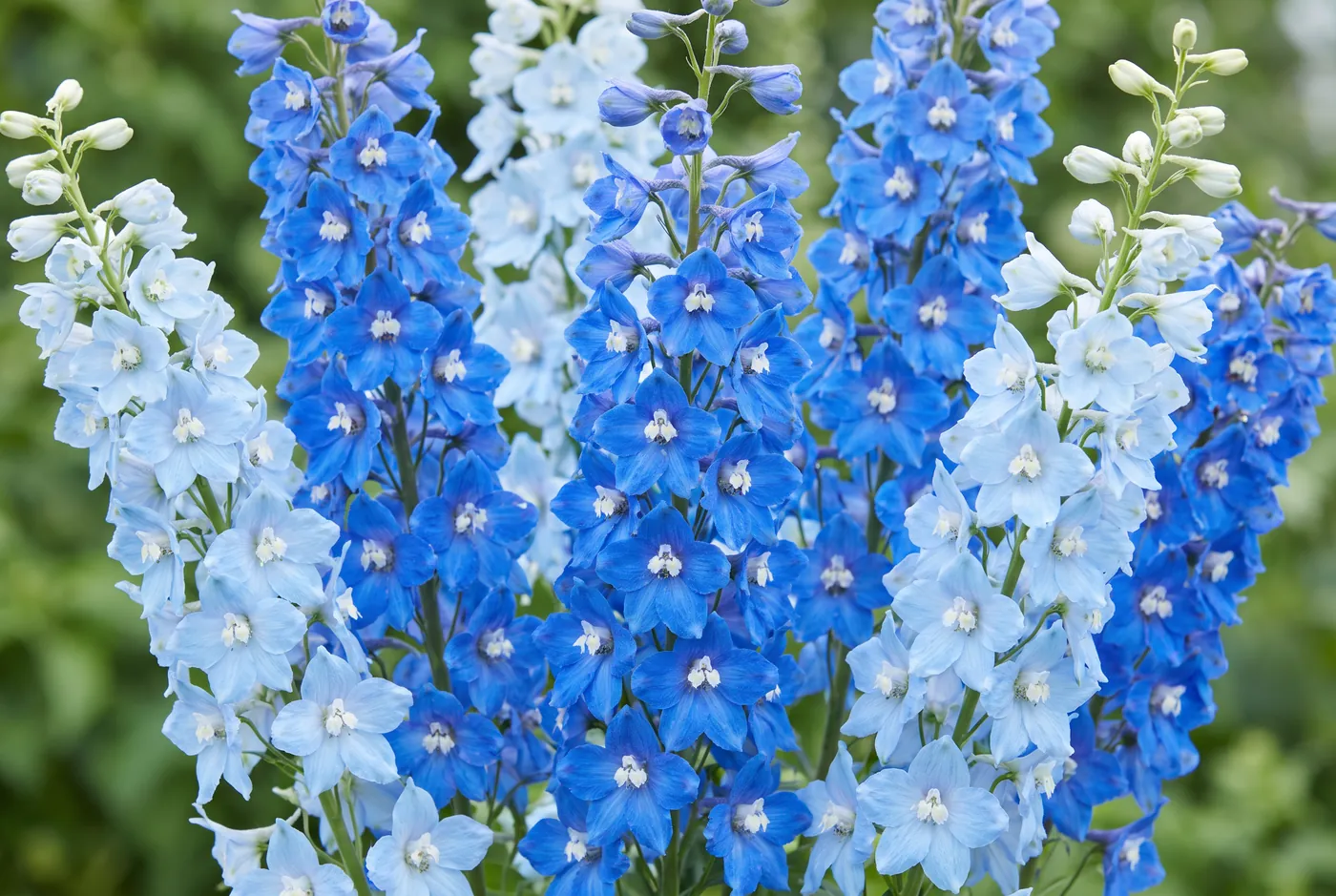
About Delphiniums
Delphiniums are the reason a florist can offer you a genuinely blue arrangement. Almost every other blue flower in the trade is dyed, and most of what is sold as blue is really purple. Delphinium is the real thing, in shades from pale sky through to a deep marine that nothing else matches, on tall spires that can reach well over a metre.
Larkspur is the annual relative, softer and looser, and is the recognised birth flower for July. Both are worth knowing about, and both are considerably more poisonous than most people handling them realise.
Primary Meanings
- Openness: The classic meaning, of an open heart
- Lightness: Associated with joy and levity
- Big-Heartedness: Traditionally given to generous people
- Protection: Once hung in doorways to keep away ill fortune
Delphiniums Colors and Their Meanings
True Blue Delphinium
The genuine article, and the reason to buy them
Pale Blue Delphinium
Serenity, popular for weddings
White Delphinium
Purity, often with a dark contrasting centre
Purple Delphinium
Dignity and depth
Pink Larkspur
Fickleness in the Victorian language, softer in practice
Popular Delphiniums Types
Pacific Giant
Very tall, dense double spikes, the florist standard
Belladonna
Shorter and branching, a looser and more natural look
Larkspur
The annual relative; airier, cheaper, dries beautifully
New Zealand Hybrids
Strong-stemmed modern varieties bred for cutting
Care Instructions
Wash Your Hands
All parts are poisonous. Wash after handling.
Deep Water
Hollow stems drink heavily; keep the vase topped up.
Store Upright
The tips curve upward if laid flat.
No Draughts
Moving air makes the florets drop faster.
Best Occasions for Delphiniums
- Weddings: The go-to for a genuine blue in a bouquet
- July Birthdays: Larkspur is the month's birth flower
- Summer Arrangements: Peak season, best height and price
- Dried Work: Larkspur holds its colour exceptionally well dried
Interesting Delphiniums Facts
- The name comes from delphis, dolphin, after the shape of the unopened bud
- It is one of very few genuinely blue cut flowers rather than a dyed one
- All parts contain diterpene alkaloids and are poisonous to people and animals
- Larkspur is the birth flower for July
- Larkspur was historically used against lice, which is how toxic it is
How to Buy Good Delphiniums
Shake the stem gently before you buy. Delphiniums shatter, meaning the individual florets drop off the spike, and a bunch that sheds at a light shake in the shop will carpet your table within two days. Buy with the bottom third open and the rest in firm colored bud. The stems are hollow and crush easily, so check the base is round rather than flattened. Avoid any spike with a dry, papery look at the lowest florets, and be wary of very cheap blue in winter, which is usually a dyed white.
Season, Availability and What Drives the Price
Delphinium is a cool-summer crop and early to mid summer is its window, often with a second lighter flush in early autumn. That is when the spikes are tallest and the blue is deepest. Out of season it is imported, shorter and considerably dearer. True blue always costs more than white or purple from the same grower, because it is the color people are specifically buying and there is no substitute. Wedding demand in June and July is what pushes the summer price up rather than any shortage.
What to Use Instead
There is no real substitute for the blue, which is the point of the flower. For the shape at lower cost, larkspur is the annual relative and gives a looser, airier spike that dries far better. Stock and snapdragons give the same vertical line in other colors. Veronica works at a smaller scale. If blue is genuinely the requirement, the honest alternatives are hydrangea in the right variety and soil, or accepting that most other blue flowers in a shop have been dyed.
Safety Around Pets and Skin
This is the one on this list to take seriously. Every part of a delphinium and a larkspur is poisonous, to people as well as to cats, dogs, horses and livestock. They contain diterpene alkaloids that affect the nervous system, and delphinium is a well-documented cause of cattle deaths on rangeland. Symptoms include vomiting, muscle weakness, tremors and in serious cases cardiac effects. Wash your hands after handling, keep it away from animals and small children, and do not let anyone treat the florets as edible decoration.
Florist Tips for Delphiniums
Shake it before you buy it
Delphiniums shatter. A gentle shake in the shop tells you exactly how much of it will end up on your table. If florets fall freely, choose another bunch.
Keep it out of a draft
Moving air accelerates shattering more than heat does. A spot by an open window or a vent is the worst place for them.
Larkspur is the one to dry
It keeps its color better than almost any other flower when hung upside down, including the blues, which normally fade to gray.
Common Questions About Delphiniums
Are delphiniums really blue, or dyed?
Genuinely blue. They are one of a very small number of true-blue cut flowers, which is why they carry a premium. If you see very cheap blue stems in midwinter, though, check them: dyed white delphinium and dyed chrysanthemum are both common.
What is the difference between delphinium and larkspur?
They are close relatives. Delphinium is the perennial with tall dense spikes; larkspur is the annual, looser and airier, cheaper, and much better for drying. Larkspur is the July birth flower. Both are equally poisonous.
How poisonous are delphiniums?
Seriously. All parts contain alkaloids toxic to people, cats, dogs, horses and cattle, and delphinium poisoning is a known cause of livestock loss. Wash your hands after handling and keep them away from pets and children entirely.