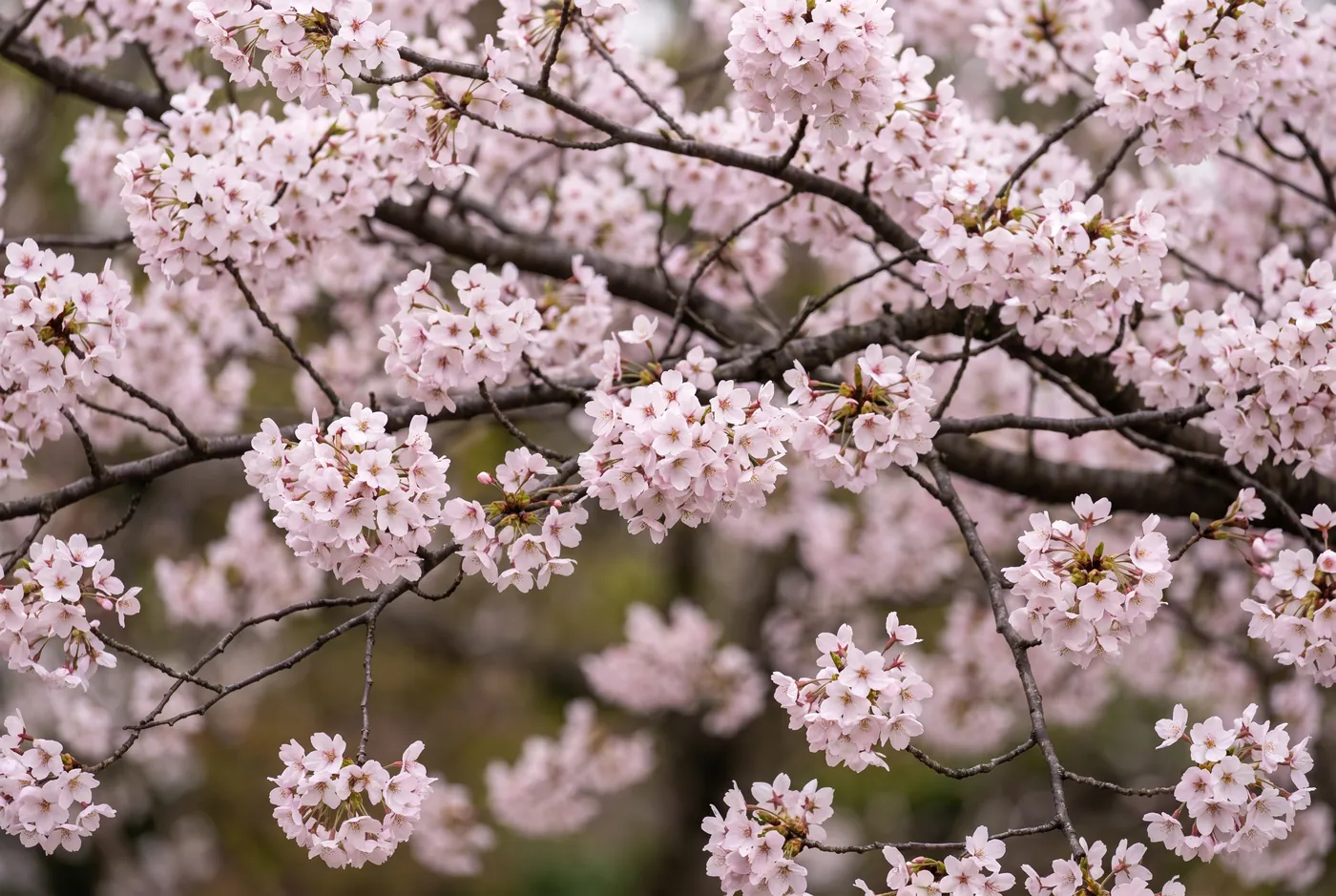
About Cherry Blossom
Cherry blossom is sold as branches rather than stems, and a single one can be two metres of bare wood covered in pale pink flowers. It is the largest statement a florist can make with one item, and it is the flower most associated with impermanence: in Japan the whole cultural meaning of sakura rests on the fact that it lasts about ten days and then falls.
You can also force it. Branches cut in late winter and brought into warmth will open weeks ahead of the trees outside, which is how it appears in shops before it appears in gardens.
Primary Meanings
- Impermanence: The central meaning of sakura in Japan
- Renewal: The arrival of spring after winter
- Beauty in Transience: Mono no aware; beauty because it ends
- New Beginnings: It marks the start of the school and business year in Japan
Cherry Blossom Colors and Their Meanings
Pale Pink Blossom
The classic sakura colour
White Blossom
Purity; Yoshino and wild cherry
Deep Pink Blossom
Kanzan and other double varieties
Green-Tinged Blossom
Ukon, a rare yellow-green flowered cherry
Popular Cherry Blossom Types
Yoshino
The classic pale pink, the one that lines rivers in Japan
Kanzan
Deep pink, heavily double, the showiest
Weeping Cherry
Long trailing branches, dramatic in tall arrangements
Quince and Plum
Related flowering branches sold alongside it
Care Instructions
Split the Cut End
Woody branches cannot drink through a flat cut.
Deep Water
Tall branches need depth and a heavy vase.
Cool Slows It
Warmth opens it fast; cool holds it back.
Expect Petal Fall
Falling petals are the flower, not a fault.
Best Occasions for Cherry Blossom
- Spring Statements: One branch is an entire arrangement
- Weddings: Large installations and arches
- Hanami: Blossom viewing, the Japanese spring tradition
- New Beginnings: The meaning it carries most strongly
Interesting Cherry Blossom Facts
- Sakura's meaning rests on impermanence; it flowers for about ten days
- Branches cut in late winter can be forced into flower weeks early
- Japan tracks a blossom front moving north across the country each spring
- Most ornamental cherries produce no useful fruit
- Washington DC's trees were a gift from Tokyo in 1912
How to Buy Good Cherry Blossom
Buy branches in tight bud with just a few flowers opening, because they open fast indoors and a branch already in full flower will be dropping within days. Look at the buds themselves: they should be plump and showing color rather than small and hard, which means they may never open. The cut end should be freshly cut and pale, not dark and dried. Length is what you are paying for, so decide where it is going before you buy, since a two-metre branch needs a vase that will not tip.
Season, Availability and What Drives the Price
Late winter through spring, and the shop season starts before the outdoor one because branches are cut early and forced into flower under warmth. Peak natural supply is March and April depending on region. It is expensive and priced by branch length rather than by stem count, so the cost of a large arrangement climbs quickly. Demand concentrates on spring weddings and on the hanami season, when Japanese and Japanese-American communities buy heavily.
What to Use Instead
Magnolia gives the same scale with much larger individual flowers. Forsythia is the cheap yellow alternative and forces even more readily. Flowering quince and plum are sold alongside cherry and behave identically. Pussy willow gives structure without flowers and lasts indefinitely. For sheer spring drama at lower cost, forsythia and quince are what florists reach for when cherry is out of budget.
Safety Around Pets and Skin
Prunus species are toxic to cats, dogs and horses. The leaves, bark and especially the seeds contain cyanogenic glycosides, which release cyanide when chewed. Blossom branches carry relatively little leaf, which limits the risk, but a pet stripping bark or chewing wood is a genuine hazard. Keep branches out of reach, and be particularly careful with horses, for whom wilted Prunus foliage is well documented as dangerous.
Florist Tips for Cherry Blossom
You can force it yourself
Cut branches in late winter once the buds have swollen, split the ends, and stand them in deep water indoors. They will open two to four weeks ahead of the trees outside. Forsythia and quince force even more easily.
Split the end, do not just cut it
A woody branch drinks badly through a flat cut. Split the bottom two inches upward with secateurs and it will take up water properly.
The petals falling is the point
Cherry blossom drops, heavily, and that is inseparable from what the flower means. Put it somewhere the fall looks deliberate rather than somewhere it is a nuisance.
Common Questions About Cherry Blossom
Can I force cherry blossom to flower early?
Yes, and it is standard practice. Cut branches in late winter once the buds have begun to swell, split the cut ends and stand them in deep water in a warm room. They will open weeks before the trees outside.
How long does cut cherry blossom last?
Five to ten days, and cooler rooms slow it down. Buy branches in tight bud rather than in full flower and you get most of that time rather than the end of it.
What does sakura mean?
It is simply the Japanese word for cherry blossom, but culturally it carries the idea of beauty that matters because it does not last. The blossom season is short and celebrated with hanami, blossom viewing, precisely for that reason.