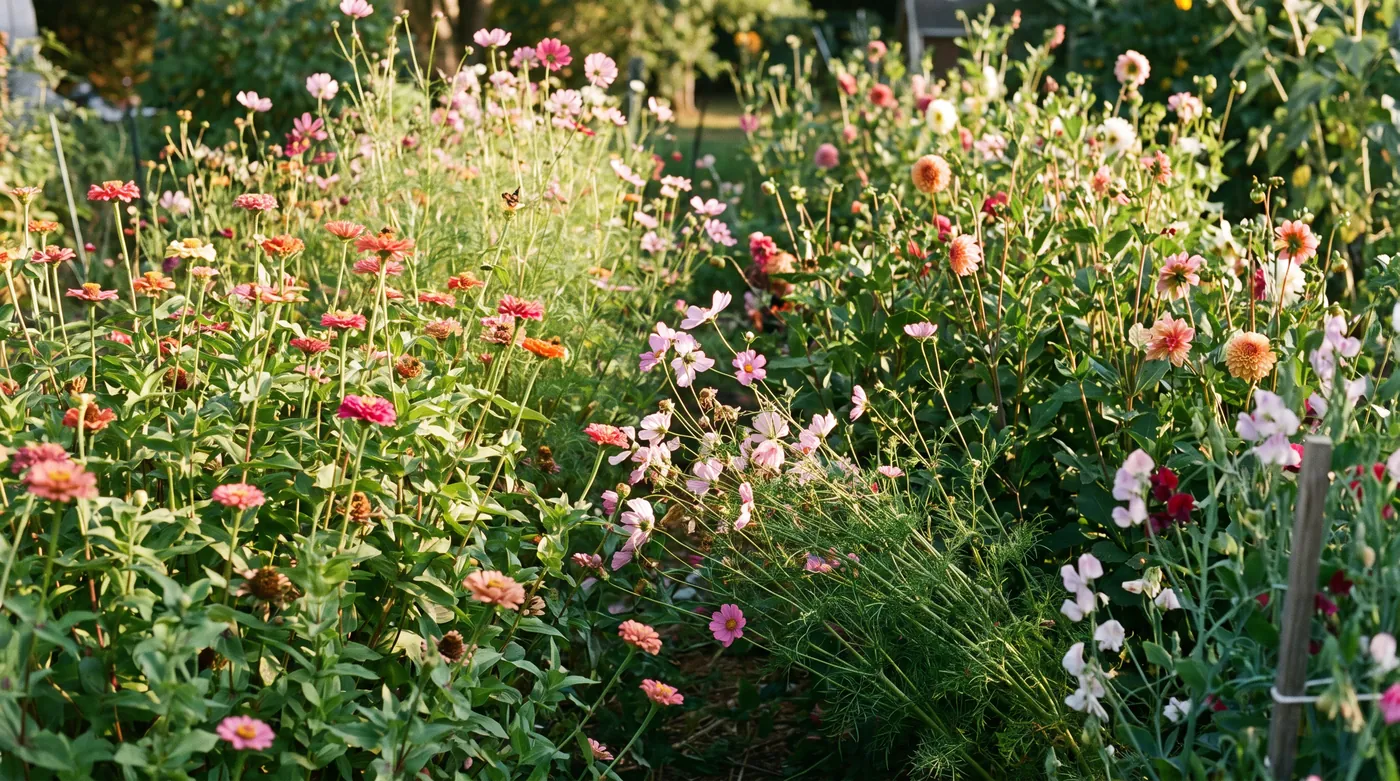
A small backyard cutting bed of zinnias, cosmos and dahlias in summer

The one thing that decides everything

Plants fall into two groups and it matters more than any other distinction. Some flower once, in a flush, and then they are done for the year. Others respond to being cut by producing more, and keep doing it until frost.

In a big garden you can afford both. In one bed, the second group is the only one worth planting, because a plant that gives you forty stems across three months is worth five that give you one each and then sit there. The habit has a name in seed catalogs, cut-and-come-again, and it is worth reading for on the packet.

Zinnias are the clearest example. Cut one properly, down to a leaf joint low on the stem rather than snipping the flower off the top, and the plant branches from that joint and sends up two more. Keep doing it and a single plant will carry you from midsummer to the first frost. Stop cutting and it sets seed and quits. The plant is not being generous, it is trying to reproduce, and cutting keeps telling it that it has not managed yet.

What does not earn it

Anything that flowers once, briefly, and takes up space for the rest of the year. Tulips and daffodils are wonderful and they belong somewhere else in the garden, not in the one bed you are cutting from, because their foliage has to be left to die back for weeks after the flower is gone and it occupies the ground the whole time.

The same goes for most shrubs. A peony is a beautiful thing and gives you perhaps a week of cutting a year off a plant that holds a square yard permanently. In a big border, obviously. In your only bed, no.

Cut in the morning, and cut more than you think

Stems cut early are full of water and last measurably longer than the same stems cut in the afternoon heat. Take a bucket of water into the garden with you and put them straight in, rather than carrying a handful around and arranging them later, because the few minutes in the air are where most of the damage happens.

And cut harder than feels comfortable. A cutting garden that looks full and untouched is a cutting garden that is not being used. The plants want it, the vase wants it, and the bed will look better in a fortnight for it.

More from the blog

Close-up view of fresh flower stems being cut at a sharp angle with professional florist shears, showing the diagonal cut surface and exposed stem tissue, water droplets visible, bright natural light,

Why Florists Recut Stems at an Angle Before They Go in Water

3 November 2026

The angled cut on flower stems isn't about surface area. It's about keeping the cut end off the bottom of the vase where it would seal shut.

Read it
Wide horizontal photograph of multiple silver metal florist buckets with flared tops arranged in rows on a concrete floor, filled with fresh flower stems including roses and lilies, shot from a slight

Why Flower Buckets Have Those Wide Flared Tops

13 October 2026

The shape of a florist's bucket is not arbitrary. The flared top, the height, and the narrow base all solve specific problems with how cut flowers stay alive.

Read it
Tight bunches of mixed fresh flowers wrapped in clear plastic sleeves standing upright in white buckets in a supermarket floral display, bright overhead lighting, vivid pinks and yellows, condensation

Why Most Grocery Store Flowers Come in Already Wrapped

22 September 2026

Grocery store flowers arrive in plastic sleeves for reasons that have nothing to do with display. The wrapping protects the product through a supply chain not

Read it