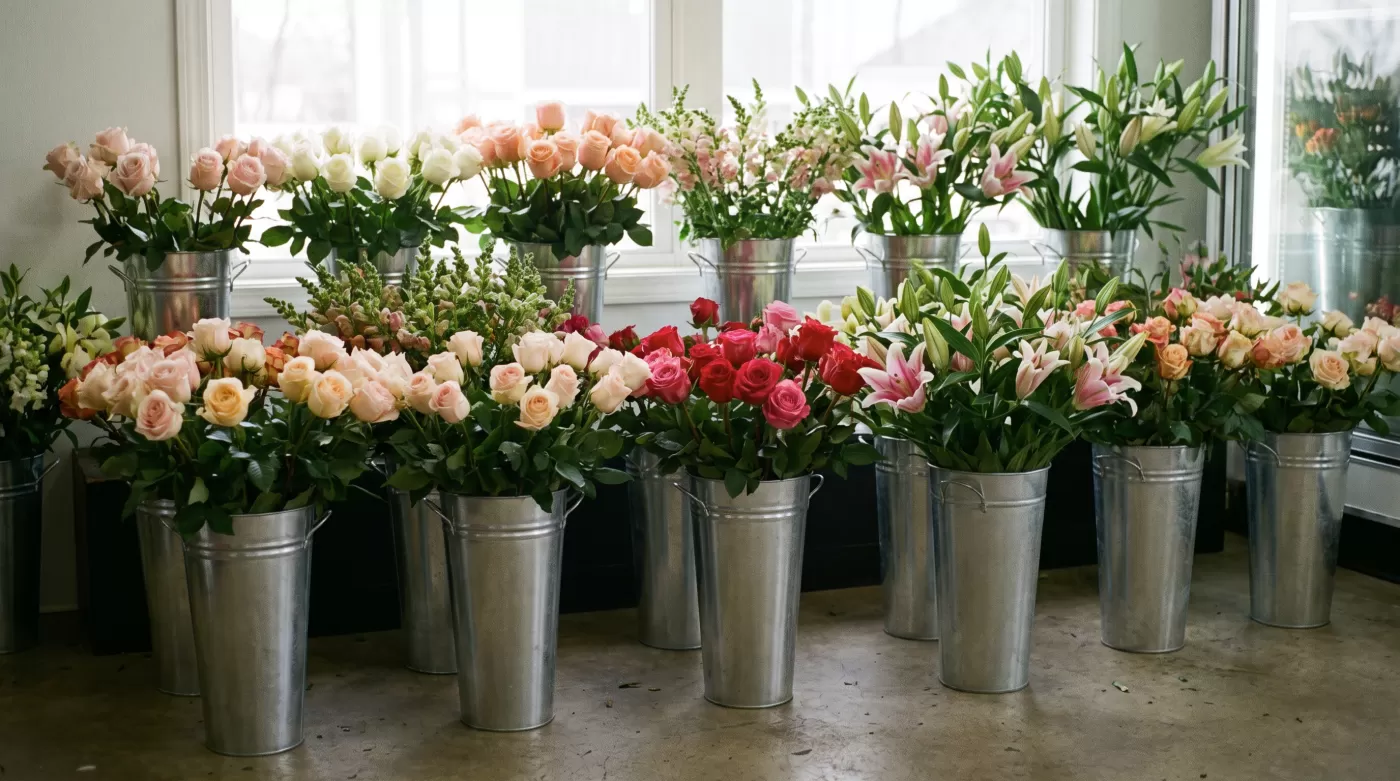
Wide horizontal photograph of multiple silver metal florist buckets with flared tops arranged in rows on a concrete floor, filled with fresh flower stems including roses and lilies, shot from a slight

The Flare Keeps Stems From Crushing Each Other

Flowers do not arrive one stem at a time. They come in bunches of ten or twenty, and a busy shop will have dozens of bunches in a single bucket. If you put that many stems in a straight-sided container, the ones in the center get crushed. Petals compress, leaves fold, and stems bend where they touch the edge.

The flared top spreads the stems as they rise, giving each one room to sit without pressing against its neighbors. The blooms end up in a wider circle than the stems below, which means a rose in the middle is not jamming into the five around it. It also means you can pull a single stem without dragging three others with it.

This matters more than it sounds like it would. Damage from crowding is cumulative. A petal that gets bent today will brown tomorrow, and a stem that gets pulled across another will strip leaves and knock off buds.

The Narrow Base Saves Cooler Space

Florists do not have unlimited room, and cooler space is especially tight. A bucket that was wide all the way down would take up three times the floor area and hold half the stems. The narrow base lets you pack buckets close together on the cooler floor, while the flared top keeps the flowers from tangling together above.

This is also why most florist buckets taper gradually rather than flaring sharply at the rim. A gentle taper means you can nest empty buckets inside each other for storage, and it also means the bucket is stable when full. A heavy load of water and stems in a vessel with a base much narrower than the top will tip if someone bumps it.

What Makes a Bucket Work in Practice

Not every bucket works equally well, and florists have strong preferences. The features that matter in daily use include:

  • Smooth interiors with no seams or ridges where bacteria can collect and where stems can catch when you pull them out
  • Handles that sit flush or fold flat so buckets can stand close together without handles tangling
  • Tapered sides that are not too steep, which would make the top so wide that stems flop over the edge, or too gradual, which would waste space
  • Opacity, because algae grows in clear containers and adds to the bacterial load in the water

More from the blog

Tight bunches of mixed fresh flowers wrapped in clear plastic sleeves standing upright in white buckets in a supermarket floral display, bright overhead lighting, vivid pinks and yellows, condensation

Why Most Grocery Store Flowers Come in Already Wrapped

22 September 2026

Grocery store flowers arrive in plastic sleeves for reasons that have nothing to do with display. The wrapping protects the product through a supply chain not

Read it
Close-up view of fresh rose stems on a clean florist work table, some stems fully leafed, others with leaves stripped away showing bare green stems, scattered rose leaves on the white surface, profess

Why Florists Strip the Leaves Before They Sell the Stems

15 September 2026

Florists remove most foliage from cut flowers before they sell them. The reasons are practical, not aesthetic, and they matter for vase life.

Read it
Bunches of long-stemmed roses arranged vertically in clear plastic sleeves on a wholesale flower market table, sorted by height with visible grade labels showing different centimeter measurements, pro

Why Flower Stems Are Graded by the Centimeter

12 August 2026

The wholesale flower trade sorts stems into grades by length, and a few centimeters can double the price. Here's what actually drives that difference.

Read it