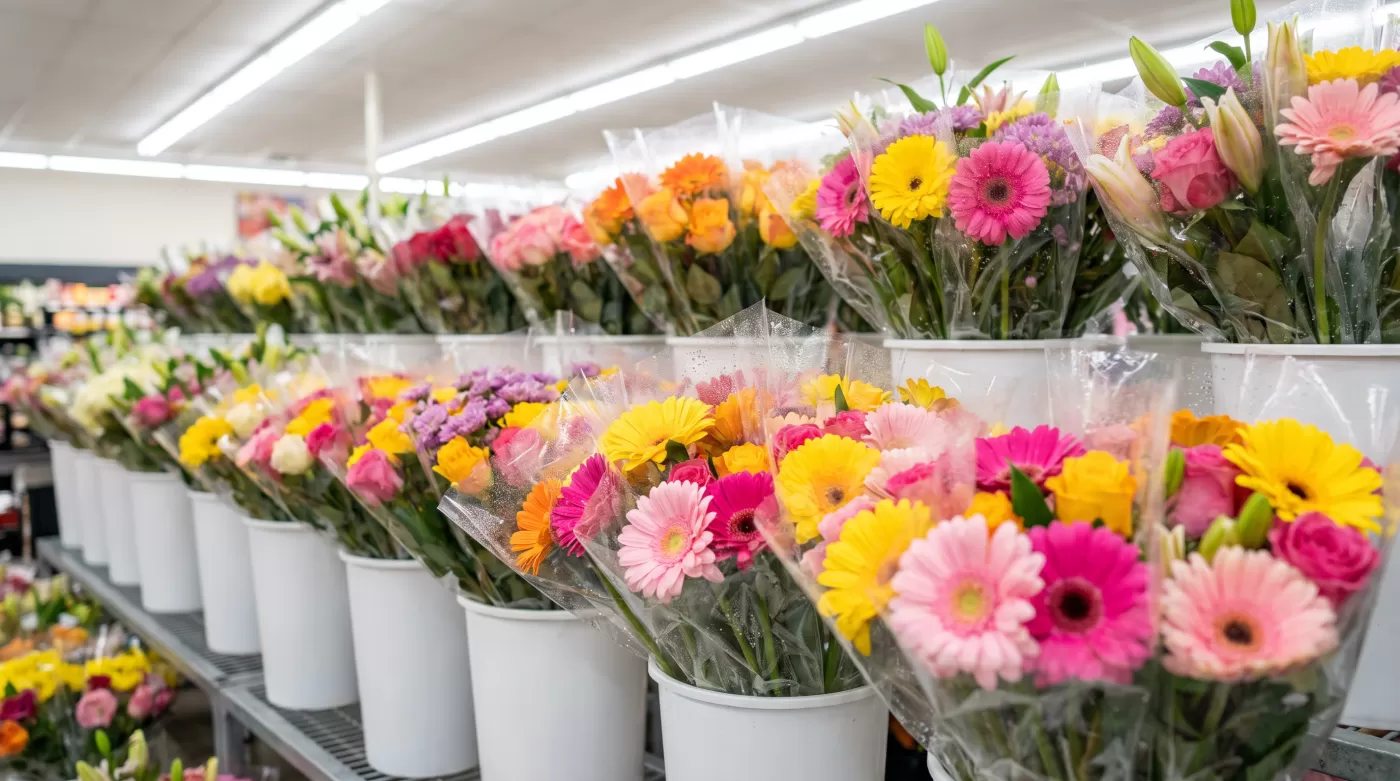
Tight bunches of mixed fresh flowers wrapped in clear plastic sleeves standing upright in white buckets in a supermarket floral display, bright overhead lighting, vivid pinks and yellows, condensation

Flowers Move Through a System Built for Boxes

Supermarket distribution centers are designed to process pallets of boxed and crated goods. Product gets unloaded from trucks, sorted, and reloaded onto other trucks heading to individual stores. It moves on conveyor belts, gets stacked, and sits in holding areas. Flowers in this system get crushed if they are not armored.

The plastic sleeve holds the stems together in a tight bundle and keeps the blooms from splaying out where they will catch on something. It also creates a rigid column that will not fold over when a box gets set on top of it or when the whole load shifts during transport. Loose flowers in a bucket would not survive the trip from the distribution center to the store, let alone the trip before that.

Growers and importers who supply supermarkets know exactly what kind of treatment the product will see, and they pack for it. The sleeve goes on before the flowers leave the farm or the wholesaler, because that is the only way to get them to the end of the chain in sellable condition.

The Wrapping Hides Damage and Protects What Is Left

Flowers that have been shipped long distances and moved through rough handling are not going to look perfect. Petals get bruised, edges brown, and the outer guard petals on roses get battered. The sleeve holds everything together and keeps the damaged parts from being too obvious until someone picks up the bunch and looks closely.

It also prevents further damage while the flowers sit in the store. Customers pull bunches out of buckets, look them over, and shove them back in. Without the sleeve, blooms would be snapping off and petals would be getting torn within hours. The wrap is the only thing keeping the product intact through several days of handling by people who are not being careful.

What the Sleeve Does Not Do

  • It does not keep the flowers fresher. If anything, it traps ethylene gas and humidity, which can speed deterioration. But the trade-off is worth it because the physical protection matters more.
  • It is not there to look decorative. The printed designs and ribbons are marketing, but the sleeve itself is structural. Bouquets aimed at florists come without any of that because florists do not need it.
  • It does not mean the flowers are low quality. The same farms that supply high-end florists also supply supermarkets. The difference is in how the product is packed and transported, not necessarily in what was cut.

More from the blog

Wide horizontal photograph of multiple silver metal florist buckets with flared tops arranged in rows on a concrete floor, filled with fresh flower stems including roses and lilies, shot from a slight

Why Flower Buckets Have Those Wide Flared Tops

13 October 2026

The shape of a florist's bucket is not arbitrary. The flared top, the height, and the narrow base all solve specific problems with how cut flowers stay alive.

Read it
Close-up view of fresh rose stems on a clean florist work table, some stems fully leafed, others with leaves stripped away showing bare green stems, scattered rose leaves on the white surface, profess

Why Florists Strip the Leaves Before They Sell the Stems

15 September 2026

Florists remove most foliage from cut flowers before they sell them. The reasons are practical, not aesthetic, and they matter for vase life.

Read it
Bunches of long-stemmed roses arranged vertically in clear plastic sleeves on a wholesale flower market table, sorted by height with visible grade labels showing different centimeter measurements, pro

Why Flower Stems Are Graded by the Centimeter

12 August 2026

The wholesale flower trade sorts stems into grades by length, and a few centimeters can double the price. Here's what actually drives that difference.

Read it