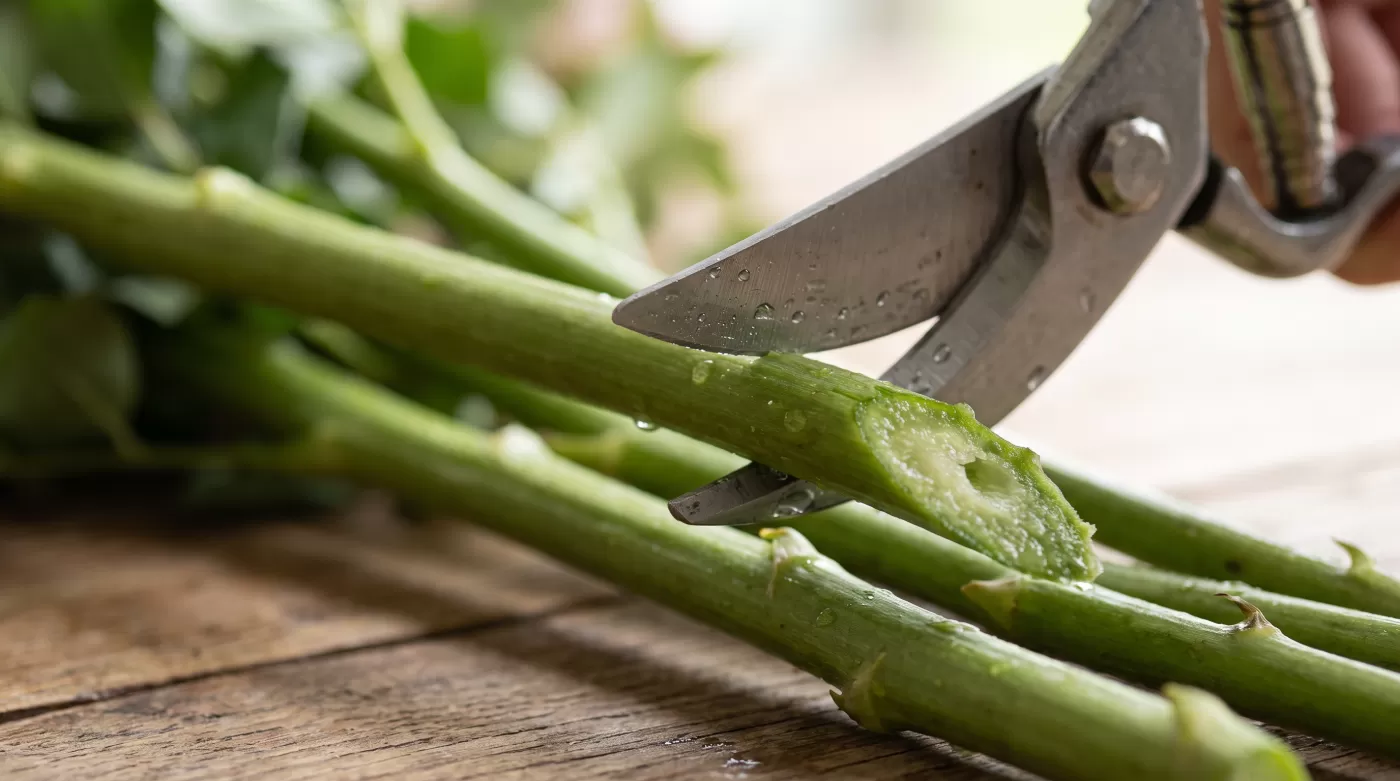
Close-up view of fresh flower stems being cut at a sharp angle with professional florist shears, showing the diagonal cut surface and exposed stem tissue, water droplets visible, bright natural light,

The Surface Area Explanation Does Not Add Up

A stem cut at a 45-degree angle does expose more area than a blunt perpendicular cut, but not by much. On a rose stem with a typical diameter of about a quarter inch, the difference between a flat cut and an angled one is negligible. You gain a sliver of additional surface, but the increase is nowhere near enough to change how much water the stem can pull up.

Xylem, the tissue that moves water through the plant, runs vertically through the stem. Whether you cut straight across or at an angle, you are opening the same number of xylem vessels. The angle does not create new pathways or suddenly make the stem more efficient at hydration. It just changes the shape of the opening.

If surface area were the limiting factor, stems would struggle in water no matter how you cut them. They do not. A straight cut works fine as long as the end is not blocked. The angle is insurance against blockage, not an upgrade in capacity.

Why Florists Cut Underwater or Recut Just Before Arranging

Cutting the stem creates an open wound, and if that cut is exposed to air for more than a few seconds, an air bubble can enter the xylem and block the flow of water up the stem. This is why florists recut stems right before they go into a vase, and why some cut them while holding the stem underwater.

The angle helps here too, but indirectly. Because the angled cut keeps the stem from sealing against the vase bottom, water begins moving up the stem immediately. There is less time for an air embolism to cause a problem. A straight cut that seals on contact gives any trapped air time to lock in place.

This is also why you see florists trim a fresh half-inch or more off the bottom of a stem even if it was already cut at the farm. That original cut has been out of water for hours or days, and the xylem ends have dried and sealed over. The new cut, done at an angle just before the stem goes into the bucket, opens everything back up.

What Actually Increases Water Uptake

If you want a stem to hydrate faster and last longer, the angle is not where to focus. The things that genuinely make a difference are:

  • Cutting cleanly with a sharp blade so the xylem vessels are not crushed or torn, which would block water flow.
  • Removing leaves below the waterline so they do not decay and foul the water with bacteria that can clog the stem.
  • Using clean water and a clean vase to minimize bacterial growth that would block the cut end from the inside.
  • Recutting every few days if the arrangement is meant to last, because the cut end will eventually seal over again as cells dry and bacteria accumulate.

The angled cut is part of good stem prep, but it is the least important part. It prevents one specific failure mode. Everything else determines whether the flower actually thrives once it is in the vase.

More from the blog

Wide horizontal photograph of multiple silver metal florist buckets with flared tops arranged in rows on a concrete floor, filled with fresh flower stems including roses and lilies, shot from a slight

Why Flower Buckets Have Those Wide Flared Tops

13 October 2026

The shape of a florist's bucket is not arbitrary. The flared top, the height, and the narrow base all solve specific problems with how cut flowers stay alive.

Read it
Tight bunches of mixed fresh flowers wrapped in clear plastic sleeves standing upright in white buckets in a supermarket floral display, bright overhead lighting, vivid pinks and yellows, condensation

Why Most Grocery Store Flowers Come in Already Wrapped

22 September 2026

Grocery store flowers arrive in plastic sleeves for reasons that have nothing to do with display. The wrapping protects the product through a supply chain not

Read it
Close-up view of fresh rose stems on a clean florist work table, some stems fully leafed, others with leaves stripped away showing bare green stems, scattered rose leaves on the white surface, profess

Why Florists Strip the Leaves Before They Sell the Stems

15 September 2026

Florists remove most foliage from cut flowers before they sell them. The reasons are practical, not aesthetic, and they matter for vase life.

Read it