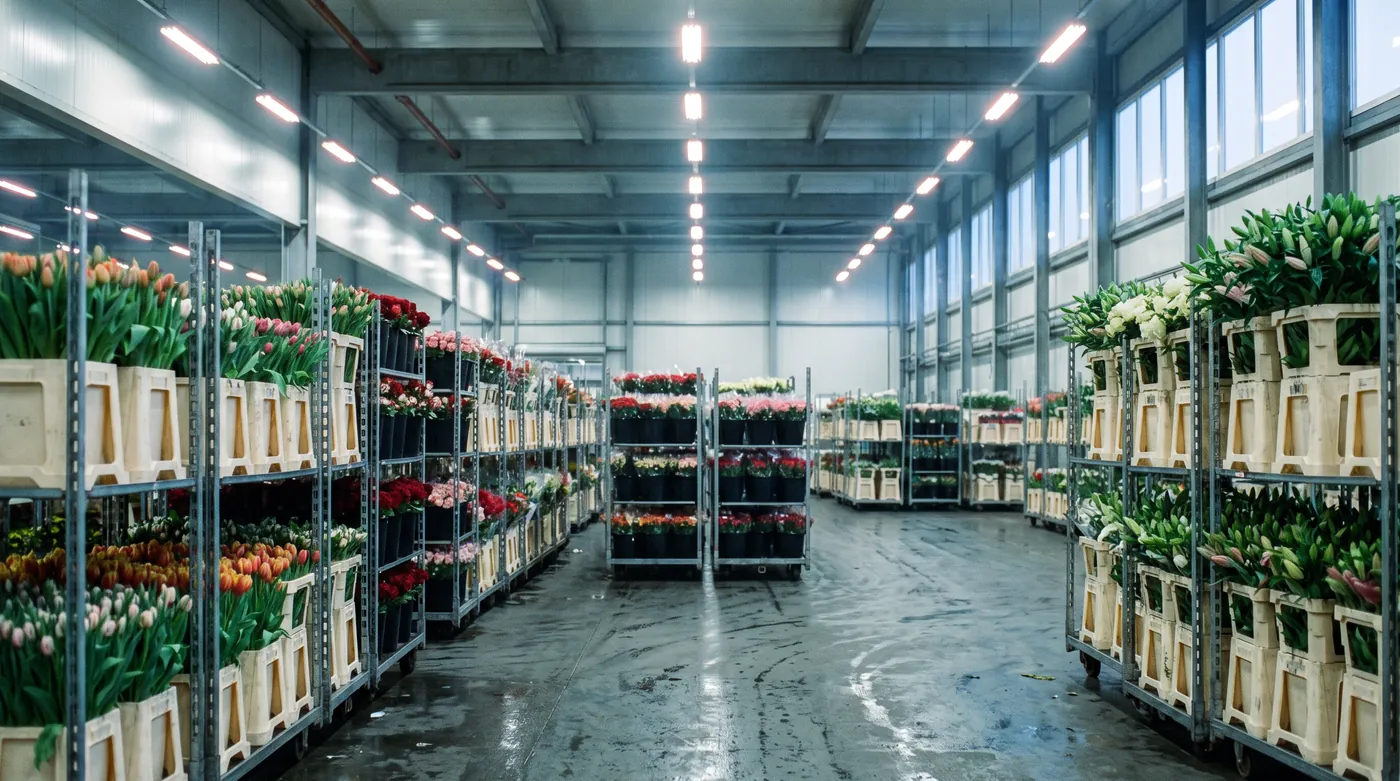
Rows of trolleys stacked with cut flowers in a vast auction warehouse

The auction that counts down

A normal auction starts low and climbs while people bid against each other. The Dutch flower auctions do the opposite. The clock starts at a price nobody would pay and falls. The first buyer to press the button gets the lot, at whatever the price was at that instant.

It sounds like a gimmick and it is the opposite. Ascending auctions are slow because they need many rounds of bidding. A descending clock needs exactly one decision from one person, so a lot can clear in seconds, and a hall running several clocks at once can move an extraordinary volume of perishable stock before the morning is out. When the product loses value by the hour, speed is not a convenience, it is the entire design.

The tension is obvious once you see it. Wait and the price falls, but somebody else may take it first. Every buyer is guessing how badly the others want the same trolley.

What it means for what you can buy

Two things, mostly.

  • Winter variety is logistics, not a miracle. The price reflects freight and refrigeration rather than the flower being better.
  • Speed shapes what gets grown. Varieties are selected for straight stems, uniform heads and the ability to survive days in a box.
  • Scent is the usual casualty. It does not survive transport and it is not what the chain is built to reward.

That last one is why a rose from a florist can look flawless and smell of nothing, while a scruffy garden rose that would not survive one night in a box smells like a rose is supposed to.

More from the blog

Rows of small hardy annual seedlings in a bare autumn garden bed

Sow Hardy Annuals in Fall and They Flower Weeks Earlier

4 August 2026

Fall sown hardy annuals come through winter as small plants and flower earlier, taller and heavier than the same seed sown in spring.

Read it
Greenhouses on a high plateau in the Colombian Andes at dawn

Why So Many American Flowers Are Grown in Colombia

28 July 2026

A large share of the flowers sold in the United States are grown near Bogota. The reasons are altitude, the equator, and a 1960s policy decision.

Read it
Striped and flamed tulips arranged in a dark vase in old master style

Tulip Mania: Most of What You Have Heard Did Not Happen

14 July 2026

The Dutch tulip bubble is the standard cautionary tale about speculation. Historians have spent decades taking most of it apart.

Read it