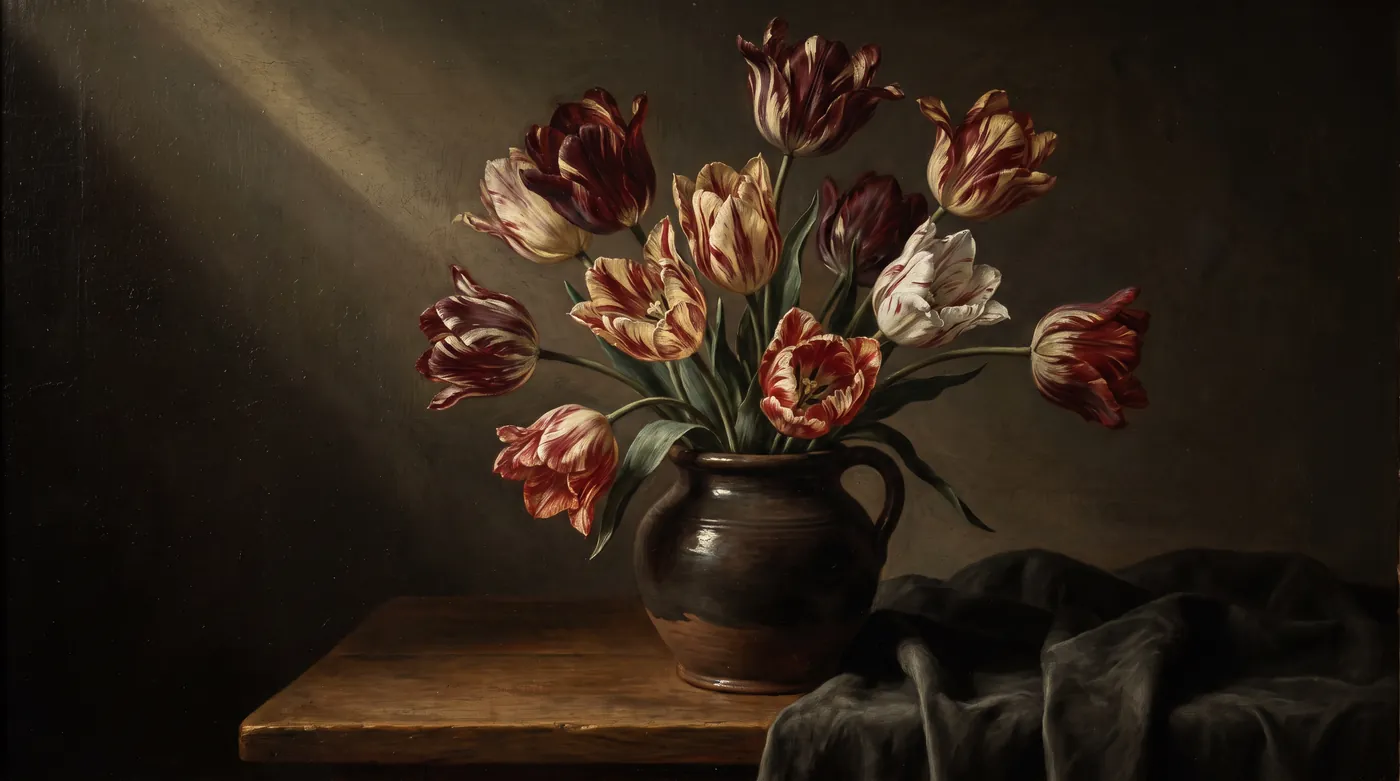
Striped and flamed tulips arranged in a dark vase in old master style

Where the story we tell comes from

The popular version does not come from the 1630s. It comes from a book published in 1841, Charles Mackay's account of popular delusions, which is a wonderful read and a poor source. Mackay drew heavily on satirical pamphlets written at the time by moralists who disapproved of the trade, which is roughly like reconstructing an event from the editorials attacking it.

Those pamphlets were making a point about greed, not keeping records. The anecdotes that survive best are the ones that made the point best, which is exactly the selection effect you would expect.

The part that is genuinely strange

The bulbs that reached the silly prices were not ordinary tulips. They were the broken ones: flowers with feathered and flamed streaks of color running through the petals, each one unrepeatable, and impossible to produce reliably from seed.

Nobody at the time knew why it happened. Growers understood only that a plain bulb sometimes broke into a patterned one, and that the pattern then passed to its offsets, which is why a single bulb could be worth so much. It was not until the twentieth century that the cause was identified as a virus, spread by aphids, which disrupts the pigment in the petal.

So the most valuable flowers in Europe were the sick ones, and the thing that made them beautiful was the thing slowly weakening the plant. Infected bulbs produce fewer and smaller offsets each generation, which is a large part of why they stayed scarce. The famous broken tulips of the Dutch still life paintings essentially no longer exist. The striped tulips sold today are bred to look like them and are perfectly healthy.

More from the blog

Rows of small hardy annual seedlings in a bare autumn garden bed

Sow Hardy Annuals in Fall and They Flower Weeks Earlier

4 August 2026

Fall sown hardy annuals come through winter as small plants and flower earlier, taller and heavier than the same seed sown in spring.

Read it
Greenhouses on a high plateau in the Colombian Andes at dawn

Why So Many American Flowers Are Grown in Colombia

28 July 2026

A large share of the flowers sold in the United States are grown near Bogota. The reasons are altitude, the equator, and a 1960s policy decision.

Read it
Rows of trolleys stacked with cut flowers in a vast auction warehouse

How Flowers Get Here: The Clock Auction Most of Them Pass Through

21 July 2026

A huge share of the world's cut flowers move through Dutch auction halls that run backwards, in seconds, before dawn.

Read it