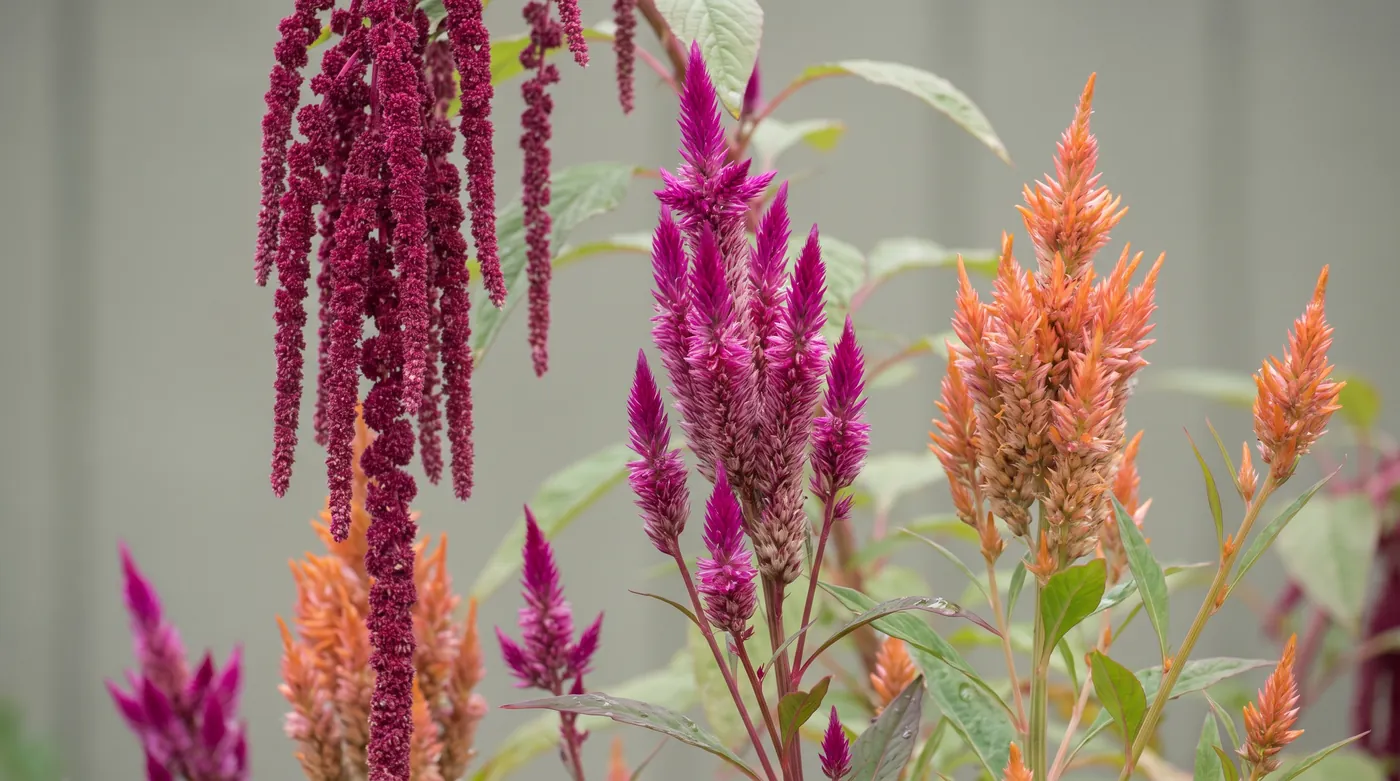
Hanging crimson amaranthus tassels beside celosia plumes

3 flowers in this family

Everything in this guide that belongs to Amaranthaceae

Trailing crimson amaranthus ropes with green foliage

Amaranthus

Amaranthus caudatus
7-14 days

Amaranthus
Velvety magenta cockscomb celosia beside feathery orange plumes

Celosia

Celosia argentea
10-14 days

Celosia
Small round magenta and white gomphrena clover-like heads

Gomphrena

Gomphrena globosa
10-14 days fresh, years dried

Gomphrena

The colored part is not petals

Look closely at any of these and the showy part is not petal tissue. Amaranthus and gomphrena carry tiny flowers wrapped in colored papery bracts, and the bracts are what you are buying. Celosia is stranger still: the crested forms are a growing tip that has flattened and fanned instead of forming a normal spike, and the brain-like shape is that fault bred deliberately into a feature.

Bracts are structural rather than delicate, which is why vase life here is good. Ten days to a fortnight is normal, and the color does not fade the way a petal does because nothing fragile is holding it.

It is also why they dry so well. Gomphrena keeps its color for years and celosia holds its shape completely. Hung upside down somewhere dark and dry, they need nothing else at all.

Relatives you already know

Beets, chard, spinach and quinoa are all in this family. So is the sugar beet behind a large share of the world's sugar, and so is the tumbleweed of the American west, which is a Salsola rolling its seed across open ground.

That mixture is not accidental. This family specializes in ground other plants find difficult: salt, drought and disturbance. A good number of its members are halophytes, able to grow in salt levels that would kill most crops outright.

Amaranth grain is one of the oldest cultivated foods of the Americas and was a staple across Mesoamerica before Spanish colonists suppressed it for its role in religious ceremony. It has returned as a gluten free grain, so the same family is now sold both as a health food and as a florist's trailing stem.