About Celosia
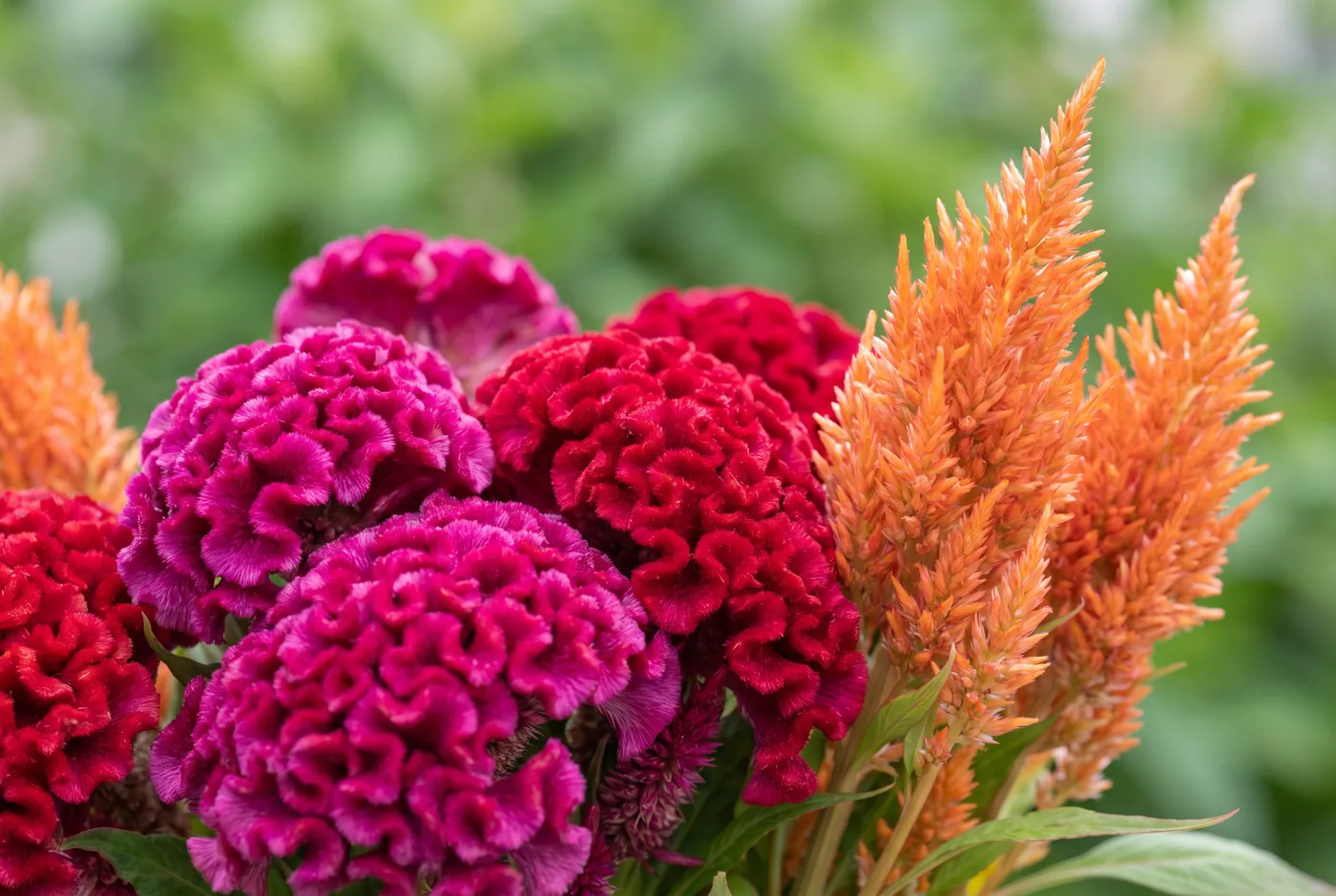
Celosia is two completely different-looking flowers sold under one name. Cristata, the cockscomb, is a dense velvet fan of fused flowers that looks like coral or a brain, deeply strange up close and unlike anything else in a shop. Plumosa is a soft feathered plume, all flame-coloured spikes.
Both are heat-loving annuals that peak in late summer, both hold their colour extraordinarily well, and both dry almost perfectly. The texture is the point: celosia is what florists reach for when an arrangement needs something to touch.
Primary Meanings
- Boldness: From its intense colour and unmissable texture
- Warmth: The Victorian association, from the flame shades
- Humour: Sometimes given for its unusual and slightly comic form
- Affection: The traditional gifting meaning
Celosia Colors and Their Meanings
Magenta Celosia
The classic cockscomb colour
Orange Celosia
Warmth; the plume forms
Deep Red Celosia
Intensity, and the most velvety
Cream Celosia
Unusual and much used in modern work
Lime Celosia
Green cockscomb, a designer favourite
Popular Celosia Types
Cristata
Cockscomb; the dense velvet fan
Plumosa
Feathered upright plumes, flame-like
Spicata
Wheat celosia, slim tapering spikes
Bombay Series
The large commercial cockscomb grown for cutting
Care Instructions
Strip Foliage
The leaves fail first and foul the water.
Change Water
It fouls water quickly; change every other day.
Recut
Trim on an angle; stems are thick and take water well.
Dries Beautifully
Hang upside down and it keeps colour for years.
Best Occasions for Celosia
- Autumn Arrangements: Peak season and its natural home
- Textural Bouquets: The modern wedding style, with protea and amaranthus
- Dried Work: It holds shape and colour exceptionally
- Día de los Muertos: Used alongside marigolds for its intense colour
Interesting Celosia Facts
- The name comes from the Greek for burned, after the flame-like plumes
- Cockscomb's velvet fan is many flowers fused into one flattened structure
- It is a relative of amaranth and the leaves are eaten as a vegetable in West Africa
- It dries with almost no loss of colour
- The two forms look so different that many people do not realise they are one plant
How to Buy Good Celosia
Feel it. Good cockscomb is dense and springy like velvet; when it is past its best it goes soft and slightly damp, and often develops a musty smell. Look at the base of the head where it meets the stem, because that is where it rots first. For the plume forms, look for tight, sharply colored spikes rather than fluffy ones, since fluffy means it is setting seed. The leaves go long before the flower does, so judge age by the head, not the foliage.
Season, Availability and What Drives the Price
It is a heat lover, so late summer into autumn is when it is best, most plentiful and cheapest. Field-grown crops from July onward give the largest cockscomb heads. Some greenhouse supply exists outside that window at a premium and with noticeably smaller heads. Demand spikes around Día de los Muertos and through the autumn wedding season, when the textural style is at its most popular.
What to Use Instead
Amaranthus gives similar unusual texture in trailing or upright form and dries just as well. Protea offers the same one-stem density at much higher cost. For flame color specifically, marigolds and zinnias cover the same season. Hydrangea heads give mass without the texture. Nothing else has the velvet surface of a cockscomb, which is why it keeps coming back into fashion.
Safety Around Pets and Skin
Celosia is not toxic to cats or dogs and is not on the ASPCA hazard list. The leaves are eaten as a vegetable across West Africa, where it is a common leafy green, so it is genuinely benign. It is a safe choice for a house with animals.
Florist Tips for Celosia
Strip the leaves immediately
Celosia foliage collapses well before the flower and fouls the water fast. Bare stems last considerably longer.
Cockscomb should feel like velvet
Soft, damp or musty means it is going over. This is one of the few flowers where touch tells you more than looking does.
Dry it and keep it
Hang it upside down somewhere dry and it holds color and shape for years. Dried cockscomb is a staple of autumn wreaths for exactly this reason.
Common Questions About Celosia
Why do celosia flowers look so different from each other?
Because they are two forms of the same species. Cristata is the velvet cockscomb, a flattened fan of fused flowers. Plumosa is the feathery upright plume. They look nothing alike and are usually sold under the same name.
Does celosia smell bad?
Fresh celosia has only a faint earthy scent. A musty smell means the head has begun to rot, usually from the base, and it will not recover. Check by smell as well as touch when buying.
Can you dry celosia?
Yes, extremely well. Hang it upside down in a dry airy place and it keeps its color and its velvet texture for years, which is why it is a fixture in dried autumn arrangements.