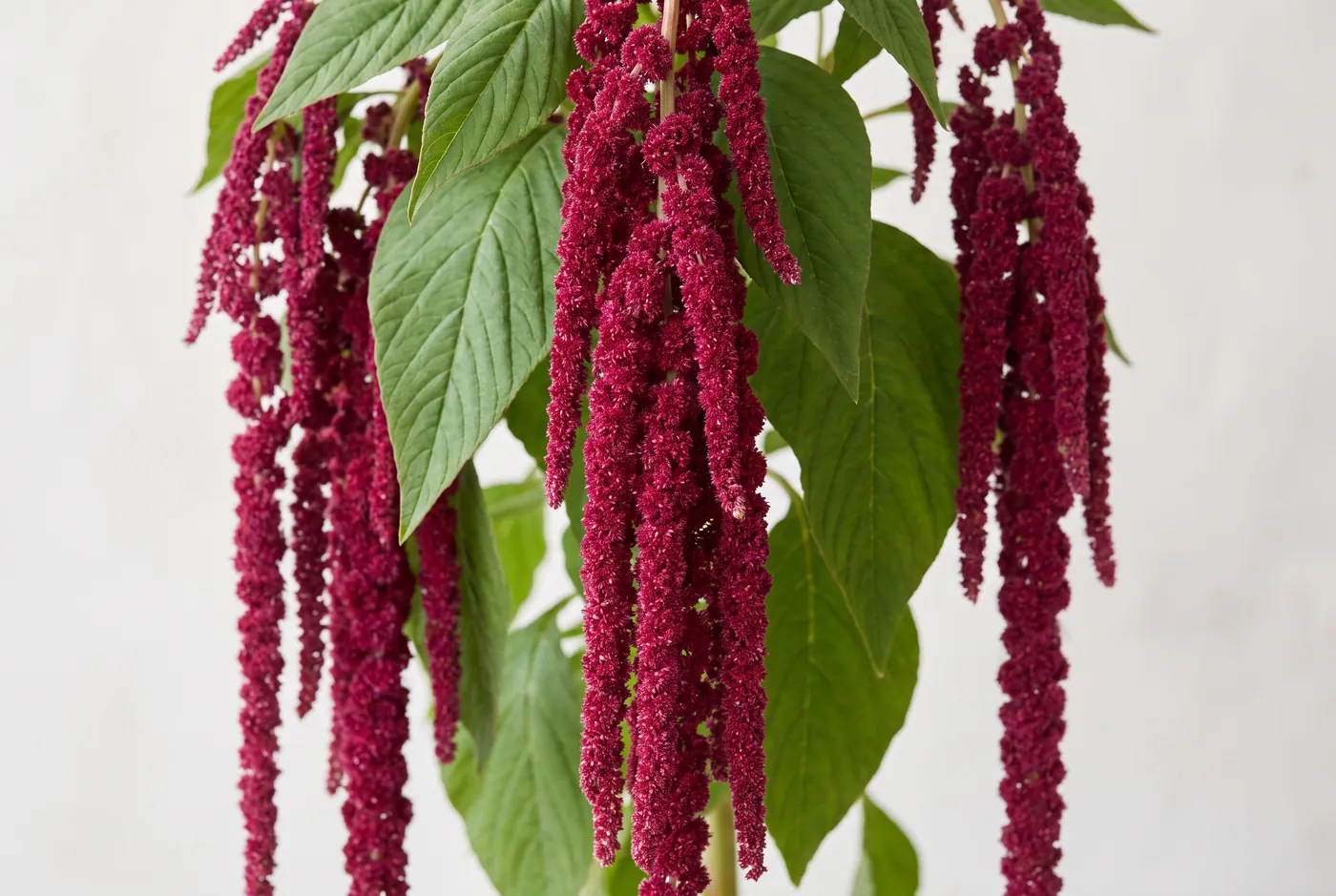
About Amaranthus
Amaranthus is the long trailing rope of tiny flowers that hangs out of modern bouquets and down the front of arches. The hanging form is called love lies bleeding, and once you have seen the name you cannot unsee the image. There is also an upright form, stiff and torch-like, which reads completely differently.
It is the same plant family that produces amaranth grain, a staple crop across the Americas for thousands of years, and the seed heads shed constantly, which is worth knowing before you put it above a dining table.
Primary Meanings
- Immortality: The Greek name means unfading
- Unfading Love: From the flower's refusal to wilt or lose colour
- Hopeless Love: The love lies bleeding association
- Faith: A long-standing symbolic use in wreaths
Amaranthus Colors and Their Meanings
Crimson Amaranthus
The classic trailing form
Green Amaranthus
Fresh and modern; heavily used in weddings
Bronze Amaranthus
Autumnal, upright varieties
Coral Amaranthus
Newer bred shades
Popular Amaranthus Types
Caudatus
Love lies bleeding; the long hanging ropes
Hypochondriacus
Upright torch form, stiff and vertical
Hot Biscuits
Bronze upright variety, popular in autumn work
Green Cascade
The green trailing form used in bridal work
Care Instructions
Expect Shedding
It drops tiny seeds constantly. Shake it first.
Deep Water
Thick stems drink heavily.
Strip Leaves
The foliage wilts long before the tassels.
Dries Well
Hang it and the colour holds for months.
Best Occasions for Amaranthus
- Weddings: Trailing from bouquets and arches; the signature use
- Autumn Arrangements: The bronze and crimson forms
- Textural Bouquets: With celosia, protea and dahlias
- Dried Work: It holds colour and drape when dried
Interesting Amaranthus Facts
- Amaranthus means unfading in Greek, after its lasting colour
- The same genus produces amaranth grain, farmed for thousands of years
- The trailing form, love lies bleeding, can hang well over half a metre
- It sheds tiny seeds continuously, which is unavoidable rather than a fault
- It was sacred to the Aztecs and its cultivation was suppressed by the Spanish
How to Buy Good Amaranthus
Run a hand down a tassel. It should feel dense and slightly furry, and hold its shape rather than falling apart. Some seed drop is normal, but a stem that sheds heavily in the shop will make a mess of a table. Look for even color along the whole rope, since the tips brown first, and check the foliage, which wilts well before the flowers and is the best age indicator. For trailing work, length is what you are paying for, so measure rather than guess.
Season, Availability and What Drives the Price
It is a warm-season annual, so late summer into autumn is the natural crop and when the longest, best stems appear. Some year-round import exists at higher prices and shorter lengths. Wedding demand for the green trailing form has grown sharply and keeps summer prices firmer than they used to be. Bronze and coral varieties cost more than plain crimson simply because fewer growers plant them.
What to Use Instead
For trailing greenery, ivy and jasmine vine give length without the texture. Hanging catkins and willow do the same in spring. Celosia gives the unusual texture in an upright form. For a similar rope of tiny flowers, tuberose spikes and buddleia read comparably. Nothing else drapes the way love lies bleeding does, which is why it survives in wedding work despite the shedding.
Safety Around Pets and Skin
Amaranthus is generally considered non-toxic to cats and dogs and is not on the ASPCA hazard list for household pets. It is worth noting that some Amaranthus species accumulate nitrates and are a recognized problem for grazing livestock, particularly cattle and pigs, but that concerns animals eating quantities of the growing plant rather than a pet nibbling a cut stem.
Florist Tips for Amaranthus
Shake it before it comes indoors
It drops tiny seeds continuously. A firm shake outside removes what was about to fall and saves sweeping up for a week.
Not above a dining table
The shedding is constant and it lands in food. Use it where it can drape over the edge of something rather than over people.
Length is the price
For trailing work you are buying drop, not flowers. A short stem is a completely different product and should not cost the same.
Common Questions About Amaranthus
Why is it called love lies bleeding?
From the long crimson tassels, which hang down like something bleeding out. The name attaches specifically to Amaranthus caudatus, the trailing form, and it carries a meaning of hopeless or unrequited love.
Why does amaranthus drop so much?
Those tassels are seed heads, and shedding is what they do. It is not a sign of poor quality or age. Shake a new stem outside and avoid hanging it over anything you eat from.
Is amaranthus the same as amaranth grain?
Same genus. The grain comes from species grown for seed, and it was a staple crop for the Aztecs. The cut flower varieties are bred for tassel length and color rather than for eating.