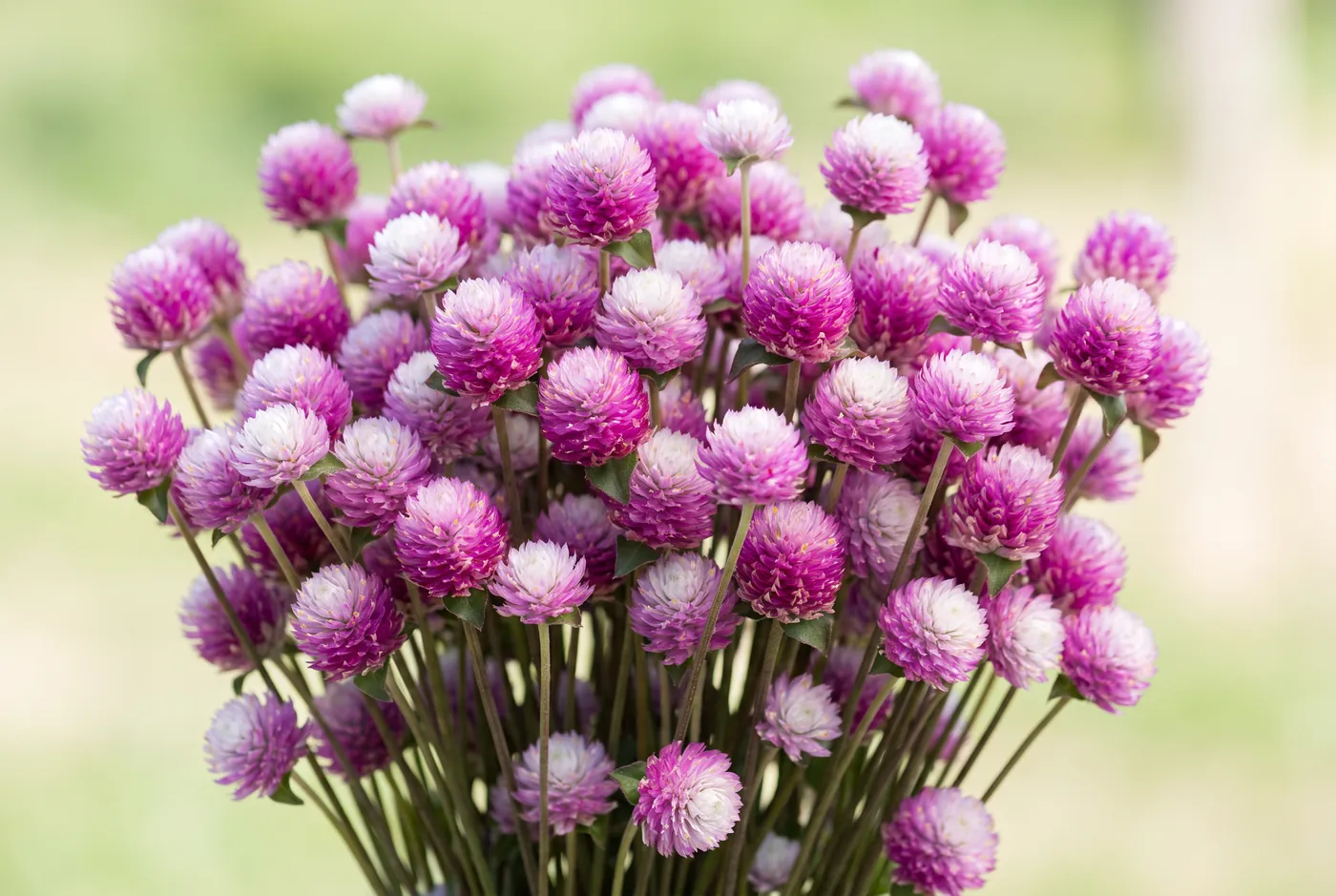
About Gomphrena
Gomphrena is a small round head like a papery clover, in magenta, purple, white, coral or lilac, on a wiry stem. It feels dry to the touch while still growing, which is the giveaway: the colour is in bracts rather than petals, so it does not wilt, does not fade and dries with essentially no change.
It is called globe amaranth and, confusingly, bachelor button, a name it shares with cornflower. It is a heat-loving annual that flowers relentlessly through the hottest part of summer when many things stop.
Primary Meanings
- Unfading Love: From its refusal to fade or wilt
- Immortality: Shared with the amaranth family
- Constancy: It keeps flowering through heat
- Loyalty: The traditional gifting meaning
Gomphrena Colors and Their Meanings
Magenta Gomphrena
The classic and most grown
White Gomphrena
Purity; used in bridal work
Coral Gomphrena
Strawberry Fields, a red-orange form
Lilac Gomphrena
Soft modern shades
Popular Gomphrena Types
Gomphrena globosa
The classic round-headed globe amaranth
Strawberry Fields
Gomphrena haageana; red-orange and larger
Fireworks
Tall, with pink heads tipped yellow
QIS Series
Bred for cutting; long stems and uniform colour
Care Instructions
Shallow Water
Wiry stems need little.
Strip Foliage
The leaves fail long before the heads.
Dries Perfectly
Hang it or just leave it; colour holds.
Loves Heat
It is unbothered by anything a room can do.
Best Occasions for Gomphrena
- Summer Bouquets: Texture and colour in high heat
- Dried Work: One of the best drying flowers there is
- Buttonholes: The scale suits it exactly
- Cutting Gardens: It flowers relentlessly and needs nothing
Interesting Gomphrena Facts
- The colour is in bracts, not petals, so it does not fade or wilt
- It feels papery and dry even while growing
- It shares the name bachelor button with cornflower, which causes confusion
- It dries with essentially no change in colour or shape
- It flowers hardest in the heat that stops most other annuals
How to Buy Good Gomphrena
The heads themselves tell you very little, since they neither fade nor wilt, so judge it on the stems and foliage exactly as with statice. Stems should be firm and the leaves clean rather than yellowing. Heads should be dense and evenly colored with no gaps. Because it dries so completely, a bunch can look perfect and be months old, so at a market it is worth asking when it was cut.
Season, Availability and What Drives the Price
Midsummer until the first frost, and it thrives in the heat that shuts down cosmos and sweet peas. It is grown almost entirely by local growers rather than imported, so markets and farm stands are the source. It is inexpensive and one of the easiest annuals to grow. Dried gomphrena is available year-round and is, for most purposes, indistinguishable from fresh.
What to Use Instead
Craspedia gives a hard round head in yellow with the same everlasting quality. Statice provides color that never fades in a flatter form. Strawflower is the other classic papery everlasting and comes in a wider color range. Ammobium gives small white papery buttons. For a small magenta ball that lasts for years, gomphrena is the cheapest option there is.
Safety Around Pets and Skin
Gomphrena is not listed as toxic to cats or dogs and is treated as safe. It is a good choice for a garden or a house with animals. The dried heads are small and hard enough to present a minor choking risk to a very small pet if they come off the stem, which is the only practical caution.
Florist Tips for Gomphrena
It is already dry
Gomphrena feels papery on the living plant. That is normal and is the whole reason it dries so well. Do not mistake it for a flower past its best.
Drying takes no effort
Hang it, or simply let the vase water run out. It keeps its color and shape essentially indefinitely, and it is one of the best beginner drying flowers.
Bachelor button means two different plants
Gomphrena and cornflower are both sold under that name. If you are asking a grower for one, use globe amaranth or cornflower to be clear.
Common Questions About Gomphrena
Why does gomphrena feel dry when it is fresh?
Because the color is in papery bracts rather than in soft petals. The plant is effectively producing a dried flower while it is still growing, which is why it neither wilts nor fades.
Can you dry gomphrena?
Extremely easily, and it is one of the best. Hang it upside down or simply let the vase water run out. It keeps color and shape for years with no special treatment.
Is gomphrena the same as bachelor button?
The name is used for both gomphrena and cornflower, which are unrelated. If you want gomphrena specifically, ask for globe amaranth.