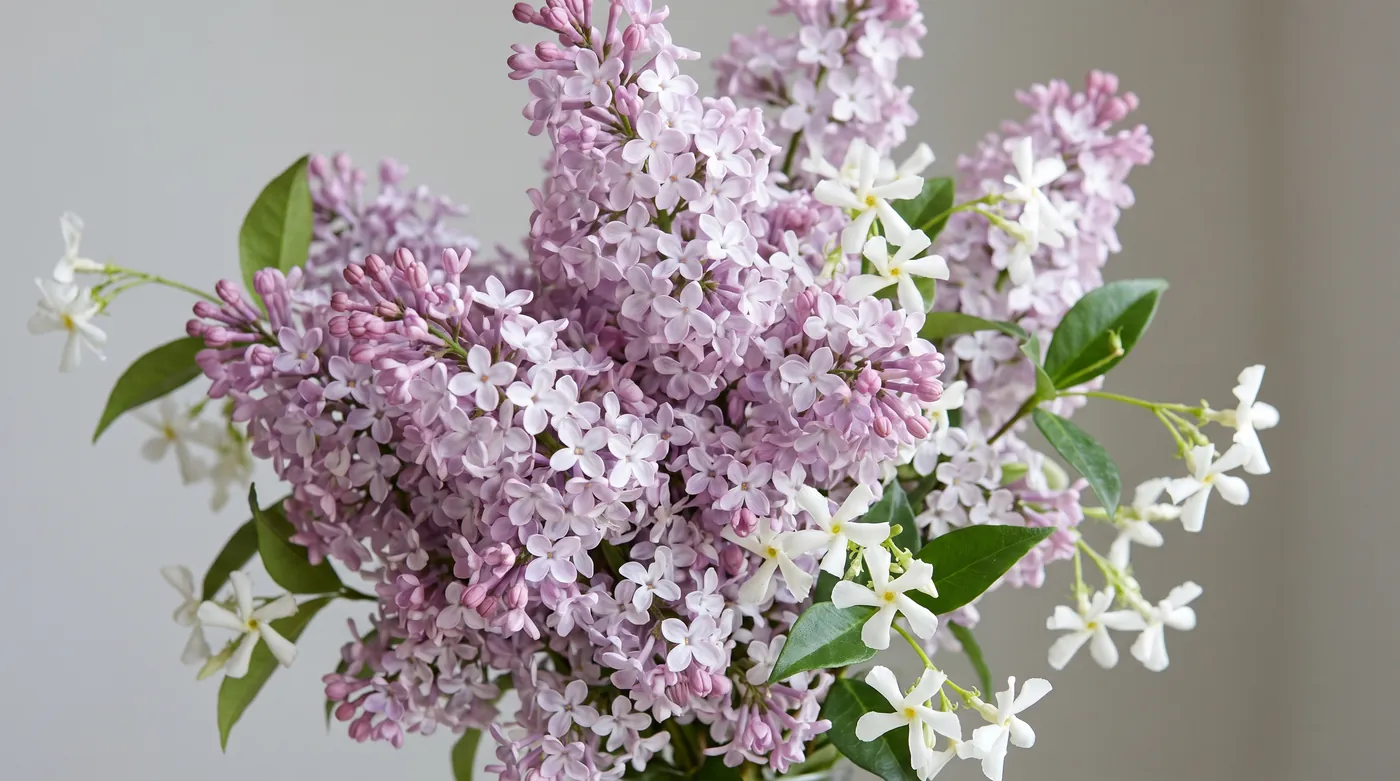
Panicles of lilac with white jasmine sprigs

4 flowers in this family

Everything in this guide that belongs to Oleaceae

Bare branches densely covered in bright yellow forsythia flowers

Forsythia

Forsythia x intermedia
7-14 days

Forsythia
Small white star-shaped jasmine flowers on trailing green vine

Jasmine

Jasminum sambac and grandiflorum
2-4 days for flowers; longer as vine

Jasmine
Full panicles of purple and white lilac

Lilacs

Syringa vulgaris
3-6 days, and only with conditioning

Lilacs
Slender olive branches with narrow silver-backed green leaves

Olive

Olea europaea
14-28 days

Olive

Woody stems, and why lilac disappoints

These are cut from wood, and woody stems take up water far less readily than soft ones. That is the whole reason lilac has such a poor reputation in the vase. Three to six days is the honest range and plenty of florists get less.

Most of that loss is avoidable, and it comes down to leaves. A cut lilac stem carries a great deal of foliage, and the foliage competes with the flower for whatever water the stem can pull up. Strip the leaves off almost completely, cut the base at a sharp angle with a clean blade, and get it straight into deep water. A stripped stem will outlast a leafy one by days, and it is the single most useful thing you can do with lilac.

Do not crush or hammer the ends. That was standard advice for decades and it is actively harmful, because smashed wood rots and blocks the vessels the water has to travel through. A fresh clean cut every couple of days does far more good.

Relatives you already know

Olive oil comes from this family, and so do table olives, which puts Oleaceae among the oldest cultivated plants of the Mediterranean. Ash is here too, the timber used for tool handles and bentwood furniture because it bends without splintering.

Privet is the least loved member and the reason so many people know the smell of this family in June without being able to name it. Its berries are toxic, which is worth remembering in a garden with children.

Forsythia earns its place for what it does rather than what it is. Cut in bud on bare wood in late winter and brought into a warm room, it will flower within a week or two, well ahead of anything outside. That is the same forcing trick used on cherry blossom, and forsythia is the most reliable subject for it.