About Jasmine
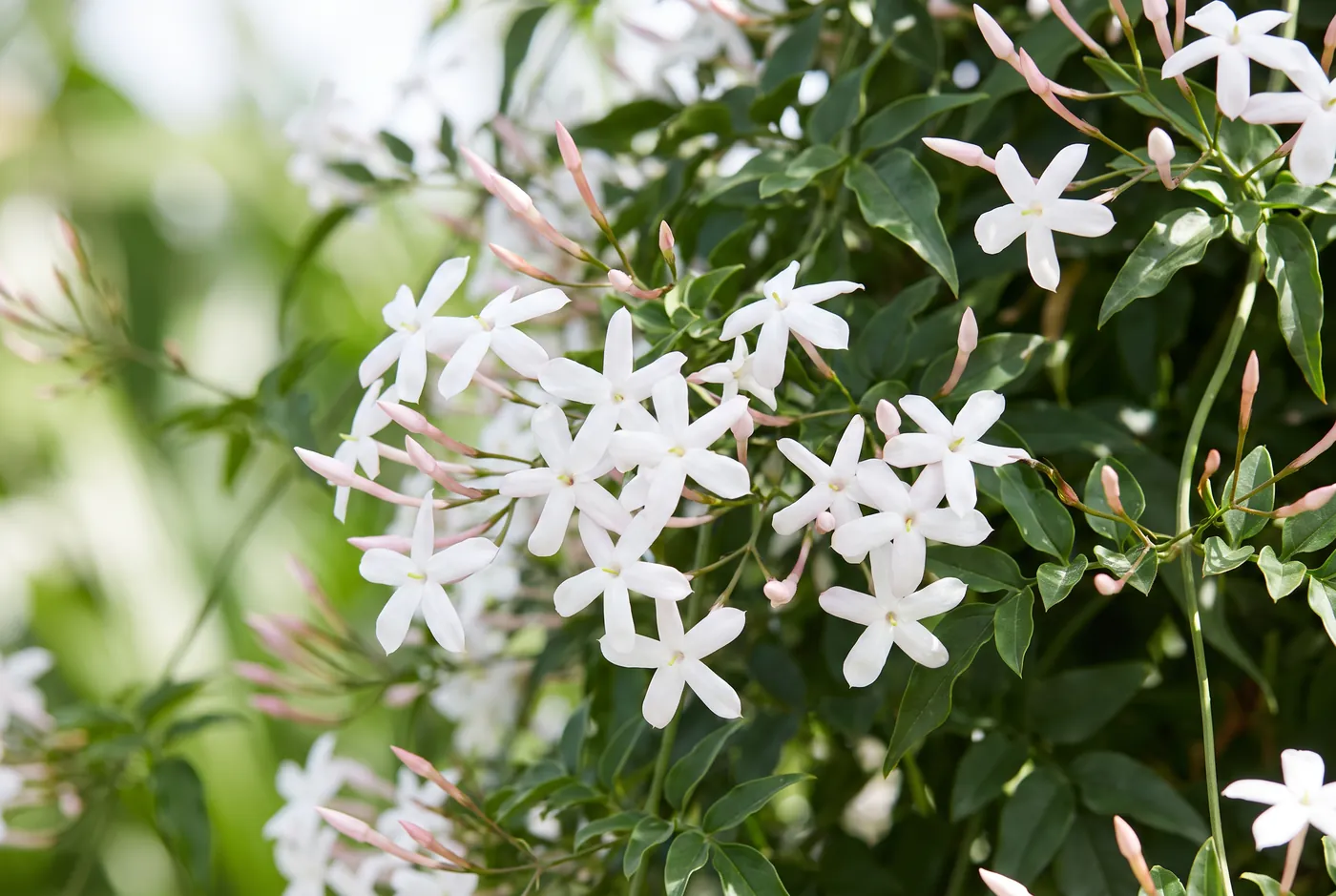
Jasmine flowers are small, white, star-shaped and almost plain to look at. The entire point is the scent, which is heavy, sweet and released mainly after dark, because the plants are pollinated by moths rather than by daytime insects.
It is worth more by weight than almost anything else grown for flowers. Jasmine absolute is one of the most expensive materials in perfumery, and the flowers have to be picked by hand before dawn while the scent is at its peak, which is why it costs what it does.
Primary Meanings
- Sensuality: The traditional association with the night scent
- Purity: Its use in bridal garlands across South Asia
- Grace: The Victorian meaning
- Motherhood: In Indonesia and the Philippines, a strong association
Jasmine Colors and Their Meanings
White Jasmine
Purity; the standard and most scented
Cream Jasmine
Sambac and doubled forms
Pink-Budded Jasmine
Common jasmine buds before opening
Yellow Jasmine
Winter jasmine, unscented and unrelated in use
Popular Jasmine Types
Jasminum sambac
Arabian jasmine; the garland and tea flower
Jasminum grandiflorum
Spanish jasmine, grown for perfume
Jasminum officinale
Common jasmine, the hardy climbing garden vine
Winter Jasmine
Jasminum nudiflorum; yellow, flowers in winter, no scent
Care Instructions
Shallow Water
Fine stems and vines rot in depth.
Mist It
It absorbs moisture and revives from misting.
Cool Room
Heat opens and finishes it fast.
Wait for Evening
The scent builds after dark; do not judge it at noon.
Best Occasions for Jasmine
- Weddings: Garlands and hair flowers across South and Southeast Asia
- Perfume: One of the most valuable materials in the industry
- Trailing Greenery: The vine used for its foliage and scent
- Religious Offerings: Widely used in temple garlands
Interesting Jasmine Facts
- The scent is released mainly at night because moths pollinate it
- Flowers for perfume are picked by hand before dawn
- Jasmine absolute is among the costliest materials in perfumery
- Jasmine tea is scented by layering the flowers with tea leaves, then removing them
- Star jasmine and winter jasmine are different plants; only true Jasminum smells like this
How to Buy Good Jasmine
Buy jasmine in bud, with the buds plump and white rather than green, because they open within hours and the scent peaks as they do. Fully open flowers are already browning at the edges within a day. Loose flowers for garlands are sold by weight and should feel cool and slightly damp, not warm, since heat accelerates them. Smell it if you can, but be aware that at midday even good jasmine smells of very little; the scent is a night phenomenon.
Season, Availability and What Drives the Price
Summer in temperate regions and year-round in the tropics, with most loose flowers reaching the United States from India, Thailand and Hawaii. It is expensive for what looks like a small plain flower, and the reason is labour: perfume-grade jasmine is picked by hand before dawn, and garland flowers are handled individually. The vine, sold as trailing greenery, is much cheaper and available more widely.
What to Use Instead
Gardenia gives a comparably heavy white-flower scent at a much larger flower size. Stephanotis provides small waxy white flowers for bridal work with a lighter fragrance and far better handling. Tuberose is the other great night-scented white flower and lasts considerably longer. For trailing vine without the scent, ivy and smilax do the same structural job.
Safety Around Pets and Skin
True jasmine, Jasminum, is not listed as toxic to cats or dogs. The serious caution is over the name: **Carolina jasmine (Gelsemium sempervirens) and night-blooming jessamine (Cestrum nocturnum) are not jasmine at all and are both seriously poisonous**, Gelsemium dangerously so. If a plant is sold as jasmine, check the botanical name before assuming it is safe.
Florist Tips for Jasmine
Judge it in the evening
Jasmine is moth-pollinated and releases its scent after dark. A stem that smells faint at midday can perfume a room at ten at night. Do not reject it on a daytime sniff.
Buy the buds, not the open flowers
They open within hours indoors and the fragrance is strongest as they do. Open flowers are already at the end.
Check what you are actually buying
Star jasmine, Carolina jasmine and night-blooming jessamine are all sold as jasmine and none are Jasminum. Two of them are poisonous.
Common Questions About Jasmine
Why does jasmine only smell at night?
Because it is pollinated by night-flying moths. The plant releases its scent compounds after dark when its pollinators are active, so the fragrance builds through the evening and is weakest at midday.
Why is jasmine so expensive?
Labour. Perfume-grade flowers are picked individually by hand before dawn, when the scent is at its peak, and it takes an enormous number of flowers to produce a small quantity of absolute. Garland flowers are handled one at a time as well.
Is all jasmine safe around pets?
True jasmine, Jasminum, is not toxic. But several unrelated plants are sold as jasmine: Carolina jasmine (Gelsemium) is seriously poisonous, and night-blooming jessamine (Cestrum) is toxic too. Always check the botanical name.