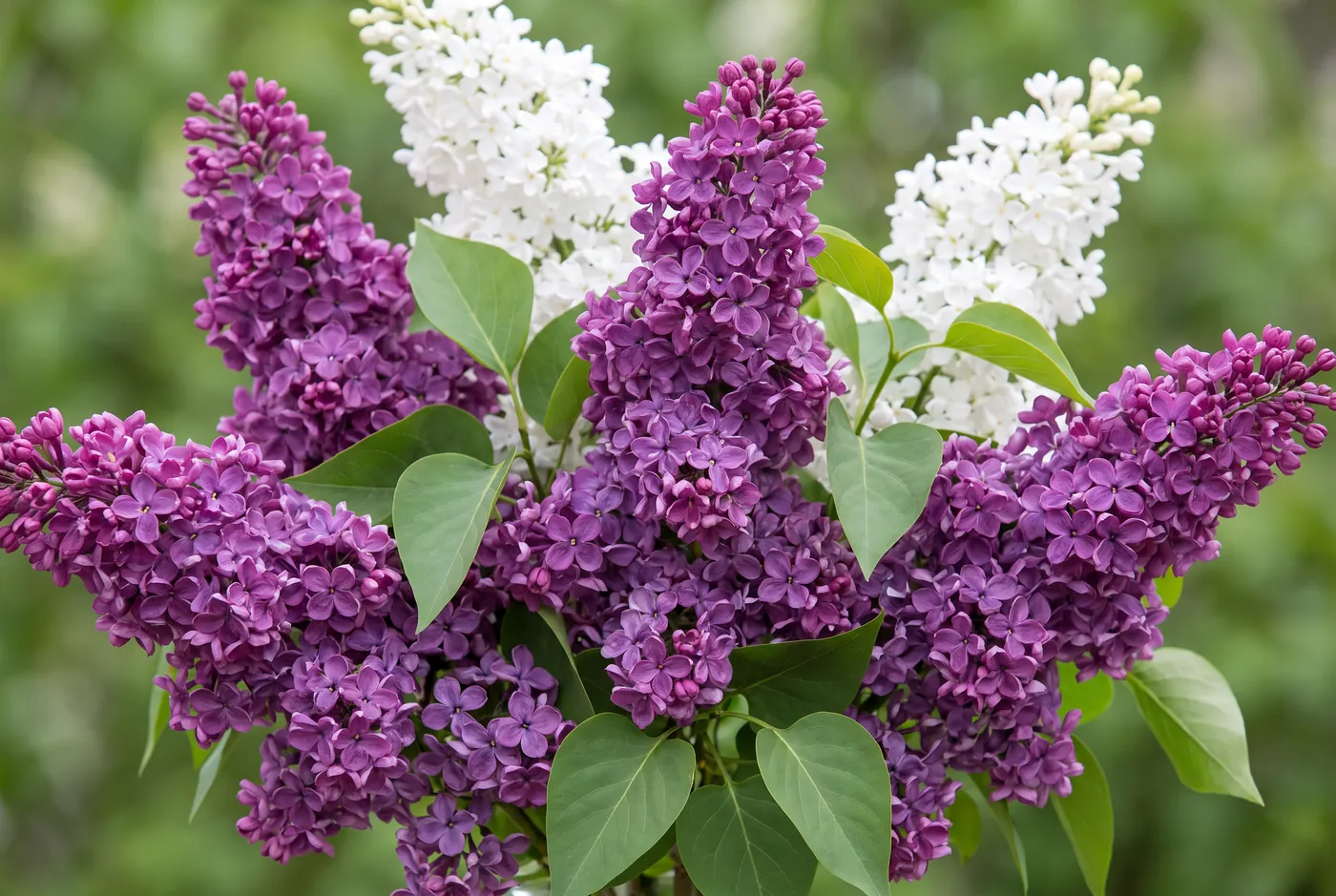
About Lilacs
Lilac is a woody shrub rather than a cut flower crop, and everything difficult about it follows from that. The season is three or four weeks in May, it cannot be forced into a year-round supply, it wilts within hours of being cut unless handled properly, and it is expensive. People still buy it, because the scent is one of the defining smells of spring and nothing else is quite like it.
If you have had lilac collapse in the vase within a day, that is not bad luck. It is a woody stem that was never conditioned, and there is a specific fix.
Primary Meanings
- First Love: The best known meaning, attached to purple lilac
- Innocence: White lilac, traditionally
- Confidence: Magenta forms in the Victorian language
- Renewal: One of the defining scents of spring
Lilacs Colors and Their Meanings
Purple Lilac
First love; the classic
White Lilac
Innocence and memory
Pale Lilac
The colour the shade is named after
Magenta Lilac
Confidence; deeper and less common
Blue Lilac
Tranquillity; specific cultivars only
Popular Lilacs Types
Common Lilac
Syringa vulgaris, the scented shrub everyone knows
French Hybrids
Bred for larger denser panicles and richer colour
Double Lilac
Twice the petals, fuller heads, often less scent
Dwarf Korean
Small-leaved and later flowering, extends the season slightly
Care Instructions
Split the Stem
Woody stems cannot drink through a flat cut. Split them.
Remove All Leaves
Leaves compete for water and are why it wilts.
Deep Cold Water
It drinks heavily in the first hours.
Coolest Room
Heat halves an already short life.
Best Occasions for Lilacs
- Late Spring Weddings: Only if the date lands in the short window
- Mother's Day: In years when the season is early enough
- Home Scent: One of the strongest spring fragrances
- 8th Anniversary: The traditional flower for the milestone
Interesting Lilacs Facts
- The season is roughly three weeks and cannot be extended commercially
- The stems are woody, which is why they wilt so fast without conditioning
- Removing every leaf is the single most effective thing you can do for them
- It belongs to the olive family, alongside jasmine and forsythia
- The colour lilac is named after the flower, not the other way round
How to Buy Good Lilacs
Buy panicles with roughly half the tiny florets open and the rest still in bud, because fully open lilac is already near the end of a very short life. Squeeze the head gently: it should feel dense and springy, not dry and papery. Look at the cut end of the stem. If it is dry, sealed and pale, it has been out of water and will struggle no matter what you do. Bunches sold with all their foliage still attached have not been conditioned, which tells you something about the shop.
Season, Availability and What Drives the Price
Three to four weeks in May in most of the country, and that is the whole thing. Lilac is a garden shrub, not a glasshouse crop, and nobody has managed to turn it into a year-round product because it needs a cold winter to flower and the stems will not travel far. Prices are high through the window and there is nothing outside it. Anything sold as lilac at another time of year is almost certainly something else, usually a lilac-colored stock or a scented alternative.
What to Use Instead
For the scent in the same season, stock is the closest and lasts longer. Hyacinth covers the weeks just before. For the look of a dense panicle, hydrangea gives the same mass in a longer-lasting form, and later in the year buddleia reads very similarly. Wisteria has the same dripping purple habit for an even shorter window. Nothing does the specific combination of that color, that panicle and that scent, which is why people put up with the vase life.
Safety Around Pets and Skin
Lilac is not toxic to cats, dogs or horses and is not on the ASPCA hazard list. It is one of the safer spring flowers for a house with animals. Persian lilac, sometimes confused with it, is Melia azedarach and IS seriously toxic, but it is a different plant entirely and is not sold as a cut flower.
Florist Tips for Lilacs
Strip every single leaf
This is the difference between three days and one. The leaves transpire hard and compete with the flowers for the little water a woody stem can move. Bare stems look odd in the bucket and last several times longer in the vase.
Split the stem, do not just cut it
Take an inch off, then split the cut end upward with scissors or crush it. A flat cut on a woody stem barely drinks at all.
Get it into water within minutes
Lilac wilts faster out of water than almost anything. If you are cutting it from a garden, carry a bucket to the shrub rather than the other way round.
Common Questions About Lilacs
Why does my lilac wilt within hours?
Two reasons, both fixable. The stems are woody and cannot draw water through a flat cut, so split or crush the end. And the leaves transpire faster than the stem can supply, so strip every leaf off. Do both and you get several days instead of one.
Can I buy lilac outside spring?
Effectively no. It flowers for three or four weeks in May and cannot be forced into a year-round crop, unlike roses or lisianthus. Anything sold as lilac at other times is usually a different flower in a lilac color.
Is lilac safe around cats?
Yes, true lilac is non-toxic to cats and dogs. Do not confuse it with Persian lilac, Melia azedarach, which is a different and genuinely poisonous plant, though it is not sold as a cut flower.