About Olive
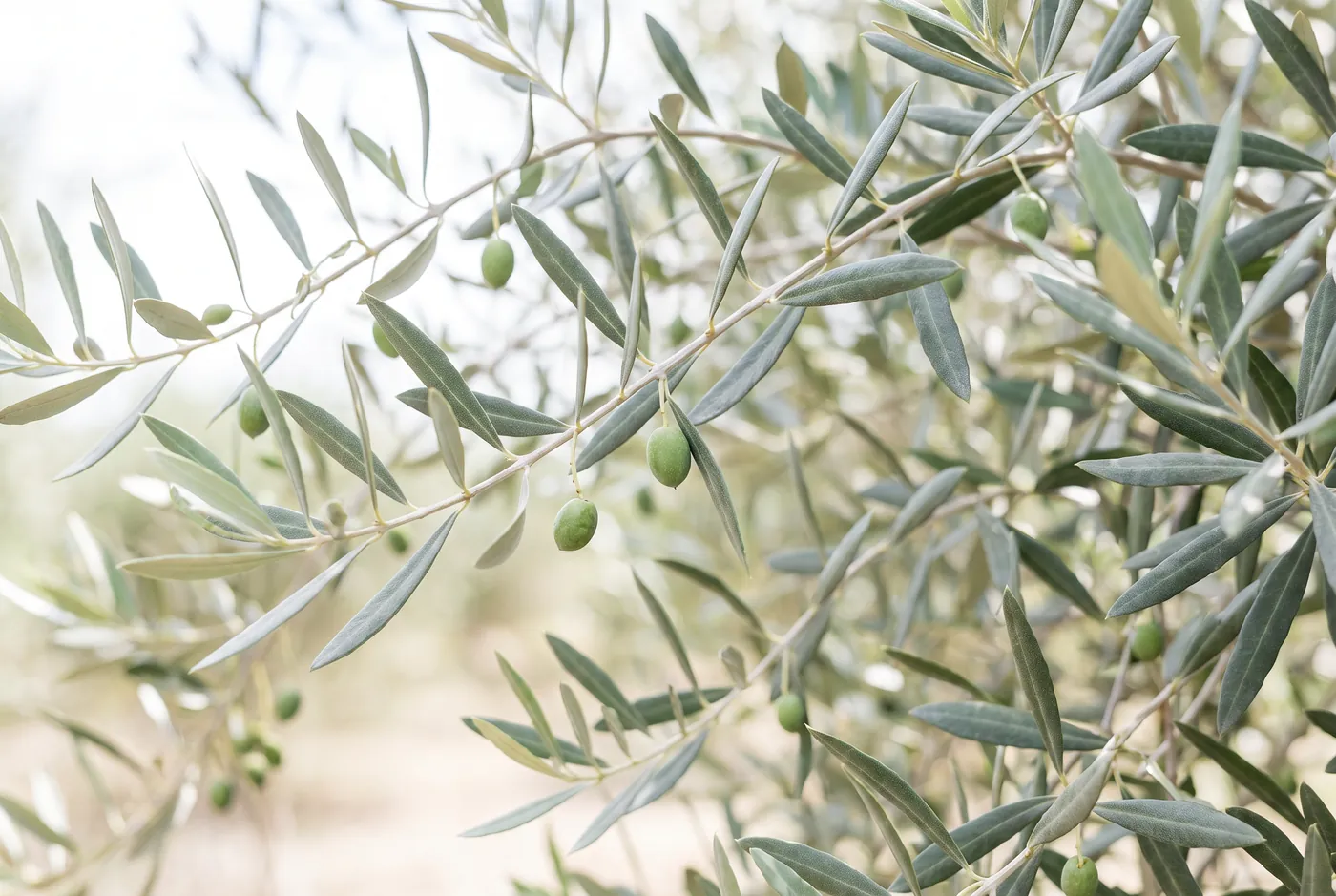
Olive branches carry narrow leaves that are grey-green above and silver beneath, so the whole stem shifts colour as it moves. They arch and trail naturally, they last for weeks, and they dry without dropping, which is why they moved from Mediterranean tables into mainstream wedding work over the last decade.
The olive branch as a symbol of peace is genuinely ancient, running through Greek, Roman and biblical tradition, and it is one of very few floral symbols that has held the same meaning for thousands of years without drifting.
Primary Meanings
- Peace: The oldest and most durable floral symbol there is
- Victory: Olive wreaths crowned Olympic champions
- Longevity: Trees live for centuries, sometimes millennia
- Abundance: The fruit and oil, across Mediterranean cultures
Olive Colors and Their Meanings
Grey-Green Olive
The leaf face; the classic colour
Silver Reverse
The underside, which catches light
Fruited Olive
Branches carrying green or black fruit
Popular Olive Types
Plain Olive Branch
Foliage only, the standard cut product
Fruited Olive
Carrying olives, sold in autumn at a premium
Russian Olive
Elaeagnus; unrelated but sold as a silver substitute
Potted Olive
Small trees used as event decoration
Care Instructions
Split the Stem
Woody; split the cut end to drink.
Deep Water
It drinks steadily over weeks.
Dries Well
It dries without dropping leaves.
Tolerant
Heat and dry air barely affect it.
Best Occasions for Olive
- Weddings: Arches, tables and trailing bouquet greenery
- Mediterranean Styling: The signature foliage of the look
- Peace and Sympathy: The symbolism is unambiguous
- Dried Displays: It holds shape and colour dried
Interesting Olive Facts
- Leaves are grey-green above and silver below, so branches change tone as they move
- The peace symbolism runs unbroken through Greek, Roman and biblical tradition
- Olive wreaths, not gold medals, crowned ancient Olympic victors
- Some living olive trees are estimated at over two thousand years old
- It dries without dropping its leaves, unlike most foliage
How to Buy Good Olive
Look for branches with dense foliage right along the stem rather than only at the tips, since bare woody sections are wasted length. Leaves should be firm and evenly colored with no black spotting, which spreads. Give a branch a shake: some leaf drop is normal but heavy shedding means it has dried out. If you want fruited branches, buy them in autumn and check the olives are firm rather than shrivelled, because they will not improve.
Season, Availability and What Drives the Price
Cut year-round, mostly from Italy, Spain and California, with fruited branches appearing in autumn at a premium. Prices are moderate and steady, rising through wedding season when olive is used by the armful for arches and long tables. It is more expensive than ruscus and less than eucalyptus in most markets, and the length and natural arch are what you are paying for.
What to Use Instead
Eucalyptus is the obvious alternative and brings scent, though it reads bluer. Ruscus gives darker green and better durability at lower cost. Russian olive, Elaeagnus, is sold as a substitute and has a similar silvered leaf on a cheaper stem. Rosemary gives fine gray-green at a much smaller scale with fragrance. For the specific two-tone shimmer, nothing else does it.
Safety Around Pets and Skin
Olive is not listed as toxic to cats or dogs by the ASPCA. It is a safe foliage for a house with animals, and the leaves and fruit are non-toxic, although raw olives are extremely bitter and a pet is unlikely to eat many. Fruited branches are worth watching only because the stones are a choking hazard for a small dog.
Florist Tips for Olive
Split the woody end
Like all woody stems, olive drinks badly through a flat cut. Split the bottom inch and it will take up water properly and last the full three or four weeks.
It dries without dropping
Most foliage sheds as it dries. Olive holds its leaves, which means an arch or a garland made from it still looks acceptable days after the event.
Use the two-tone
The silver undersides are half the effect. Arrange it so some branches twist and show their backs rather than laying everything the same way up.
Common Questions About Olive
Why is the olive branch a symbol of peace?
It is one of the oldest floral symbols in continuous use, running through Greek and Roman practice and into biblical tradition, where a dove returns to Noah with an olive leaf. Unusually for flower symbolism, the meaning has not drifted in thousands of years.
How long do olive branches last?
Two to four weeks in water if the woody ends are split, and they dry afterwards without dropping their leaves, so a display can simply be left to age rather than thrown away.
Can I get olive branches with olives on?
Yes, in autumn, and they cost more. Check the fruit is firm rather than shrivelled, because it will not improve after cutting. Raw olives are inedibly bitter and are there for looks only.