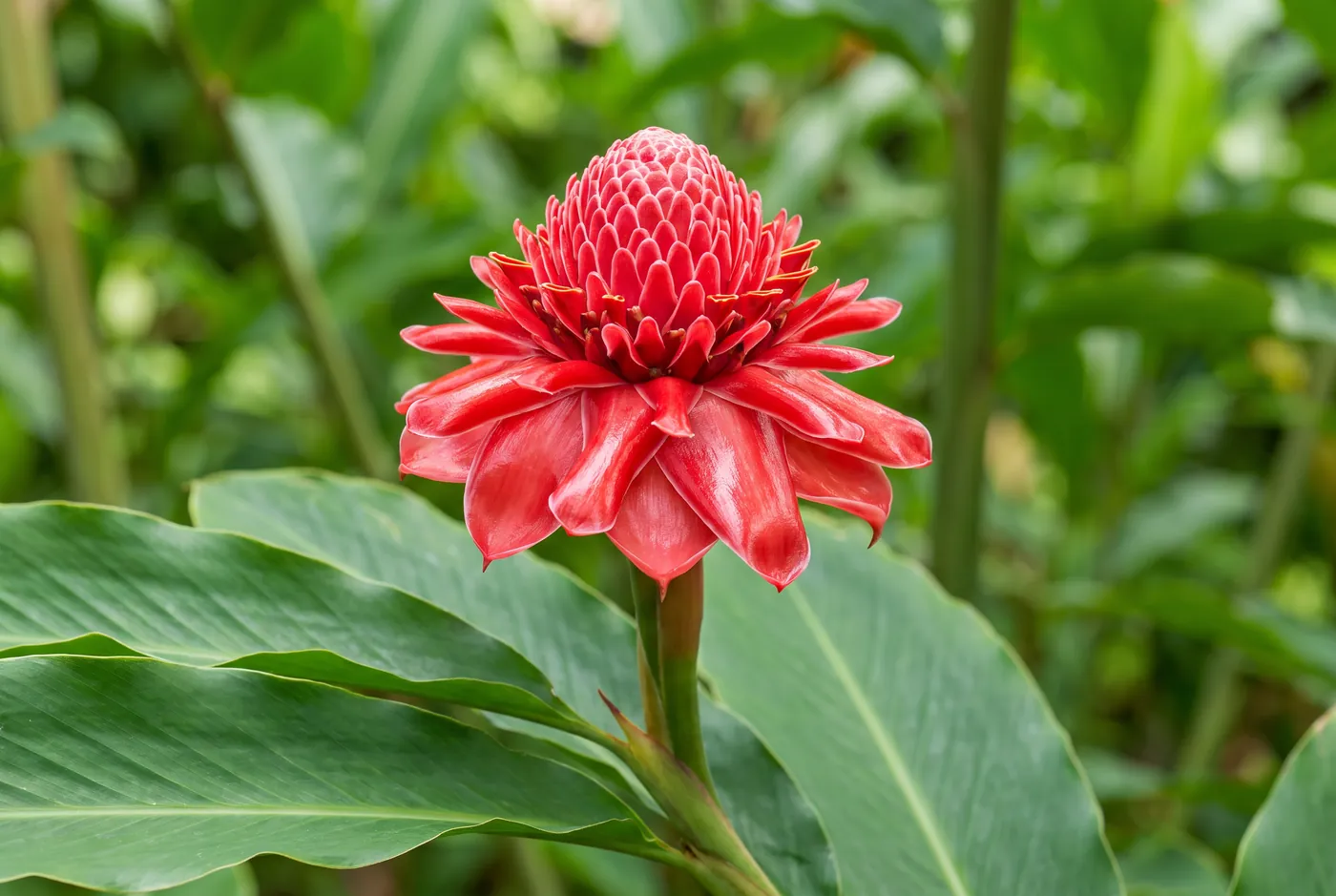
About Ginger Flower
Ginger flower is a dense waxy cone of overlapping bracts, usually scarlet or shocking pink, held on a tall straight stem. Red ginger forms a narrow torch; torch ginger opens into a wide pink cup with a ruff of reflexed bracts, and both look as though they were made rather than grown.
It is not the ginger you cook with. Culinary ginger is a different genus grown for its rhizome, and its flowers are small and insignificant. The ornamental gingers are grown purely for the bract cone, which lasts for weeks in water.
Primary Meanings
- Diversity: From the extraordinary variety within the family
- Strength: The upright, unyielding form
- Wealth: The traditional tropical association
- Pride: Commonly given to mark an achievement
Ginger Flower Colors and Their Meanings
Red Ginger
The classic narrow torch
Pink Torch Ginger
The wide open cup form
Shell Pink Ginger
Softer; shell ginger flowers
Beehive Ginger
Yellow tiered cones, Zingiber spectabile
Popular Ginger Flower Types
Red Ginger
Alpinia purpurata; the narrow scarlet torch
Torch Ginger
Etlingera elatior; the wide pink cup
Beehive Ginger
Zingiber spectabile; tiered honeycomb cones
Shell Ginger
Alpinia zerumbet; arching pearl-like buds
Care Instructions
Never Refrigerate
Cold blackens it, as with all tropicals.
Deep Water
Tall heavy stems drink steadily.
Mist It
It absorbs moisture through the bracts.
Recut Weekly
Long vase life means the stem end seals over.
Best Occasions for Ginger Flower
- Tropical Arrangements: With heliconia and bird of paradise
- Statement Displays: Height and colour that lasts weeks
- Destination Weddings: Standard in Hawaii and the Caribbean
- Hotel and Office Work: Chosen for lasting without attention
Interesting Ginger Flower Facts
- It is not the ginger used in cooking, which is a different genus grown for its root
- Torch ginger buds are eaten as a vegetable in Malaysia and Indonesia
- The colourful cone is made of bracts; the true flowers emerge from between them
- Red ginger produces plantlets on the flower head that can be grown on
- Vase life of two to three weeks is normal
How to Buy Good Ginger Flower
As with all tropicals, look for cold damage before anything else: dark water-soaked patches on the bracts, usually starting at the edges. The cone should be tightly packed, glossy and firm, with no gaps where bracts have loosened. Check whether small true flowers are already emerging from between the bracts, which means it is mature and has less time left. Stems should be rigid, and the cut end fresh rather than dried and fibrous.
Season, Availability and What Drives the Price
Grown year-round in Hawaii, Costa Rica, Thailand and the Caribbean, so it is always available with stable pricing. Like heliconia it must travel at room temperature rather than chilled, which makes freight a large part of the cost. Torch ginger is the most expensive of the group because the stems are enormous and awkward to pack. Prices lift around destination-wedding season rather than around any holiday.
What to Use Instead
Heliconia is the obvious alternative and behaves identically in the vase. Anthurium gives the same waxy artificial finish, lasts even longer and costs less. Protea provides a similar one-stem statement in a drier, more textural direction. Bird of paradise covers tropical drama at smaller scale. For a tall scarlet cone specifically there is nothing else in the trade.
Safety Around Pets and Skin
Ornamental gingers are not listed as toxic to cats or dogs by the ASPCA, and torch ginger buds are eaten as a vegetable in Southeast Asia, so the family is broadly benign. That said, these are not the plants sold as culinary ginger, and the ornamental cones should not be treated as food in a Western kitchen. The practical hazard is a heavy stem in an unstable vase.
Florist Tips for Ginger Flower
It is not cooking ginger
Culinary ginger is Zingiber officinale, grown for the rhizome, with unremarkable flowers. The ornamental gingers are different plants grown entirely for the bract cone.
Room temperature, always
Cold damage is the main way these stems are ruined, and it appears days after the damage is done. Never buy from a chilled display.
Red ginger grows plantlets
Left long enough, red ginger produces small plantlets on the flower head itself. They can be potted up and grown on, which is a genuinely unusual thing for a cut flower to offer.
Common Questions About Ginger Flower
Is this the same ginger you cook with?
No. Culinary ginger is Zingiber officinale, grown for its rhizome, and its flowers are small and dull. Ornamental gingers such as red ginger and torch ginger are different genera grown purely for the colorful bract cone.
How long does ginger flower last?
Two to three weeks is normal, sometimes longer with weekly recutting and misting. It is one of the longest-lasting tropical stems, which helps justify the price.
Why did my ginger flower turn black?
Cold. Tropical stems must be kept at room temperature and never refrigerated. The black patches appear several days after the cold exposure and cannot be reversed.