About Heliconia
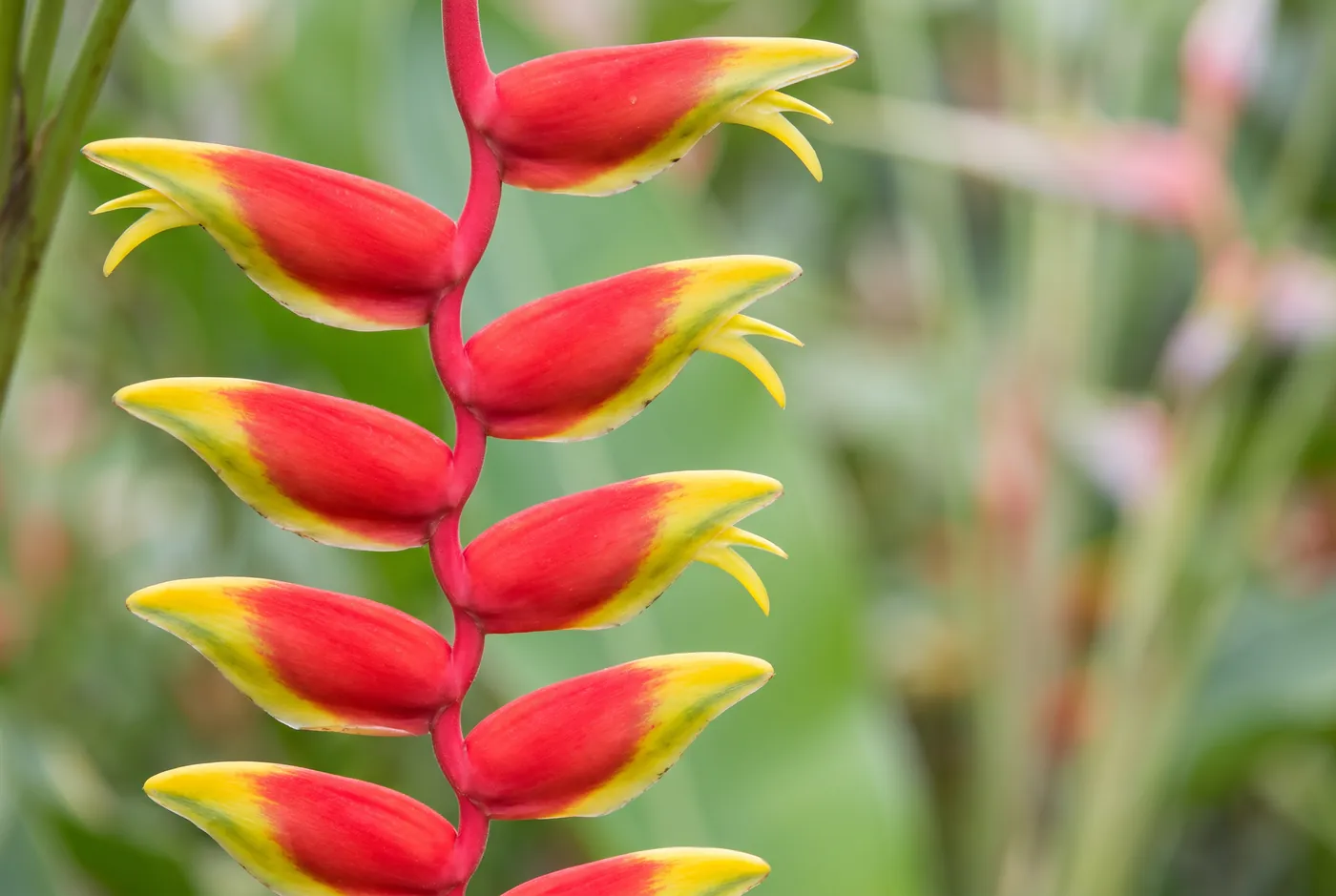
Heliconia is a stack of waxy boat-shaped bracts in scarlet, orange and yellow, arranged along a stem either upright or hanging, and looking so much like plastic that people touch it to check. The common name, lobster claw, is exactly right.
The actual flowers are small and tucked inside those bracts, which do all the visual work and last for weeks. In the wild the bracts hold water and hummingbirds feed from them, and the plants are relatives of bananas rather than of anything in a temperate garden.
Primary Meanings
- Pride: From its bold upright form
- Returning Happiness: The common tropical gifting meaning
- Exotic Beauty: Its association since reaching Europe
- Strength: The structure is genuinely tough
Heliconia Colors and Their Meanings
Scarlet Heliconia
The classic lobster claw
Orange Heliconia
Warmth; the most common commercially
Yellow Heliconia
Bright and less usual
Pink Heliconia
Sexy Pink, a hanging variety
Green-Tipped
Bract edges on many varieties
Popular Heliconia Types
Lobster Claw
Heliconia rostrata; the hanging scarlet and yellow classic
Parrot's Beak
Heliconia psittacorum; small, upright, widely grown
Sexy Pink
Large hanging pink and cream bracts
Golden Torch
Upright yellow-orange, the commercial standard
Care Instructions
Never Refrigerate
Cold blackens it permanently. Room temperature only.
Deep Water
Heavy stems need depth and a stable vase.
Mist It
Tropical origin; misting keeps the shine.
Recut Weekly
It lasts long enough to need a second cut.
Best Occasions for Heliconia
- Tropical Arrangements: The defining flower of the style
- Statement Displays: Hotel lobbies and large spaces
- Destination Weddings: Standard across the Caribbean and Pacific
- Congratulations: The returning happiness association
Interesting Heliconia Facts
- The waxy claws are bracts; the true flowers are small and hidden inside
- It is closely related to bananas, not to birds of paradise
- In the wild the bracts hold rainwater and hummingbirds feed from them
- Refrigeration causes permanent black damage, unlike most cut flowers
- Some species have bracts that hang more than a metre
How to Buy Good Heliconia
Check for cold damage first, because it is the commonest fault and it is not always obvious. Look for water-soaked or blackened patches along the bract edges, particularly at the tips. Good heliconia is glossy, evenly colored and stiff, and the bracts should feel waxy rather than soft. Never buy from a chilled display. Check the stem is firm and the cut end has not dried and split, and look inside a lower bract for mold, since they hold moisture.
Season, Availability and What Drives the Price
Grown year-round in Hawaii, Costa Rica, Ecuador and across the Caribbean, so there is no season to work around and prices are fairly stable. It is expensive, largely because the stems are heavy, bulky and must be air-freighted at room temperature rather than shipped cold like most flowers. That temperature requirement is a real cost in the supply chain and is part of why tropical stems price the way they do.
What to Use Instead
Bird of paradise gives the same tropical drama in a smaller, more sculptural form. Ginger flower provides comparable scale with a softer, cone-like shape. Anthurium offers the same waxy artificial-looking finish and lasts even longer for less money. Banksia gives structure in a completely different, drier direction. For a hanging metre of scarlet claws, nothing substitutes.
Safety Around Pets and Skin
Heliconia is not listed as toxic to cats or dogs by the ASPCA. It is generally regarded as safe around animals, and as with most tropicals its size and stiffness make it unappealing to chew. The practical hazards are mechanical: a tall heavy stem in a light vase, and water held inside the bracts that can spill or stagnate.
Florist Tips for Heliconia
Never put it in the fridge
This is the opposite of the rule for almost every other flower. Cold causes permanent black patches that appear days later. Buy from an unchilled display and keep it at room temperature.
Tip the water out of the bracts
The boat-shaped bracts collect water, which goes stagnant and smells. Tip the stem gently before it goes in the vase.
One stem is enough
Heliconia is large, expensive and self-sufficient. A single stem in a tall heavy vase reads as deliberate; three usually reads as a hotel lobby.
Common Questions About Heliconia
Is heliconia related to bird of paradise?
Not closely. Heliconia is in its own family and is most closely related to bananas. Bird of paradise is a Strelitzia. They are grouped together in shops because both are large tropical statement stems, not because they are relatives.
Why did my heliconia go black?
Cold. It is one of the few flowers that must never be refrigerated, and damage from a cold display or a cold journey shows up as black patches several days later. It cannot be reversed.
Are the colorful parts flowers?
No, they are bracts, modified leaves shaped like boats or claws. The real flowers are small and tucked inside them. That is why the color lasts for weeks.