About Stephanotis
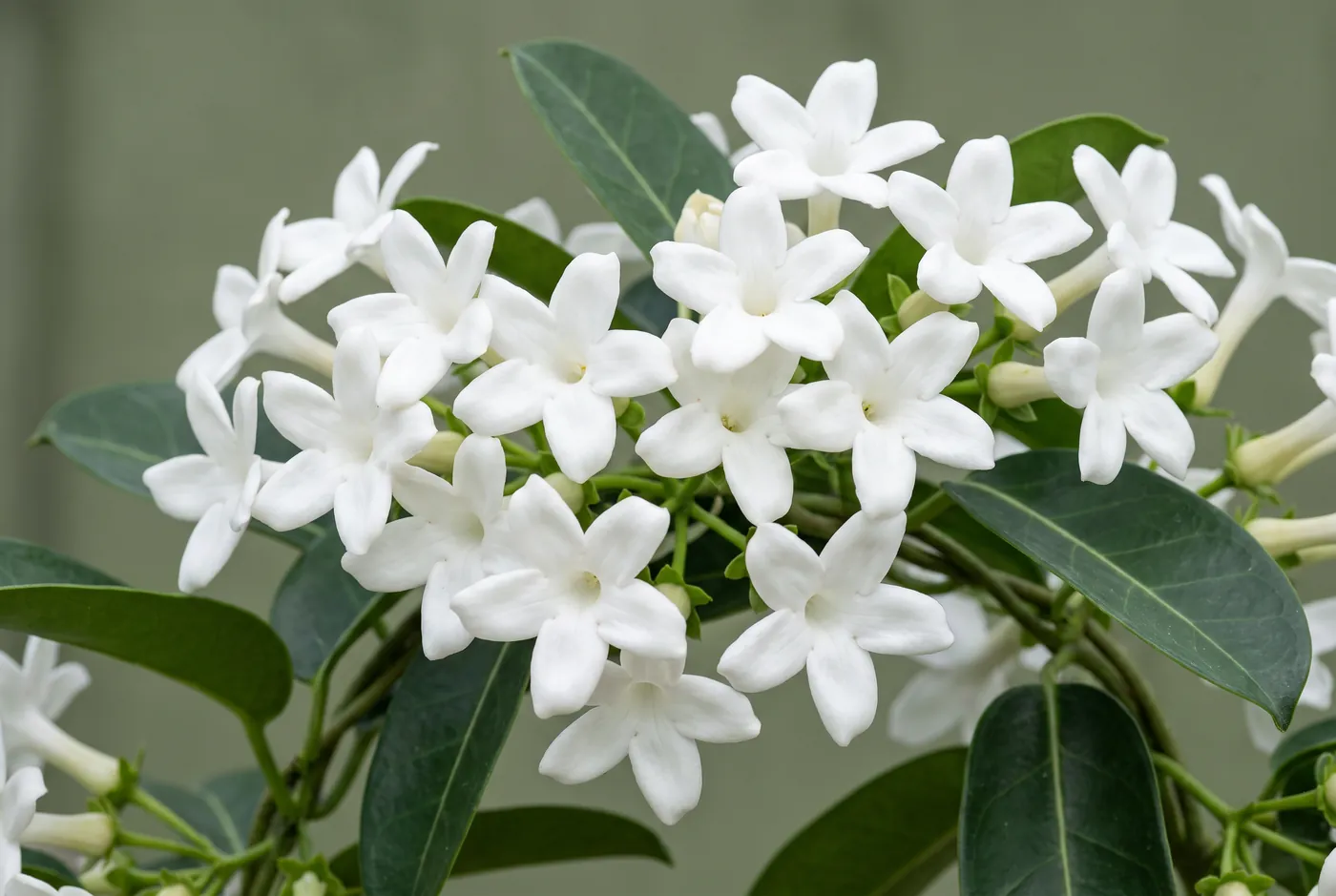
Stephanotis is sold by the floret rather than the stem. Each bloom is a small waxy white trumpet flaring into five pointed lobes, thick enough to feel almost artificial, and florists buy them in boxes and wire them individually into bouquets and headpieces.
It is the traditional bridal flower across much of the English-speaking world, and it is also called Madagascar jasmine, though it is not a jasmine. The scent is lighter and cleaner than true jasmine, and the flowers hold out of water far longer than anything that delicate has a right to.
Primary Meanings
- Marital Happiness: The classic meaning and the reason for its bridal use
- Good Luck: Traditionally carried by the bride
- Desire to Travel: The Victorian meaning, from its exotic origin
- Purity: From the pure white waxy flower
Stephanotis Colors and Their Meanings
White Stephanotis
Purity; effectively the only colour
Cream-Throated
The faint warmth inside the trumpet
Popular Stephanotis Types
Stephanotis floribunda
The species; effectively the only one grown
Loose Florets
Sold boxed by the bloom for wiring
Vine Lengths
Trailing stems, occasionally sold whole
Potted Plants
Grown as a conservatory climber
Care Instructions
Keep Them Damp
Boxed florets need damp cotton, not a vase.
Cool, Never Cold
Chilling browns them; heat wilts them.
Handle Minimally
Fingermarks bruise the waxy surface brown.
Wire Them
Each floret is wired individually for bouquet work.
Best Occasions for Stephanotis
- Weddings: The traditional bridal flower, wired into bouquets
- Headpieces: Small waxy blooms suit hair and combs
- Buttonholes: One or two florets is a classic groom's flower
- Christenings: The purity association
Interesting Stephanotis Facts
- It is sold by the individual floret rather than by the stem
- It is not a jasmine, despite being called Madagascar jasmine
- Each floret is wired by hand into bouquet work
- Florets survive out of water far longer than their delicacy suggests
- The name comes from the Greek for ear and crown, after the flower's shape
How to Buy Good Stephanotis
You will be ordering these rather than picking them off a shelf, and they arrive boxed on damp padding. Look for florets that are pure white and evenly waxy, with no translucent or fawn patches, which are bruises and spread. The small green calyx at the base should be fresh, not dried. Count them, because they are sold by the bloom and a wedding bouquet can take a hundred. Order more than you need: some will be damaged in wiring and there is no way to buy three more at short notice.
Season, Availability and What Drives the Price
Grown under glass year-round, chiefly in the Netherlands and Israel, so there is no season, but there is also very little standing stock. Most florists order it in for a specific job rather than keeping it. It is expensive per floret, and a bouquet's worth adds up quickly, which is one reason it fell out of fashion for a period and has been returning as traditional bridal styles came back.
What to Use Instead
Bouvardia gives small white waxy flowers on a stem rather than loose, and is far easier to handle. Hyacinth pips, the individual florets pulled from a hyacinth spike, are the classic cheap substitute and are wired the same way. Gardenia gives the same waxy white character at a much larger size. Lily of the valley covers the same bridal role in spring. For the specific five-pointed waxy star nothing else is close.
Safety Around Pets and Skin
Stephanotis is in the Apocynaceae, the dogbane family, which contains many toxic plants, and it is generally treated as mildly toxic to cats and dogs. The milky sap can irritate skin and mouths. It is not among the dangerous members of that family and is not on the ASPCA's main hazard list, but it is not a flower to leave where a pet will chew it, and the sap is worth washing off your hands.
Florist Tips for Stephanotis
Order more than you need
Florets are damaged in wiring and there is no topping up at short notice. Ten per cent extra on a wedding order is normal practice.
They live out of water
Unlike almost anything this delicate, wired stephanotis holds for a day or more out of water if kept cool and damp. That is precisely why it became the bridal flower.
Never chill them
Cold browns the waxy surface. Cool is right; a fridge is not.
Common Questions About Stephanotis
Why is stephanotis sold by the flower?
Because that is how it is used. Individual florets are wired by hand into bouquets, headpieces and buttonholes rather than arranged on their stems, so the trade sells them boxed and counted.
Is stephanotis a jasmine?
No. It is called Madagascar jasmine because of the white flowers and the scent, but it is in a different family entirely. The fragrance is lighter and cleaner than true jasmine.
How long does stephanotis last in a bouquet?
Wired and kept cool, it will hold through a wedding day and beyond, which is unusual for something so delicate. Out of the bouquet, three to five days is realistic if the florets are kept damp.