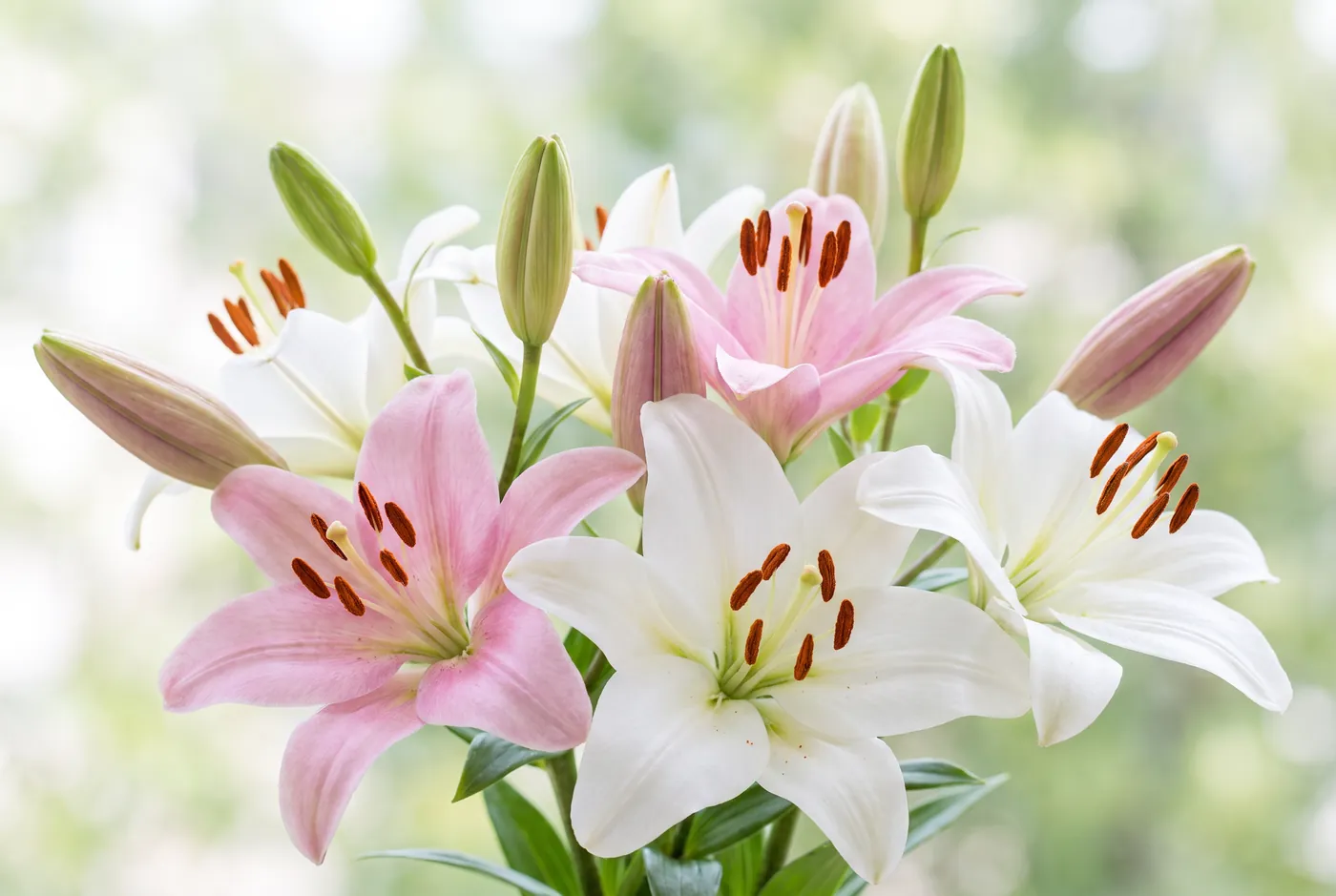
About Lilies
Lilies are majestic flowers known for their large, trumpet-shaped blooms and sweet fragrance. These elegant flowers have been cultivated for over 3,000 years and hold deep symbolic meaning across many cultures. With their striking appearance and powerful scent, lilies make a bold statement in any arrangement.
From the pure white Easter lily to the vibrant Asiatic and Oriental varieties, lilies offer an impressive range of colors, sizes, and forms. Their long-lasting blooms and architectural beauty make them popular for both gardens and cut flower arrangements.
Primary Meanings
- Purity: White lilies symbolize innocence and virtue
- Devotion: Deep commitment and dedication
- Rebirth: Renewal and the restoration of innocence
- Majesty: Regal beauty and refined elegance
Lilies Colors and Their Meanings
White Lilies
Purity, virtue, innocence, sympathy
Pink Lilies
Prosperity, abundance, femininity
Yellow Lilies
Joy, gratitude, friendship
Orange Lilies
Confidence, passion, energy
Red Lilies
Love, passion, desire
Popular Lilies Types
Asiatic Lilies
Unscented, upward-facing blooms in bright colors
Oriental Lilies
Large, fragrant flowers with exotic appeal
Trumpet Lilies
Trumpet-shaped blooms with strong fragrance
Calla Lilies
Sleek, modern blooms (actually not true lilies)
Care Instructions
Water
Change water every 2-3 days, use lukewarm water.
Trim
Cut stems at 45-degree angle, remove lower leaves.
Temperature
Keep cool, away from direct sun and heat sources.
Remove Pollen
Carefully remove stamens to prevent staining and extend life.
Clean Leaves
Remove any foliage that would be below waterline.
Best Occasions for Lilies
- Weddings: White lilies for purity and commitment
- Sympathy: Express condolences and offer comfort
- Religious Ceremonies: Easter, baptisms, christenings
- Anniversaries: Celebrate enduring love and devotion
- Mother's Day: Honor maternal love and grace
Interesting Lilies Facts
- Lilies have been cultivated for over 3,000 years
- The Madonna lily appears in ancient Greek and Roman mythology
- Lily pollen can stain clothing and should be removed carefully
- There are about 100 species of true lilies
- The lily is the flower associated with the 30th wedding anniversary
- Lilies are toxic to cats and should be kept away from feline pets
How to Buy Good Lilies
Buy lilies in bud, not open. A stem showing color in the lowest bud and tight green buds above it will open in sequence over a week or more in your house, that is where the value is. A stem already fully open is at the end of its life, not the beginning. Check that the buds are plump rather than shrivelled, and that the lowest leaves are not yellowing.
Season, Availability and What Drives the Price
Oriental and Asiatic lilies are greenhouse crops and available all year, with the bulk of the trade coming through Dutch growers. Prices are steadier than roses because demand is spread across the year rather than concentrated on one date, though white lilies firm up around Easter and through the funeral-heavy winter months. Fragrance varies enormously by type: Orientals such as Stargazer are powerfully scented, Asiatics are almost scentless. If you are buying for a hospital, an office or a small room, ask specifically for Asiatic.
What to Use Instead
Alstroemeria gives a similar lily-shaped bloom at a fraction of the cost and lasts far longer, though the flowers are much smaller. For the scale and drama of a lily without the pollen problem, consider calla lilies, which are unrelated despite the name. Where the point is white and formal, single-stem chrysanthemums or large white gerberas will hold the same visual weight.
Safety Around Pets and Skin
This one genuinely matters. True lilies (Lilium) and daylilies (Hemerocallis) are lethally toxic to cats. Every part is dangerous. Petals, leaves, pollen, and even the vase water. A cat brushing past and later grooming pollen off its fur has taken a dose. It causes acute kidney failure and is frequently fatal without fast veterinary treatment. If you have a cat, do not have lilies in the house; ask the florist to substitute. Note that calla lilies and peace lilies are NOT true lilies. They contain calcium oxalate and cause painful mouth irritation and drooling rather than kidney failure. Unpleasant, but a completely different order of risk. Lilies are much less dangerous to dogs, generally causing stomach upset only.
Florist Tips for Lilies
Remove the anthers as each flower opens
Lily pollen stains skin, clothing and furnishings permanently, and it is the part most dangerous to cats. Pinch the orange anthers out with a tissue the moment a bud opens, before the pollen ripens.
If pollen lands on fabric, do not touch it with water
Lift it with the sticky side of tape, or shake it off outdoors. Wetting it or brushing it in sets the stain.
Buy on bud count, not on open flowers
Four or five buds on a stem is a week and a half of flowers. Two open blooms is two or three days.
Common Questions About Lilies
Are lilies poisonous to cats?
True lilies and daylilies are, severely, they cause acute kidney failure and can kill. Pollen alone is enough, so the flower does not need to be eaten. If a cat has had any contact, treat it as an emergency and phone a vet immediately. Calla and peace lilies are different plants and cause mouth irritation rather than kidney damage.
Why are my lilies not opening?
They were probably cut too tight, or they are cold. Lilies open on warmth. Move them somewhere a little warmer for a day and give them fresh water with flower food. If the buds are hard and pale green with no color showing at all, they may never open.
How do I stop lily pollen staining things?
Take the anthers off as each bloom opens. Once the pollen has shed onto a petal or a tablecloth, lift it with tape rather than rubbing it.