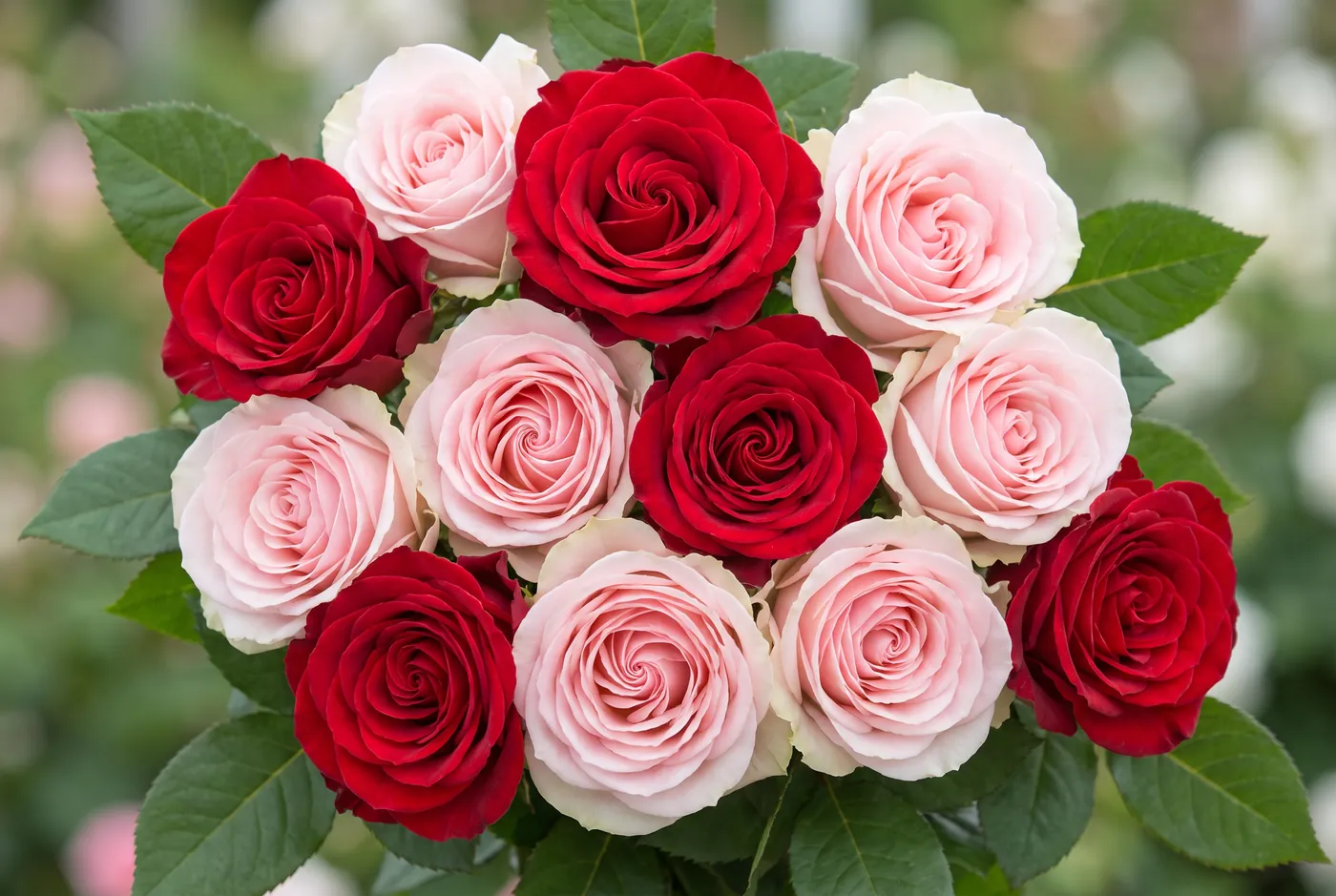
About Roses
Roses are among the most beloved and recognizable flowers in the world. With their elegant petals, enchanting fragrance, and rich symbolism, roses have captured hearts for centuries. These timeless blooms are the ultimate expression of love, passion, and romance.
Belonging to the genus Rosa, these woody perennial flowering plants are native to Asia, Europe, and North America. With over 300 species and thousands of cultivars, roses offer an incredible variety of colors, sizes, and forms to suit any occasion.
Primary Meanings
- Love & Romance: The classic symbol of deep romantic love
- Passion: Intense emotions and desire
- Beauty: Physical and inner beauty
- Devotion: Unwavering commitment and dedication
Roses Colors and Their Meanings
Red Roses
Deep love, passion, respect, and courage. The ultimate romantic gesture.
White Roses
Purity, innocence, reverence, new beginnings, and sympathy.
Pink Roses
Grace, elegance, admiration, appreciation, and gratitude.
Yellow Roses
Friendship, joy, caring, and warmth. Perfect for friends.
Orange Roses
Enthusiasm, desire, fascination, and energy.
Lavender Roses
Enchantment, love at first sight, and wonder.
Peach Roses
Appreciation, gratitude, sincerity, and modesty.
Popular Roses Types
Hybrid Tea Roses
Classic long-stemmed roses with large, perfectly formed blooms. Most common in florist shops.
Spray Roses
Smaller blooms on branching stems, perfect for bouquets and arrangements.
Garden Roses
Full, romantic blooms with many petals and strong fragrance. Popular for weddings.
Floribunda Roses
Clusters of blooms on a single stem, offering abundant flowers.
Care Instructions
Water
Change water every 2-3 days. Use lukewarm water and ensure stems are fully submerged.
Trim
Cut stems at a 45-degree angle every few days to improve water absorption.
Temperature
Keep roses in a cool location away from direct sunlight and heat sources.
Remove Leaves
Remove any leaves that would be below the waterline to prevent bacterial growth.
Flower Food
Add flower food to the water to extend vase life and keep blooms vibrant.
Best Occasions for Roses
- Romantic Occasions: Valentine's Day, anniversaries, proposals, romantic dates
- Celebrations: Birthdays, graduations, promotions, achievements
- Sympathy: Funerals, memorials (white or pastel roses)
- Friendship: Thank you gifts, get well soon (yellow or pink roses)
- Weddings: Bridal bouquets, centerpieces, decorations
Interesting Roses Facts
- Roses have been cultivated for over 5,000 years
- The oldest living rose bush is over 1,000 years old in Germany
- There are over 150 species of roses worldwide
- Rose hips (the fruit) are rich in vitamin C and used in teas and jellies
- The world's most expensive rose is the Juliet Rose, which took 15 years to develop
- Roses are edible and often used in Middle Eastern and Indian cuisine
How to Buy Good Roses
Squeeze the base of the bloom gently, the head should feel firm and dense, not spongy. A soft, loose head means the rose is already open and will blow within two days. Look at the outermost petals: florists call these guard petals, and they often look bruised or discolored. That is their job. They protect the bloom in transit and get peeled off before arranging, so do not reject a bunch for them. What should worry you is a bent or weak neck just below the head, brown translucent edges on the inner petals, or any gray fuzz, which is botrytis and will spread through the bunch.
Season, Availability and What Drives the Price
Roses are available every week of the year because almost all of them are grown under cover in Colombia, Ecuador and Kenya rather than harvested seasonally. Ecuadorian roses are the ones with very long stems and large heads. That year-round supply does not mean year-round pricing. Valentine's Day is the single biggest distortion in the flower trade: growers begin timing crops for it months ahead, and the wholesale price of a red rose can double or triple in the run-up. If you want roses in the first half of February and are not committed to red, choosing another color will often cost noticeably less for exactly the same quality of stem.
What to Use Instead
For the look of a rose at lower cost, spray roses give several smaller heads on one stem and fill space faster. Lisianthus is the closest substitute in feel. Ruffled, layered and rose-like, and holds up well. Ranunculus reads similarly in photographs but has a much shorter life. If you want the romantic, many-petalled look specifically, garden roses and peonies both deliver it, though peonies are seasonal and will not be an option for most of the year.
Safety Around Pets and Skin
Roses are not toxic to cats or dogs. The realistic hazard is mechanical: thorns, and the risk of a pet chewing a stem and cutting its mouth. Strip the thorns before the vase goes anywhere a cat can reach it.
Florist Tips for Roses
Recut under water if the neck bends
A drooping head just under the bloom is usually an air lock in the stem, not age. Recut two centimetres off the stem while it is held under water, then return it to a deep vase. Many roses come back within a couple of hours.
Take the guard petals off yourself
Peel away the one or two scruffy outer petals and the rose immediately looks like the one in the photograph. This is what florists do before the bunch reaches the shop floor.
Strip anything below the waterline
Rose foliage rots quickly once submerged, and the resulting bacteria is the usual reason a bunch dies early.
Common Questions About Roses
Why do supermarket roses die so quickly?
Usually one of two things. Either they were cut too tight and never had the sugar reserves to open, or they have an air lock from being out of water in transit. Recut the stems at an angle under water as soon as you get home and use the flower food sachet, that single step makes more difference to roses than to almost any other flower.
How long should roses last in a vase?
Five to twelve days is realistic. Under a week suggests the stems were old or dry when you bought them; beyond twelve days is unusual for anything but very fresh, well-conditioned stems.
Do red roses really cost more at Valentine's Day?
Yes, and specifically red ones. Demand concentrates on a single color on a single day, so growers and wholesalers price red separately from the rest of the crop. Buying pink, white or peach in early February frequently gets you a better stem for less money.