About Baby's Breath
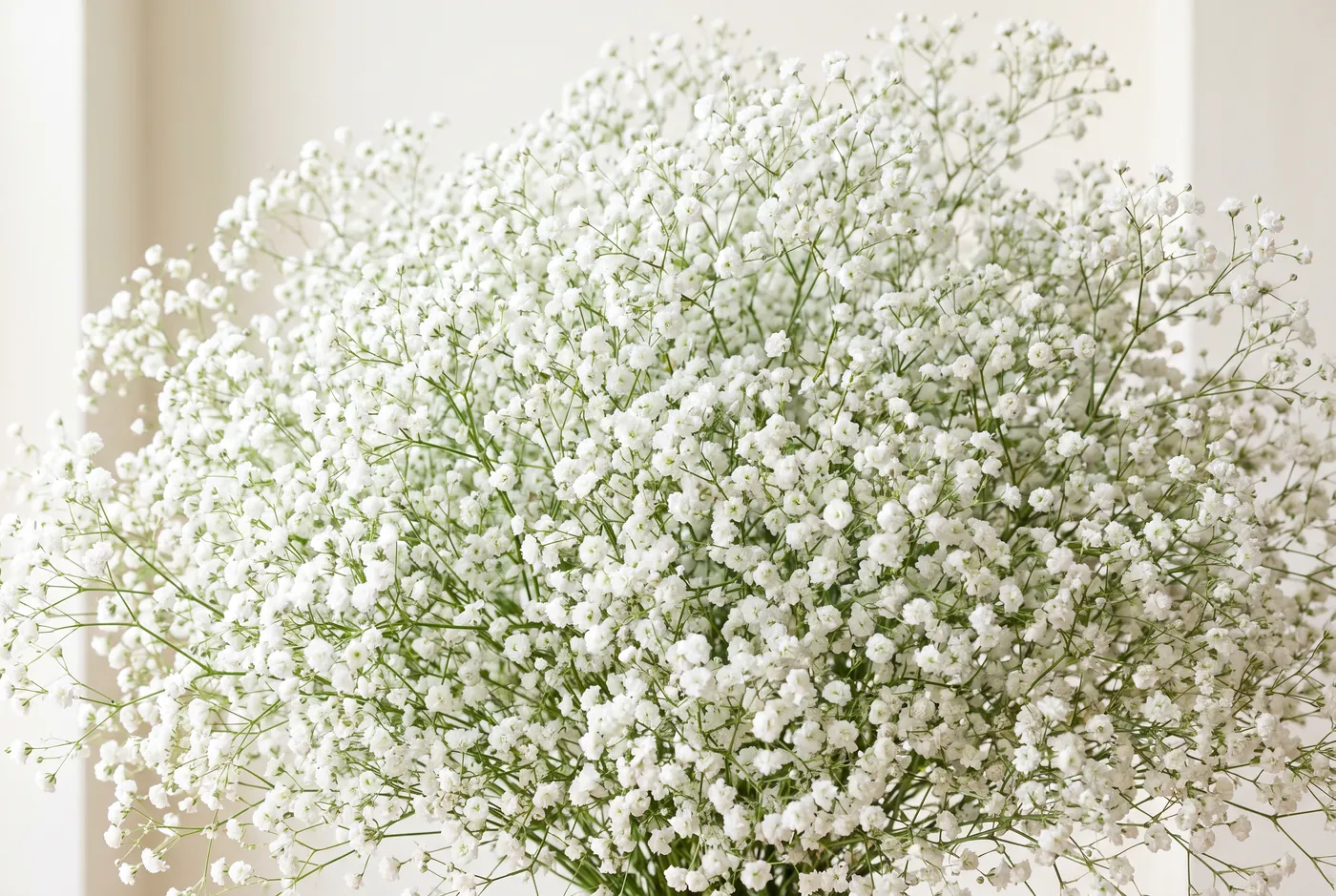
Baby's breath, or gypsophila, spent decades as the thing packed around roses and ignored. That changed completely. It is now sold on its own by the armful, used as the entire flower for weddings, dried for wreaths, and priced accordingly. A stem carries hundreds of tiny blooms on branching wiry stalks, which is what lets a small number of stems fill an enormous amount of space.
It is also the cheapest way to make an arrangement look twice the size, which is exactly why florists have always kept buckets of it. Understanding how it is graded, and knowing about the scent, is the difference between a good buy and a disappointing one.
Primary Meanings
- Everlasting Love: Its long life dried gave it a lasting-devotion meaning
- Innocence: The traditional association, and why it appears at christenings
- Purity: White gypsophila is a fixture at weddings for this reason
- New Beginnings: Commonly given for births and new arrivals
Baby's Breath Colors and Their Meanings
White Baby's Breath
Purity, innocence, everlasting love
Pink Baby's Breath
Gentle affection, usually tinted rather than grown
Dyed Baby's Breath
Novelty; the stems drink dye readily, so any colour is possible
Popular Baby's Breath Types
Million Star
The florist standard: dense, small-flowered, holds its shape dried
New Love
Larger individual blooms, more open and airy
Overtime
Bred for vase life and shipping, common in supermarket bunches
Annual Gypsophila
Garden type, looser and softer than the cut-flower varieties
Care Instructions
Water
Shallow water is enough. The stems are thin and rot fast in a deep vase.
Trim
Cut on an angle and strip anything that would sit below the water.
Air
Give the bunch room. Packed tight and damp, the centre browns first.
Dry It
Hang upside down in a dry room and it keeps its shape for months.
Best Occasions for Baby's Breath
- Weddings: Now used as the main flower, not just filler
- Christenings and Births: The traditional innocence association
- Everyday Arrangements: The cheapest way to add volume
- Dried Displays: Wreaths and hoops that last a season or more
Interesting Baby's Breath Facts
- Gypsophila means 'gypsum loving', after the chalky soil it grows in
- A single stem can carry several hundred individual flowers
- It dries better than almost any other cut flower, holding shape rather than shrivelling
- Most coloured baby's breath is dyed through the stem, not grown that colour
- It became a standalone wedding flower in the 2010s after decades as a filler
How to Buy Good Baby's Breath
Look at the middle of the bunch, not the outside. Baby's breath is packed tight for shipping and the center is where it browns first, so pull the bunch open and check. You want blooms that are open and bright white, with only a few unopened buds. Unlike most flowers, buying this one tight is a mistake: the buds often never open once cut, so a bunch that looks green and closed in the shop will look green and closed in your vase. Gray or fawn patches mean it has been damp in transit and that will spread.
Season, Availability and What Drives the Price
It is grown under cover year-round and is one of the steadiest things in the flower trade, so there is no real season to work around. What moves the price is wedding demand rather than weather, because a single wedding can absorb an enormous quantity when it is used as the main flower. Late spring through early autumn is when that pressure is highest. Buying it as an unbranded bunch rather than as part of a mixed arrangement is always cheaper, and it is one of the few flowers where the supermarket product is essentially the same as the florist's.
What to Use Instead
For the same cloud effect with a longer life, waxflower is tougher and brings a clean citrus scent instead of a musty one. Limonium and statice give a similar haze and dry just as well. Ammi, sometimes sold as false Queen Anne's lace, is a softer, more meadow-like version at a larger scale. If the point is volume rather than texture, a bunch of solidago does the same job for less. What does NOT substitute is anything with a heavy head; the airiness is the entire effect.
Safety Around Pets and Skin
Gypsophila contains saponins and is mildly toxic to cats and dogs. It is a stomach upset rather than an emergency: drooling, vomiting, loose stools. Worth knowing because it appears in a very large share of mixed bouquets, so it is one of the most common things a curious pet actually gets hold of. The dried stems are just as irritant as fresh. Some people also get contact dermatitis from handling large quantities, which is a known issue for florists rather than for buyers.
Florist Tips for Baby's Breath
The smell is real and nobody warns you
Baby's breath has a distinctly musty, slightly sour scent that gets stronger in a warm room and as the water ages. It is not a sign anything is wrong. If it bothers you, change the water daily and keep the vase out of direct sun.
Buy it open, not in bud
This is the opposite of the rule for most flowers. Closed gypsophila buds frequently fail to open after cutting, so what you see is close to what you get.
Dry it by doing nothing
Leave a bunch in a vase and let the water run out. It dries standing up and keeps its shape, which is why it turns up in wreaths months later.
Common Questions About Baby's Breath
Why does my baby's breath smell bad?
That is the flower, not spoilage. Gypsophila has a musty scent that some people find unpleasant and most florists stop noticing. It intensifies in warmth and as the vase water ages, so fresh water and a cool spot keep it in check.
Can I dye baby's breath myself?
Yes, and it is the easiest flower to do it with. Stand the cut stems in water mixed with food coloring and the color travels up into the blooms over several hours. Most colored baby's breath sold in shops is made exactly this way.
Is baby's breath safe around cats?
Not entirely. It contains saponins and causes vomiting and diarrhoea if eaten. It is not dangerous the way true lilies are, but since it appears in so many mixed bouquets it is one of the most likely things a cat will chew.