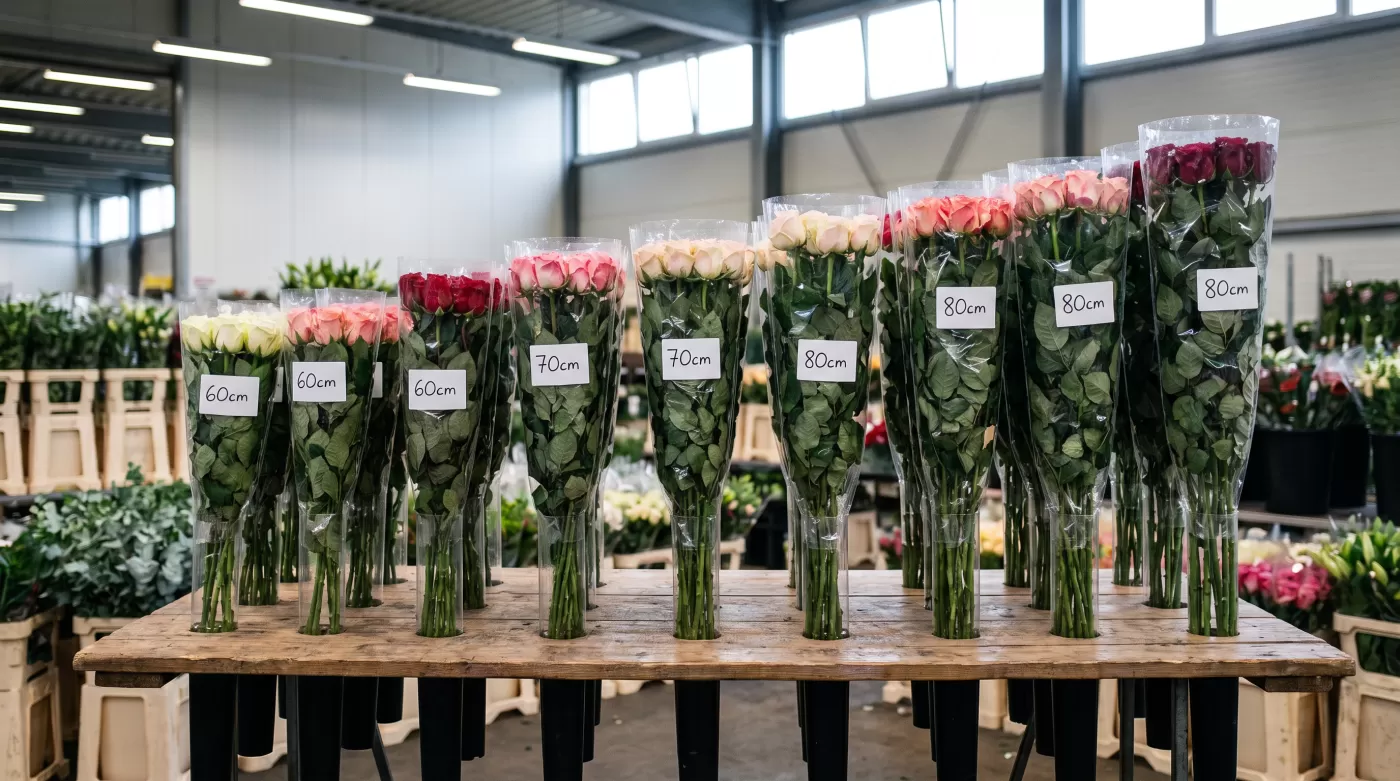
How Florists Sort and Use Each Grade
Professional florists stock multiple grades of the same flower because different designs require different working lengths. A fifty centimeter rose leaves about fifteen inches of workable stem after you account for the bloom and the portion that sits in foam or water. That is enough for a tabletop arrangement but not enough for a large urn.
The seventy and eighty centimeter grades are what event florists and hotel lobbies buy, because they need the visual impact and the height. Funeral work often uses sixties because casket sprays and standing arrangements require length but not the extreme premium of the longest cuts.
Grocery stores and corner shops almost always stock forties and fifties. They are cheaper, they fit the standard bouquet sleeve, and most retail customers are not arranging at a scale where they would notice the difference. The long grades move through wholesale to the trade, not to the consumer counter.
Grading Is Not About Quality
A forty centimeter rose is not a worse rose. It is a shorter one. The head size, the petal count, the freshness, and the variety are all independent of the grade. A premium variety grown short is still a premium variety, and it will outlast a mediocre variety grown long.
This trips up retail customers who assume that longer automatically means better. It does not. It means the florist can do different things with it, and those things cost more because the stem cost more to grow. If you are buying for a low bowl or a small vase, you are paying for length you will cut off and throw away.