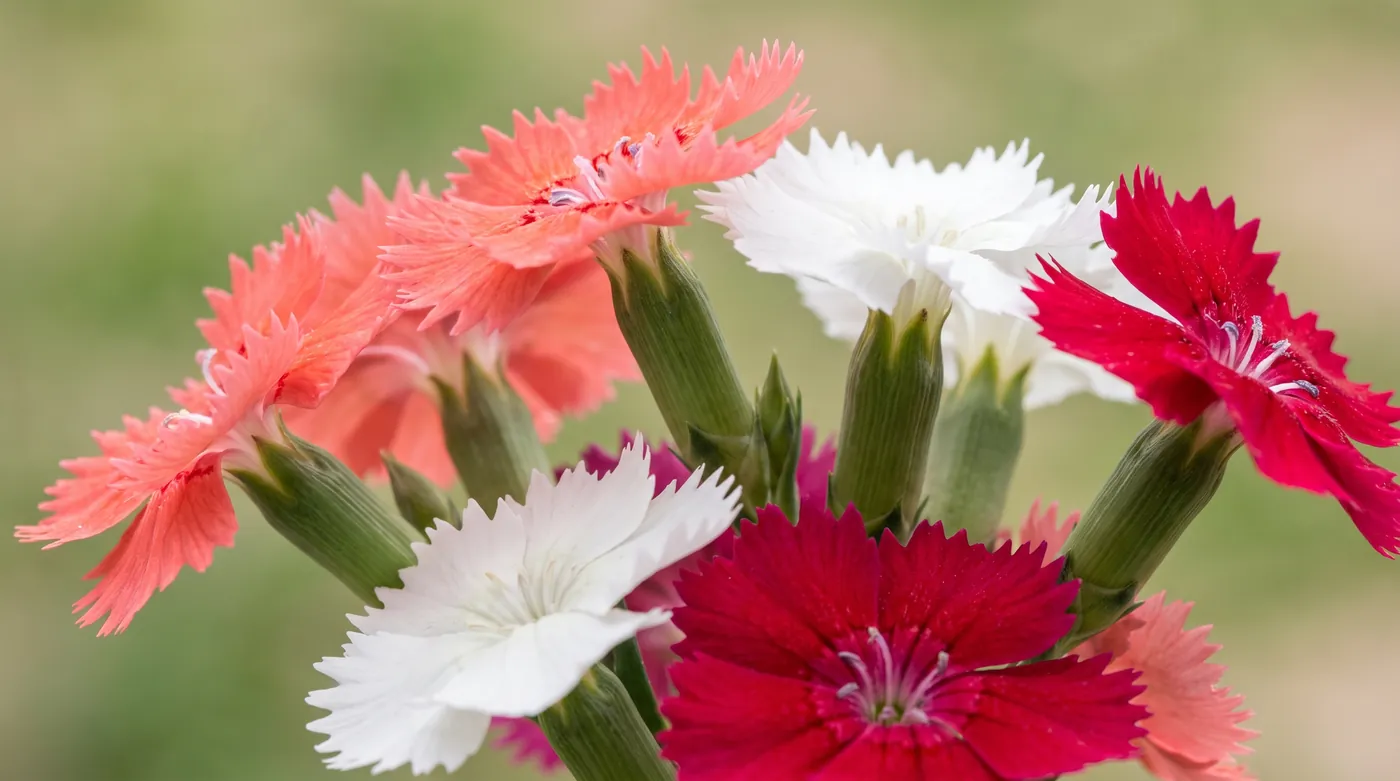
Dianthus and carnations showing fringed petals and ribbed calyx

3 flowers in this family

Everything in this guide that belongs to Caryophyllaceae

A dense cloud of white baby's breath

Baby's Breath

Gypsophila paniculata
7-14 days

Baby's Breath
Carnations

Carnations

Dianthus caryophyllus
14-21 days

Carnations
Dense flat heads of crimson and white sweet William flowers

Sweet William

Dianthus barbatus
7-14 days

Sweet William

The flower named the color

Dianthus means flower of the gods, from the Greek. The English name pink refers to the petal edge, which looks cut with pinking shears, and the verb is the older word. The color took its name from the flower in the seventeenth century, not the other way around.

Carnation is a separate puzzle nobody has settled. Coronation is the most likely origin, from the flower's use in garlands, though incarnation and a reference to flesh color both have their supporters.

The clove scent in an old fashioned border pink is not a coincidence either. These species carry eugenol, the compound that gives cloves their smell, which is why the flower was once used to spice wine. Most modern commercial carnations have had that scent bred almost entirely out in favor of size and vase life. It is a real loss, and worth mentioning to any customer old enough to remember it.
Relatives you already know

Outside the florist's bucket this family is best known for weeds. Chickweed is a member and is in nearly every garden in the country. So is red campion in the hedgerows, ragged robin in damp meadows, and the soapwort whose roots were genuinely used to wash wool and delicate cloth.

Soapwort is not folklore. It contains saponins, which foam in water, and textile conservators still use a preparation of it on historic fabrics that modern detergent would destroy.

There is no significant food crop here at all, which is unusual for a family this large and this widespread. What it produces instead is ornament and nuisance in roughly equal measure, and the ornament has been in cultivation for well over two thousand years.