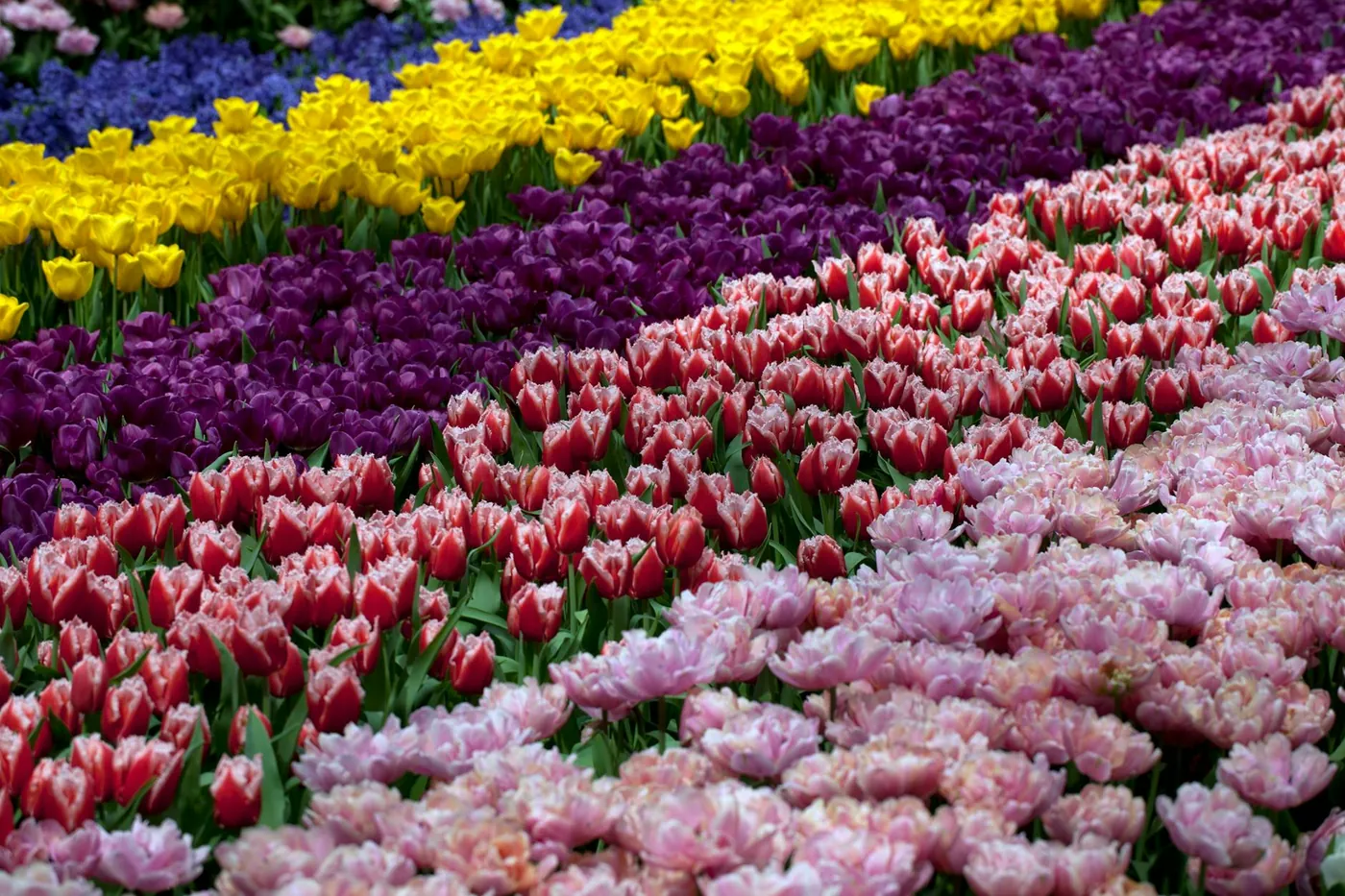
About Tulips
Tulips are elegant spring flowers that herald the arrival of warmer weather. With their distinctive cup-shaped blooms and vibrant colors, tulips are among the most recognizable and beloved flowers worldwide. Originating from Central Asia, tulips became famous in the Netherlands and are now cultivated globally.
These perennial bulbs come in virtually every color and bloom in early to mid-spring. From classic single blooms to fringed, parrot, and double varieties, tulips offer stunning diversity in form and color.
Primary Meanings
- Perfect Love: Tulips represent deep, unconditional love
- New Beginnings: Symbol of fresh starts and spring renewal
- Elegance: Grace and refined beauty
- Rebirth: Associated with spring and new life
Tulips Colors and Their Meanings
Red Tulips
True love, passion, perfect love
Yellow Tulips
Cheerful thoughts, sunshine, hopeless love
Pink Tulips
Caring, affection, good wishes
Purple Tulips
Royalty, elegance, rebirth
White Tulips
Forgiveness, purity, worthiness
Orange Tulips
Energy, enthusiasm, passion
Popular Tulips Types
Single Early Tulips
Classic cup-shaped blooms, early spring flowering
Darwin Hybrid Tulips
Large flowers with strong stems, excellent for gardens
Triumph Tulips
Mid-season bloomers with sturdy stems
Parrot Tulips
Dramatic fringed and ruffled petals
Care Instructions
Water
Water bulbs after planting. Cut flowers need fresh water daily.
Trim
Cut stems at an angle and remove lower leaves.
Temperature
Keep in cool location, away from direct sunlight and heat.
Remove Leaves
Remove foliage below waterline to prevent bacteria.
Keep Cool
Tulips prefer cool temperatures for maximum vase life.
Best Occasions for Tulips
- Spring Celebrations: Easter, spring parties, garden events
- Romantic Gestures: Declarations of love, anniversaries
- New Beginnings: New home, new job, fresh starts
- Apologies: White tulips for forgiveness
- Birthdays: Colorful arrangements for spring birthdays
Interesting Tulips Facts
- Tulips originated in Central Asia and were cultivated in Persia
- The Netherlands is the world's largest tulip producer
- Tulip bulbs were once more valuable than gold during "Tulip Mania" (1630s)
- There are over 3,000 registered tulip varieties
- Tulips continue growing after being cut, up to an inch or more
- The name "tulip" comes from the Persian word for turban
How to Buy Good Tulips
Look for buds that are still closed but showing full color, with crisp, upright leaves. Soft or floppy stems mean the bunch has been dry too long. Tulips are sold by stem count and by head size, the larger-headed varieties cost more and open wider. Avoid any bunch where the outer petals have translucent, water-soaked patches, which is the start of rot.
Season, Availability and What Drives the Price
Tulips are the clearest seasonal bargain in the flower shop. The natural season runs from late winter into spring, and through it Dutch growers flood the market, this is when tulips are at their cheapest and best. Out of season they are forced, which costs more and generally gives you a weaker stem. If you want a lot of flowers for a small budget in February and March, tulips are almost always the answer.
What to Use Instead
Ranunculus fills a similar spring role with more petal detail and a higher price. Daffodils are cheaper still and equally seasonal, but must be conditioned separately before mixing. For the simple, clean-lined look of a tulip outside its season, calla lilies give the same restraint at a higher cost.
Safety Around Pets and Skin
Tulip bulbs are the toxic part and are a genuine risk to dogs that dig. The cut flowers and stems cause only mild stomach upset if chewed. Handling large quantities can cause a contact dermatitis known in the trade as tulip fingers.
Florist Tips for Tulips
They keep growing after you cut them
A tulip can add three or four centimetres in the vase, and will bend towards the light. This is normal and not a sign of anything wrong. Buy them slightly shorter than the final height you want, and turn the vase daily if you want them straight.
Use shallow, cold water
Deep water softens tulip stems. A few inches is enough, kept cold.
A pin through the stem is the old trick for droop
Piercing the stem just below the flower head with a pin lets trapped air out and helps a bent tulip stand up again.
Common Questions About Tulips
Why do my tulips droop and bend over?
Partly because they are still growing and reaching for light, which is natural, and partly because the stems soften in deep water. Use shallow cold water, keep them out of direct sun, and turn the vase each day.
When are tulips cheapest?
Late winter through spring, at the height of the Dutch season. Prices are at their worst in autumn when everything on sale has been forced.
Can I put tulips and daffodils in the same vase?
Not straight away. Daffodil sap kills tulips. Condition the daffodils on their own in water for at least six hours first, then move them across without re-cutting the stems.