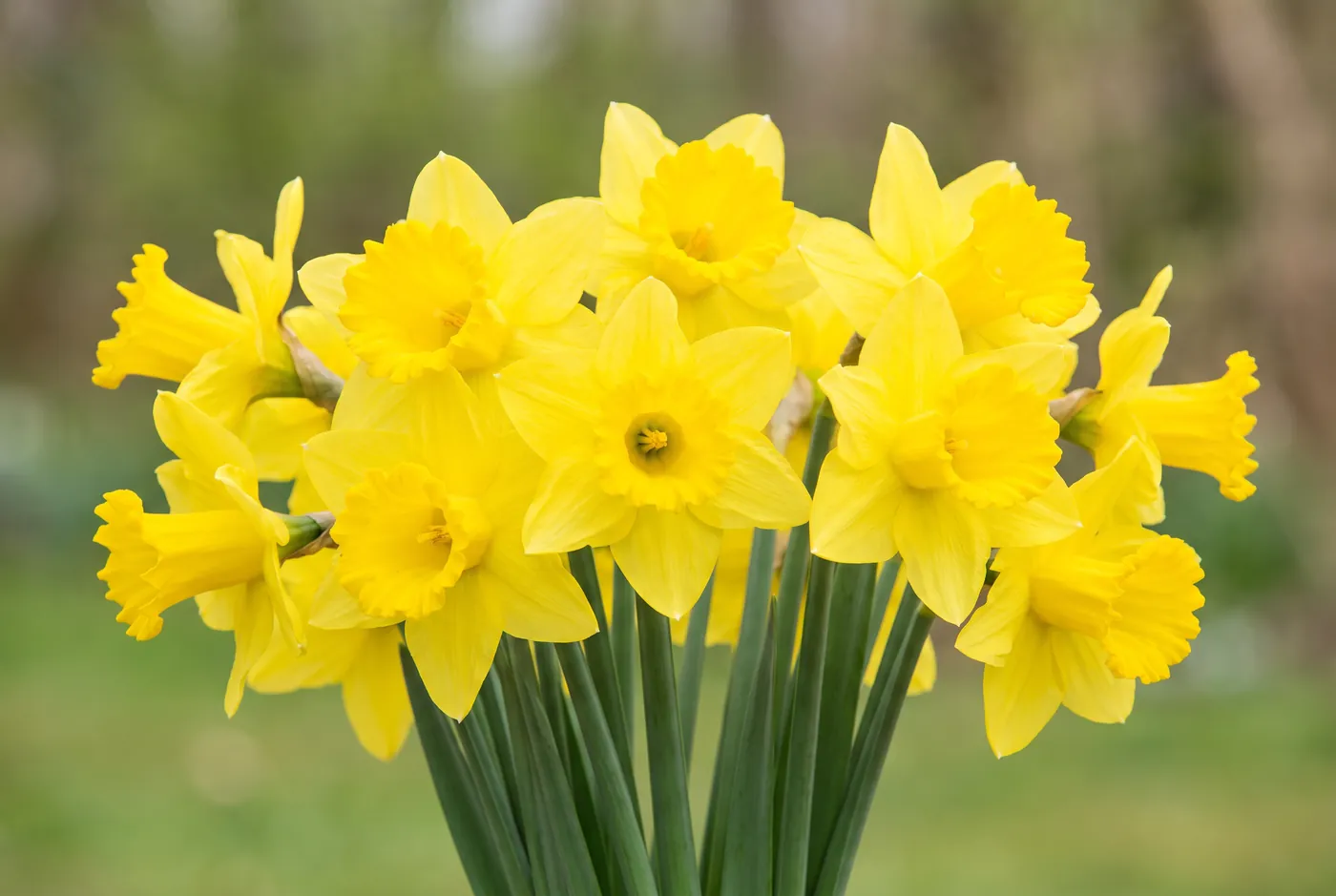
About Daffodils
Daffodils are one of the most beloved spring flowers, instantly recognizable by their bright yellow trumpet-shaped blooms. These cheerful flowers are among the first to bloom after winter, symbolizing rebirth and new beginnings. Native to Europe and North Africa, daffodils have been cultivated for centuries and remain a favorite for gardens and bouquets alike.
Belonging to the genus Narcissus, daffodils are perennial bulbs that return year after year. With their sunny disposition and reliable blooming, they're perfect for brightening early spring gardens and indoor arrangements. Daffodils are also known as jonquils in some regions, though true jonquils are actually a specific type of narcissus.
Primary Meanings
- New Beginnings: Symbol of fresh starts and rebirth after winter
- Hope & Renewal: Represents hope, faith, and forgiveness
- Prosperity: Associated with good fortune and wealth
- Unrequited Love: In Greek mythology, linked to Narcissus
Daffodils Colors and Their Meanings
Yellow Daffodils
Classic daffodil color representing joy, happiness, and friendship
White Daffodils
Purity, innocence, and spiritual rebirth
Orange Daffodils
Energy, enthusiasm, and warmth
Pink Daffodils
Grace, elegance, and femininity
Bi-color Daffodils
White petals with yellow or orange trumpets, unique charm
Popular Daffodils Types
Trumpet Daffodils
Classic large trumpet as long as petals, most recognizable type
Large-Cupped Daffodils
Cup is more than one-third but less than the length of petals
Small-Cupped Daffodils
Shorter cups with prominent petals, elegant appearance
Jonquils
Multiple small fragrant flowers per stem, strong sweet scent
Care Instructions
Water
Change water every 2-3 days. Use cool water for longer vase life.
Trim
Cut stems at angle. Note: daffodils release sap that can harm other flowers.
Temperature
Keep in cool location away from direct sunlight and heat.
Isolation
Display alone initially - their sap can shorten life of other flowers.
Remove Leaves
Strip lower leaves that would be below waterline.
Best Occasions for Daffodils
- Spring Celebrations: Easter, spring parties, garden events, March birthdays
- New Beginnings: New home, new job, graduations, fresh starts
- Sympathy: Representing eternal life and resurrection
- Get Well Soon: Cheerful flowers to lift spirits
- Friendship: Yellow daffodils perfect for showing appreciation
Interesting Daffodils Facts
- Daffodils are the birth flower for March
- In Wales, the first person to spot a daffodil is blessed with good luck
- Daffodils are toxic to pets if ingested - keep away from cats and dogs
- The American Cancer Society uses daffodils as a symbol of hope
- There are over 13,000 registered daffodil varieties
- Daffodils can naturalize and multiply in gardens for decades
How to Buy Good Daffodils
Buy at what the trade calls the gooseneck stage, the bud bent over at the top of the stem, showing yellow, but not yet open. They open fast indoors and a bunch bought fully open is already half spent. Stems should be crisp and snap rather than bend.
Season, Availability and What Drives the Price
Late winter into spring, and during that window they are among the cheapest flowers you can buy anywhere. Outside it they essentially disappear from the market rather than becoming expensive. Daffodils are not worth forcing year-round. If you want a lot of color in February or March for very little money, this is the flower.
What to Use Instead
Tulips share the season and mix well once the daffodils are properly conditioned. Freesia brings similar spring yellow with scent. Later in spring, ranunculus takes over the same role at a higher price.
Safety Around Pets and Skin
All parts are toxic to cats and dogs, and the bulbs most of all, a real risk with dogs that dig in the garden. Symptoms run from vomiting to more serious effects if a bulb is eaten. The sap also causes a contact dermatitis known as daffodil itch in people who handle them in bulk.
Florist Tips for Daffodils
Never put freshly cut daffodils straight in with other flowers
This is the single most useful thing to know about them. Cut daffodil stems leak a sap that blocks the stems of other flowers and will kill tulips and roses in the same vase.
Condition them alone first
Stand them in their own water for six to twelve hours, then move them across WITHOUT cutting the stems again. Re-cutting restarts the sap and undoes the conditioning.
Use cold water and keep them cool
Warmth makes them race through their life. They last noticeably longer in a cool room.
Common Questions About Daffodils
Can I put daffodils in the same vase as tulips?
Not straight away. Daffodil sap will kill tulips. Condition the daffodils on their own for at least six hours first, then transfer them without re-cutting the stems.
Are daffodils poisonous to dogs?
Yes, and the bulbs especially. A dog that digs up and eats bulbs needs a vet. The cut flowers are less dangerous but still cause vomiting if chewed.
Why did my daffodils only last three days?
Usually because they were bought already open, or kept somewhere warm. Buy them in bud at the gooseneck stage and keep them cool.