About Allium
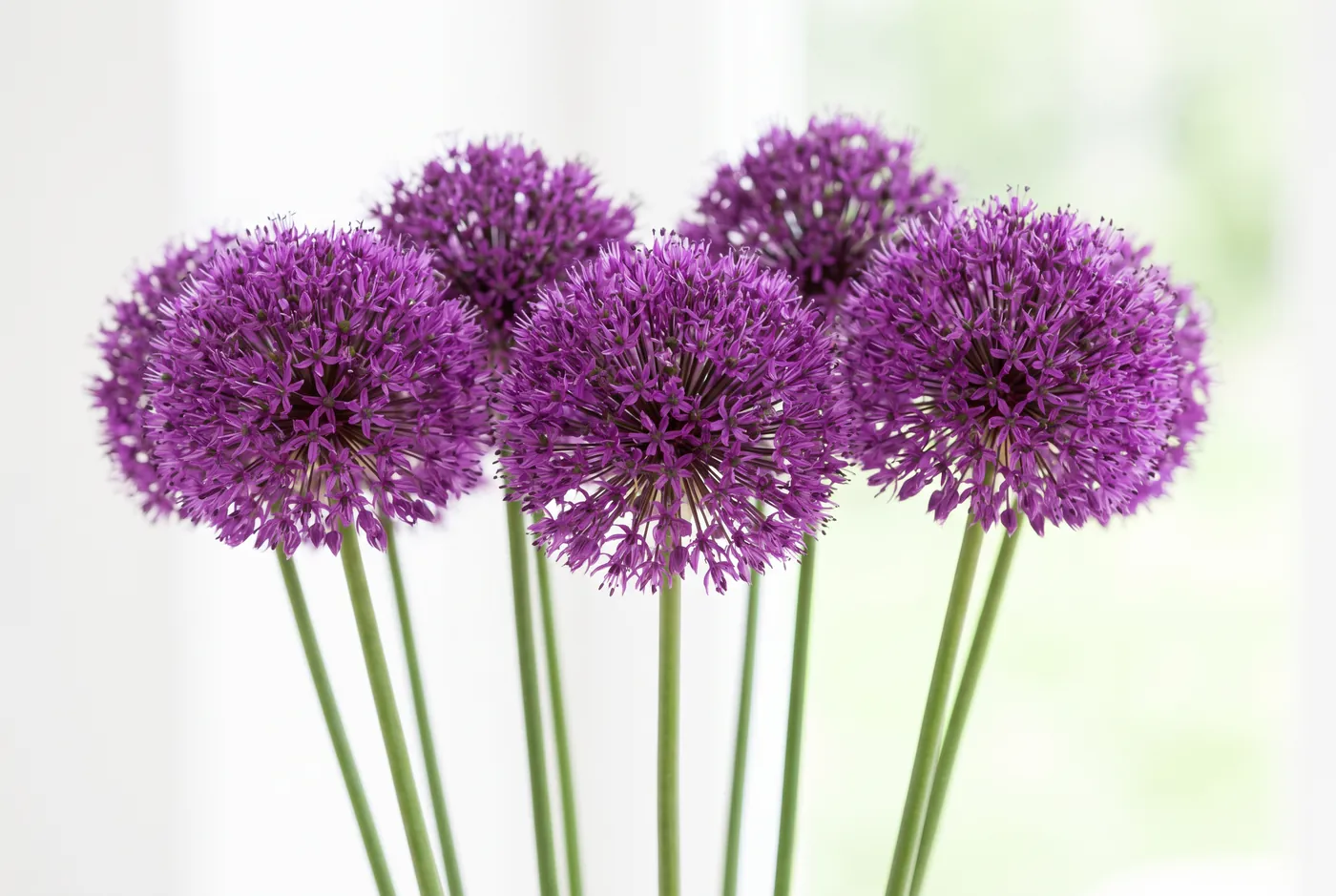
Allium is architecture rather than a flower. A perfect sphere of hundreds of tiny star-shaped florets sits on a bare straight stem with no foliage at all, and the largest varieties reach the size of a grapefruit. It is one of the few flowers that looks deliberately modern without any arranging.
It is an ornamental onion, and it does not let you forget it. The stems smell of onion when cut and the vase water turns quickly, which is entirely manageable once you know it is coming.
Primary Meanings
- Unity: From hundreds of florets forming one sphere
- Patience: Bulbs take years to reach flowering size
- Prosperity: The traditional association with the onion family
- Good Fortune: Long planted near doorways for luck
Allium Colors and Their Meanings
Purple Allium
The classic; Purple Sensation
White Allium
Purity; Mount Everest and similar
Deep Violet Allium
Drumstick types, small and dense
Green Allium
Unopened or green-flowered varieties
Popular Allium Types
Purple Sensation
The standard cut variety, dense purple spheres
Globemaster
The giant, heads the size of a grapefruit
Drumstick
Small dense egg-shaped heads on wiry stems
Schubertii
An exploded firework of florets on long spokes
Care Instructions
Change Water Daily
It smells of onion and turns fast.
Recut
A fresh cut each time you change the water.
Shallow Water
Less water in the vase means less smell.
Cool Room
Warmth intensifies the onion smell sharply.
Best Occasions for Allium
- Modern Arrangements: Its sculptural form suits contemporary work
- Late Spring: Peak season, May and June
- Weddings: Structure and height in large installations
- Dried Work: The seed heads dry into permanent spheres
Interesting Allium Facts
- It is an ornamental onion and the stems smell of it when cut
- Each sphere is hundreds of individual star-shaped florets
- Globemaster heads can reach the size of a grapefruit
- The dried seed heads keep their shape indefinitely
- Bulbs take several years to reach flowering size, which is why stems cost what they do
How to Buy Good Allium
Look for a sphere with most florets open but the center still showing a few tight buds, which means several more days of development. Any brown or shrivelled florets on the outside date the stem. The bare stem should be rigid and evenly green with no soft or yellowing patch just below the head, which is where it collapses first. Smell the cut end: a sharp fresh onion smell is normal and healthy, while a sour or rotten smell means it has been standing in old water.
Season, Availability and What Drives the Price
Late spring into early summer, peaking in May and June, and largely tied to the Dutch bulb trade. Some forced and imported supply extends it at higher prices. The giant varieties such as Globemaster carry a real premium because the bulbs take several years to reach flowering size and each one produces a single stem. Drumstick alliums arrive later in summer and cost considerably less.
What to Use Instead
For a sphere of tiny flowers, hydrangea gives mass at a similar scale in a softer form. Craspedia offers small hard spheres in yellow. Echinops and eryngium give spiky architecture in blue. Agapanthus provides a looser dome on a bare stem later in the summer. For the sheer geometric precision of a Globemaster there is no substitute, which is why designers pay for it.
Safety Around Pets and Skin
This one matters: **alliums are toxic to cats and dogs**, and the whole genus is, including onions, garlic and leeks. They contain compounds that damage red blood cells and cause haemolytic anaemia, with cats considerably more sensitive than dogs. Symptoms can be delayed by days and include weakness, pale gums, rapid breathing and dark urine. This is not a mild stomach upset. Keep cut stems and the vase water well away from animals, and dispose of the water carefully.
Florist Tips for Allium
Change the water daily or accept the smell
The onion odour comes from the cut stem, not the flower, and it builds in the water. Daily fresh water and a fresh cut keeps it almost unnoticeable.
Use less water, not more
A shallow vase means less water in contact with the stem and much less smell. Alliums do not need depth.
Keep the seed heads
Once the florets drop, the skeleton sphere dries into a permanent structure that looks good for years. Do not bin the stem when the color goes.
Common Questions About Allium
Why does my allium water smell of onion?
Because it is an ornamental onion. The smell comes from the cut stem releasing sulfur compounds into the water, not from the flower itself. Change the water daily, keep the vase shallow and keep it out of a warm room.
Are alliums poisonous to cats?
Yes, and seriously. The entire allium genus, including onions and garlic, damages red blood cells and causes anaemia in cats and dogs. Cats are more sensitive. Symptoms can appear days later. Keep stems and vase water out of reach entirely.
Can you dry allium heads?
Yes. After the florets fall, the remaining seed head holds its spherical shape indefinitely and is often used in dried and architectural arrangements. Leave the stem to dry standing in an empty vase.