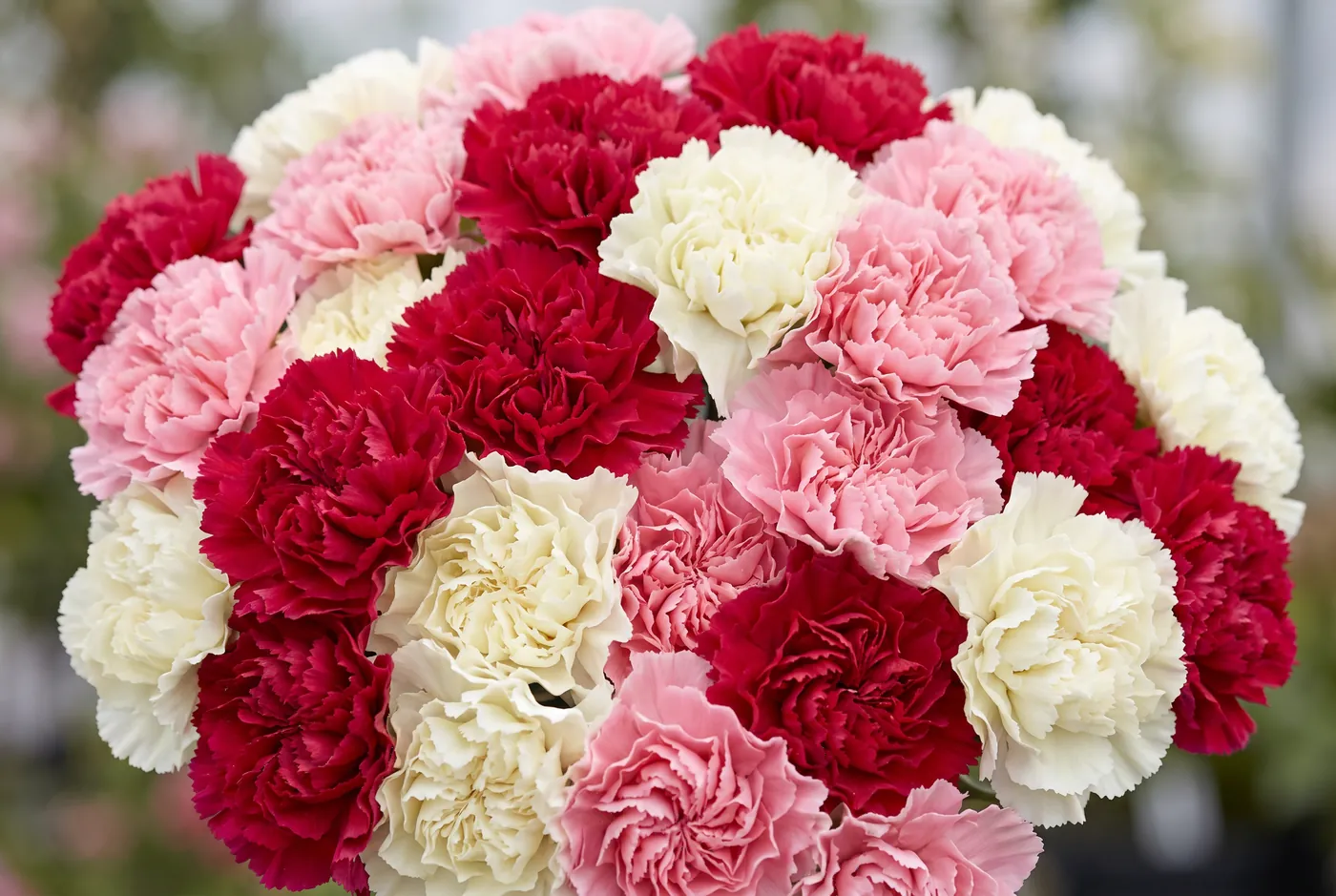
About Carnations
Carnations are beloved for their ruffled petals, spicy fragrance, and exceptional longevity. These versatile flowers have been cultivated for over 2,000 years and are among the most popular cut flowers worldwide. Their long vase life and affordability make them practical choices for any occasion.
Available in a rainbow of colors, carnations can be found in single blooms or spray varieties with multiple smaller flowers per stem. Their meaning varies significantly by color, making them versatile messengers of emotion.
Primary Meanings
- Love: Fascination, distinction, and deep affection
- Gratitude: Appreciation and thankfulness
- Remembrance: Honoring memory and devotion
- Distinction: Admiration and respect
Carnations Colors and Their Meanings
Pink Carnations
Gratitude, mother's love, never forget you
Red Carnations
Deep love, admiration, affection
White Carnations
Pure love, innocence, good luck
Yellow Carnations
Disappointment (historically), joy (modern)
Purple Carnations
Capriciousness, unpredictability
Green Carnations
Good fortune, St. Patrick's Day
Popular Carnations Types
Large-Flowered
Single large bloom per stem
Spray Carnations
Multiple smaller blooms per stem
Dwarf Carnations
Compact plants for containers
Malmaison Carnations
Large, very fragrant varieties
Care Instructions
Water
Change water every 2 days, use flower food.
Trim
Cut stems between nodes at a 45-degree angle.
Temperature
Cool location, avoid ethylene gas sources.
Remove Leaves
Strip lower foliage below waterline.
Longevity
Can last 2-3 weeks with proper care!
Best Occasions for Carnations
- Mother's Day: Pink carnations are the official Mother's Day flower
- Anniversaries: Red carnations for enduring love
- Weddings: Affordable and long-lasting for bouquets
- Sympathy: Express remembrance and sympathy
- Teacher Appreciation: Show gratitude and respect
Interesting Carnations Facts
- Carnations are the birth flower for January
- The name comes from "coronation" for their use in Greek ceremonial crowns
- Carnations can last up to 3 weeks in a vase
- Pink carnations became associated with Mother's Day in 1907
- Carnations are edible and sometimes used to decorate cakes
- They're one of the oldest cultivated flowers, dating back 2,000 years
How to Buy Good Carnations
Check the calyx, the green cup holding the petals. It should be intact; if it has split, the petals will spill sideways and the flower loses its shape. Petals should be crisp at the edges rather than brown or dried. Carnations are sold as standards, one large bloom per stem, or sprays with several smaller heads. Spray carnations go much further in an arrangement for the money.
Season, Availability and What Drives the Price
Available every week of the year and among the cheapest flowers in the shop, largely grown in Colombia and shipped in enormous volume. Price is stable except around Mother's Day, when they are traditional in many countries and demand lifts. Carnations have a reputation as a cheap filler that is genuinely undeserved: they hold longer than almost anything else, and the modern ruffled and antique-toned varieties look nothing like the ones that gave them the reputation.
What to Use Instead
Nothing else gives this combination of price and life, so carnations are more often the substitute than the substituted. Massed tightly they stand in for peonies convincingly. If you want the same longevity in a different shape, chrysanthemums are the closest match.
Safety Around Pets and Skin
Mildly toxic to cats and dogs, causing stomach upset and, occasionally, mild skin irritation from the sap. Not dangerous, but worth keeping off the floor.
Florist Tips for Carnations
Keep them away from the fruit bowl
Carnations are unusually sensitive to ethylene, the ripening gas fruit gives off. A vase next to a bowl of apples or bananas will fade days early. This one change often doubles how long they last.
Cut between the nodes
The stem has visible swollen joints. Cutting just above one, rather than through it, lets the stem take up water properly.
Expect two to three weeks
If your carnations are dying inside a week, something is wrong, usually ethylene, or water that has not been changed.
Common Questions About Carnations
How long do carnations last?
Two to three weeks is normal, and they will often outlast everything else in a mixed bunch. They are the best value in the shop by a wide margin on cost per day.
Why are carnations considered cheap flowers?
Volume. They are grown and shipped in enormous quantities, which drives the price down. It reflects supply, not quality, and the ruffled antique varieties now used in high-end wedding work bear little resemblance to the old carnation of reputation.
Why did my carnations wilt so fast?
Almost always ethylene exposure from nearby fruit, or stale water. They are one of the most ethylene-sensitive flowers sold.